

Sloped Writing Desk Box
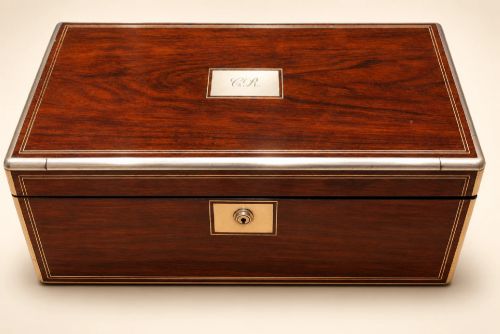
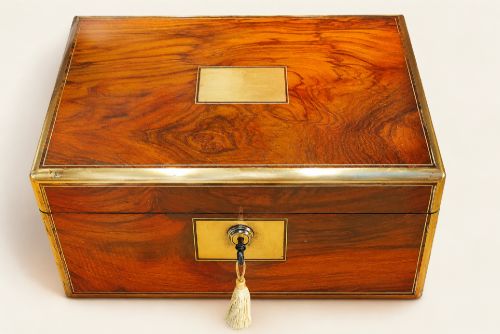
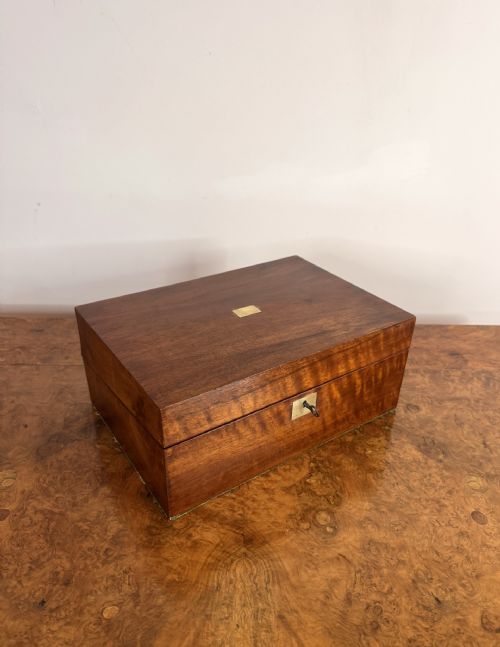
A sloped writing desk box is a portable chest designed for correspondence, most frequently seen here in nineteenth-century mahogany, rosewood, and walnut.
Sloped Writing Desk Box
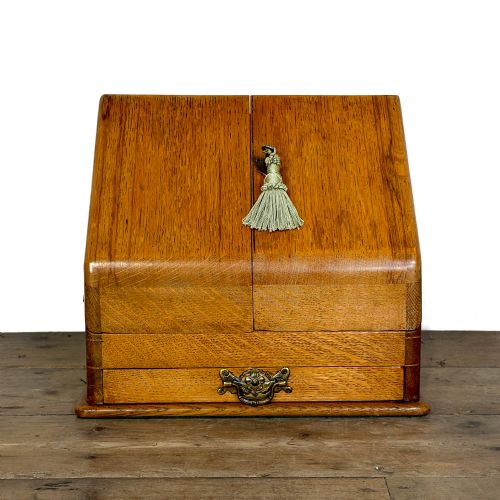
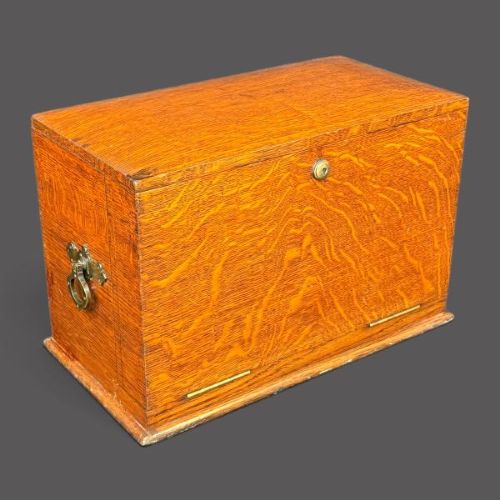
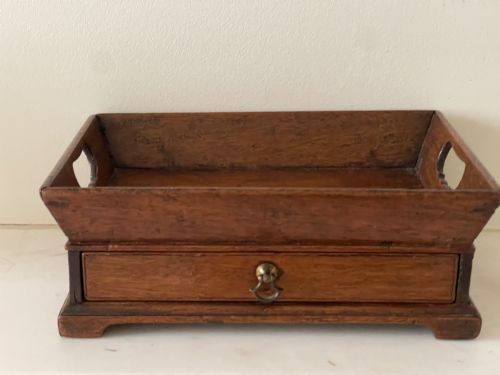
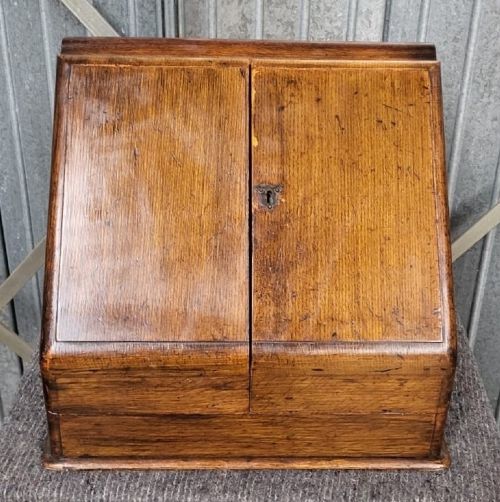
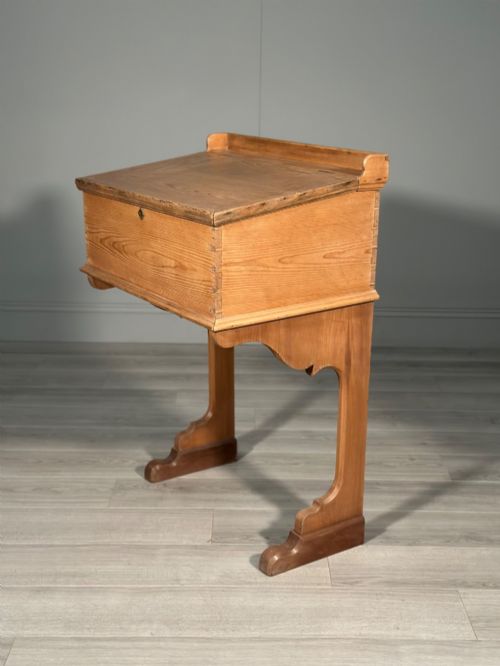
A buyer seeking a sloped writing desk box encounters portable containers designed to hold writing materials, paperwork, and correspondence. These pieces span from the seventeenth century through the Edwardian period, incorporating forms such as writing slopes, lap desks, stationery boxes, and desk boxes.
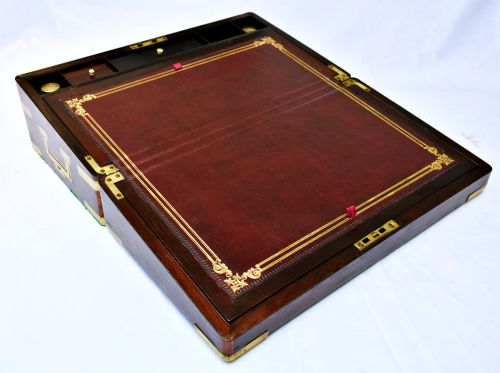
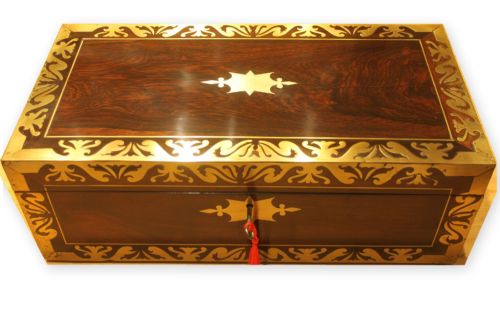
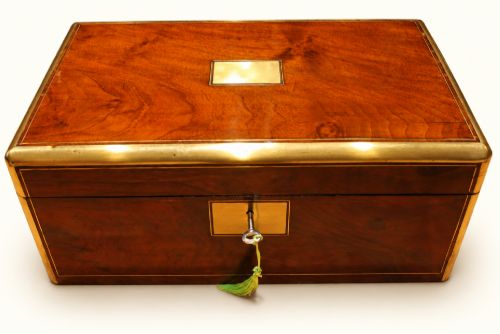
The most common examples on this page date to the Victorian era and the nineteenth century, built as folding desk boxes that open to reveal an angled writing surface lined with leather. Many of these domestic and campaign examples include internal compartments, inkwells, and secret drawers accessed through hidden mechanisms.
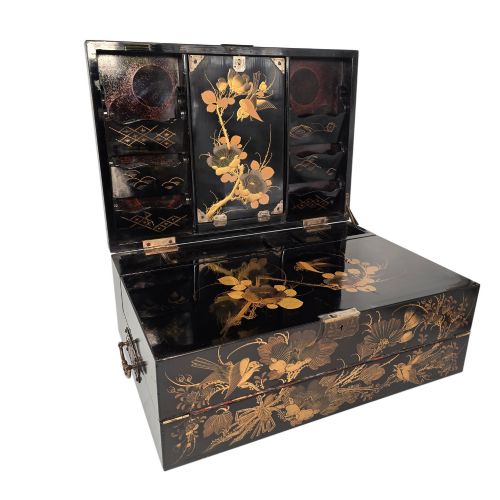
Beyond standard Victorian rosewood and mahogany boxes, the selections extend to Regency brass-inlaid pieces, earlier oak bible boxes, and imported items like Meiji period Japanese lacquer writing boxes and Anglo-Indian camphor campaign boxes.
Materials and construction
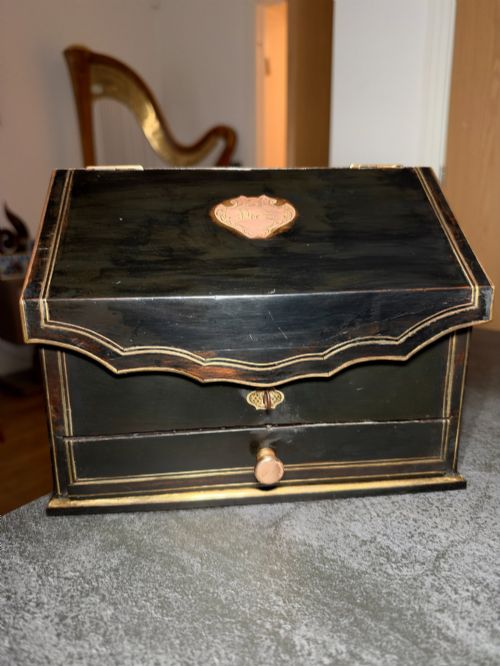
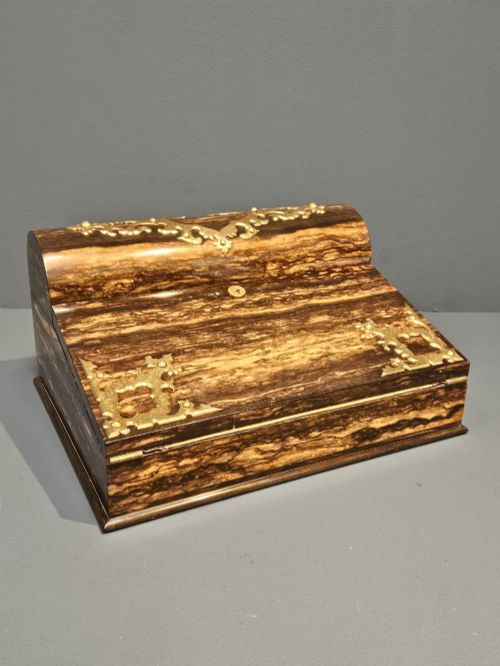
Cabinetmakers constructed these boxes using solid timbers and decorative veneers such as rosewood, mahogany, walnut, oak, and coromandel. Surfaces were frequently embellished with brass banding, brass inlay, or mother-of-pearl decoration.
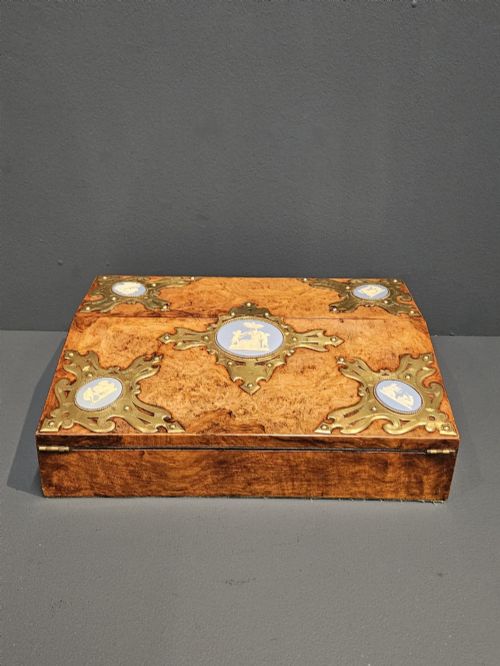
Interior fittings often combined secondary woods with specialised elements like leather writing surfaces, porcelain panels, Wedgwood plaques, and jasperware inserts. Security was managed through integrated brass locks, with makers utilising mechanisms by Bramah.
Sloped Writing Desk Box Retail Price Guide 2026
Typical asking prices for sloped writing desk box among the pieces listed under this phrase on Sellingantiques today, from the lower quarter to the upper quarter. They describe what is for sale here now, not the wider market.
Several Victorian writing slopes hide their secret compartments behind false drawer dividers that only release when you pull a secret wooden pin.
Variations in execution
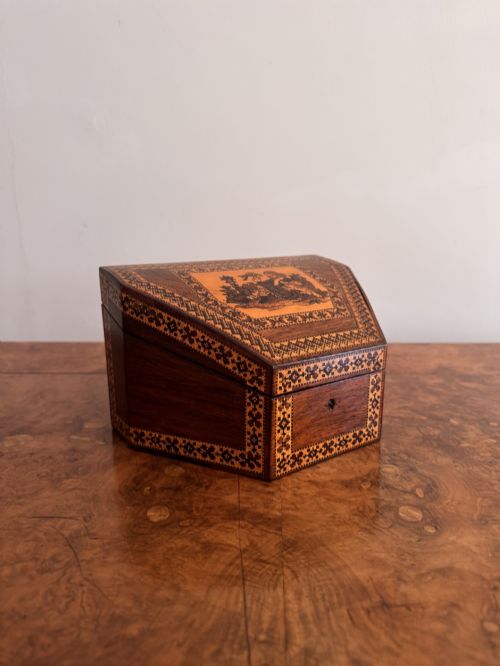
Quality rests in the choice of timber figure, such as burr walnut or heavily grained rosewood, and the precision of the brass inlay or Tunbridge ware mosaic work. Finer boxes feature seamless mitred joints, fully fitted interiors with matching timber secret drawers, and substantial brass hardware.
Secondary details, including the presence of original glass inkwells with brass lids, functional locks with matching keys, and specialised decorative elements like ormolu mounts or enamel accents, separate standard utilitarian pieces from high-grade commissions.
Jennens & Bettridge·Edwards & Jones
The Sloped Writing Desk Box Glossary
- Writing slope
- A portable box with a hinged lid that opens to form an inclined writing surface, usually lined with leather or velvet. Inside, compartments hold paper, pens, and inkwells.
- Secret drawers
- Hidden compartments concealed behind false panels or accessed by removing secondary internal partitions within a writing box. These were designed for storing valuables and confidential letters.
- Campaign box
- A sturdy wooden box, often brass-bound and fitted with recessed carrying handles, made for travel and military use during the nineteenth century.
- Tunbridge ware
- A form of decorative woodworking originating in Kent, characterised by mosaic patterns built from tiny wood blocks of various natural colours to form geometric or pictorial designs.
- Bramah lock
- A patented high-security cylindrical lock invented by Joseph Bramah in the late eighteenth century, commonly fitted to superior nineteenth-century writing boxes.
Sloped Writing Desk Box: Frequently Asked Questions
How do I use a writing slope?
A writing slope opens by folding down the top section to create an angled writing desk. The internal space stores stationery, while fitted slots secure inkwells and pens.
To write, you place paper on the leather-lined slant and keep reference materials or completed letters in the compartment beneath the folding surface.
What are secret drawers for?
Secret drawers provide concealed storage within the interior of a writing box. They require specific steps, such as lifting a hidden panel or removing a pen tray, to access.
Historically, owners used these compartments to safeguard private correspondence, currency, and small valuables while travelling.
How do I date a writing box?
Dating relies on timber choices, construction techniques, and hardware styles. Regency pieces often showcase precise brass stringing in rosewood, while Victorian examples frequently feature brass bound corners and walnut veneers.
Earlier seventeenth-century iterations appear as solid oak bible boxes with carved decoration, predating the folding slope format.
Can I travel with a lap desk?
Lap desks were originally built for travel, featuring robust wood construction, brass edge binding, and locking mechanisms to secure contents on the move.
While modern travel subjects antique wood and leather to changes in humidity, these boxes remain structurally portable for contemporary display and light use.