



Sliding Book Trough
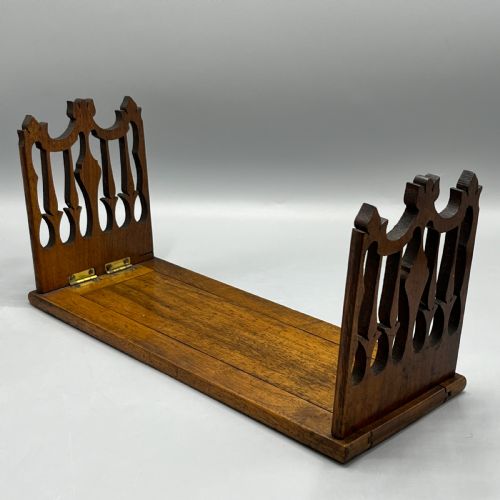
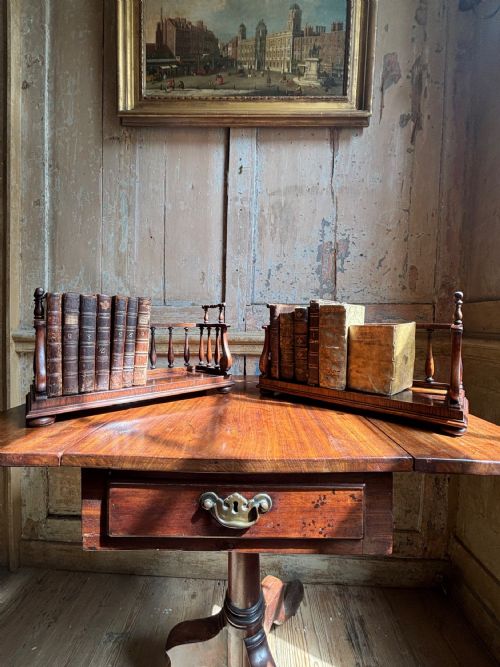
A sliding book trough organises your shelf with expanding wooden ends held by expanding brass actions.
Sliding Book Trough
A sliding book trough provides an adjustable shelf for holding upright volumes on a desk or table, expanding to fit a growing collection. These practical library accessories appear frequently in Victorian and Edwardian forms, alongside occasional examples from the early twentieth century.
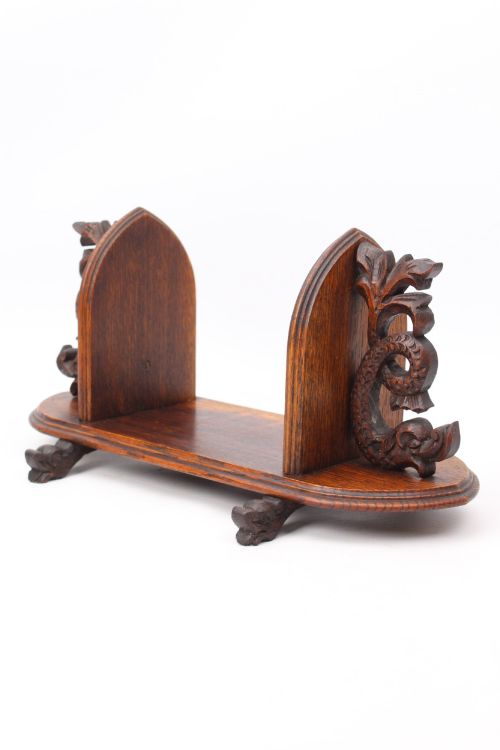
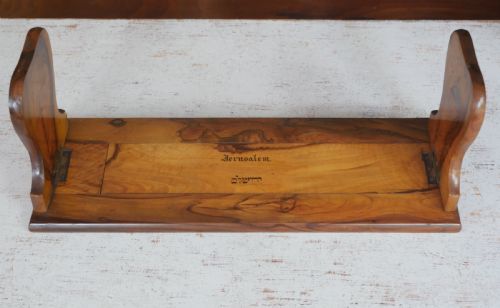
You will most commonly encounter these pieces fashioned from dense hardwoods like walnut, oak, and rosewood, often fitted with extending mechanisms that allow the sides to slide smoothly apart. The designs range from simple robust oak troughs to ornate book slides embellished with brass mounts and decorative inlays.
How they were made
Cabinet makers constructed the bodies from timbers such as walnut, oak, coromandel, and ebonised wood, joining the sliding sections with hidden wooden channels or metal runners. Brass featured heavily as mounting hardware for hinges, edges, and folding galleries.
Surface decoration involved intricate techniques including Tunbridge ware micro-mosaic work, hand-painted porcelain plaques, stone inlay, and carved relief details characteristic of Anglo-Indian or Gothic Revival workshops.
Some book slides feature secret folding bookends that pop up when you least expect them.
What varies in quality
The sophistication of the extending mechanism distinguishes standard desk accessories from finer library pieces, with patented actions operating more smoothly than simple sliding channels. Robust timber selection and precise joinery ensure the extending sides remain parallel during use.
The degree of artistic ornamentation elevates individual examples, where finely painted porcelain, pietra dura panels, or complex Tunbridge ware patterns reflect higher craftsmanship and greater material cost.
Gillows·Betjemanns·Tiffany and Co
The Sliding Book Trough Glossary
- Tunbridge Ware
- Woodworking technique involving small mosaic tiles assembled to form geometric or pictorial surface patterns. This technique originates from the spa town of Tunbridge Wells.
- Pietra Dura
- Inlay method using cut and fitted polished coloured stones to create decorative pictures. Craftsmen applied these stone panels directly into the wooden body.
- Gothic Revival
- Architectural and decorative style drawing inspiration from medieval forms. Pieces in this style utilise pointed arches and heavy timber mouldings.
- Coromandel
- Dense and heavy exotic timber prized for its dark brown colour and contrasting grain. Makers selected this material for luxury library furnishings.
Sliding Book Trough: Frequently Asked Questions
How do sliding book troughs work?
These accessories feature a base with two movable ends that glide outward to accommodate varying quantities of volumes. The internal mechanism often relies on a scissor action or overlapping wooden tracks concealed beneath the base.
Users pull the ends apart to insert more books, whereupon the friction of the mechanism holds the volumes upright against the upright panels. This adjustable design prevents books from tilting or falling over on open desk surfaces.
Where were these pieces used?
Victorian and Edwardian households placed these items on library tables, writing desks, and parlor sideboards for immediate access to favourite volumes. They kept reference books and poetry collections tidy in domestic studies without requiring fixed shelving.
Public offices and institutional libraries also utilised them on reception counters to manage daily ledgers and frequently consulted reference texts.
How do I care for wooden book slides?
Maintain the timber by applying a microcrystalline wax periodically to nourish the grain and protect the polished surface from dryness. Avoid placing them in direct sunlight or near heat sources that might warp the expanding wooden sections.
Keep brass mounts bright with a soft cloth while avoiding harsh metal polishes that could stain surrounding wood veneers.
How can I tell the period?
Examine the timber choices, construction methods, and decorative motifs to determine the era of manufacture. Early nineteenth-century examples often favour rosewood with classical proportions, whilst Victorian pieces frequently incorporate brass mounts and Gothic detailing.
Later Edwardian and Art Deco iterations display simpler geometric lines and lighter oak construction typical of twentieth-century domestic interiors.