

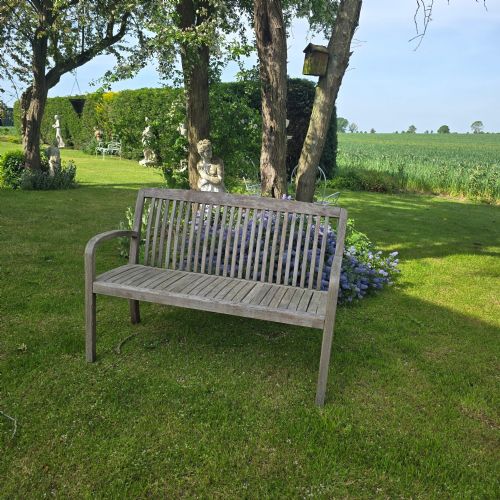


Slatted Timber Seat
These slatted timber seat pieces combine sturdy frames with slatted wooden surfaces, offering practical utility and enduring garden charm.
Slatted Timber Seat
The objects span multiple periods, including the eighteenth century, nineteenth century, Victorian era, Edwardian period, and nineteen-thirty. Their origins encompass English country houses, gardens, and continental workshops, reflecting diverse domestic and outdoor uses.
Materials and construction techniques
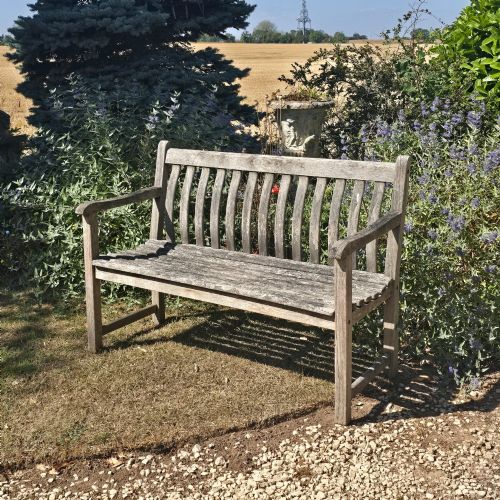
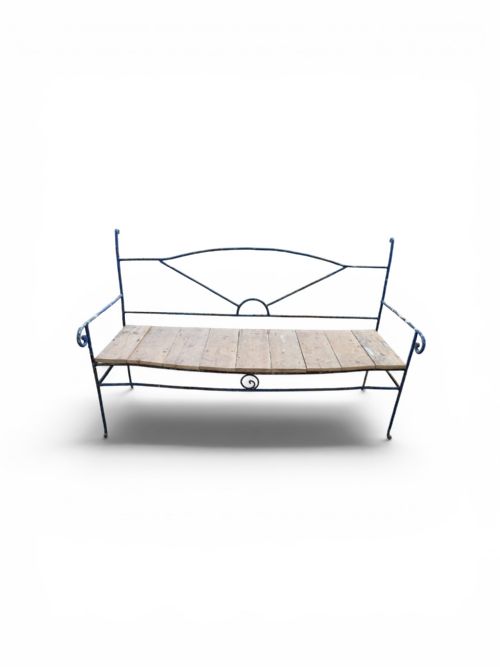
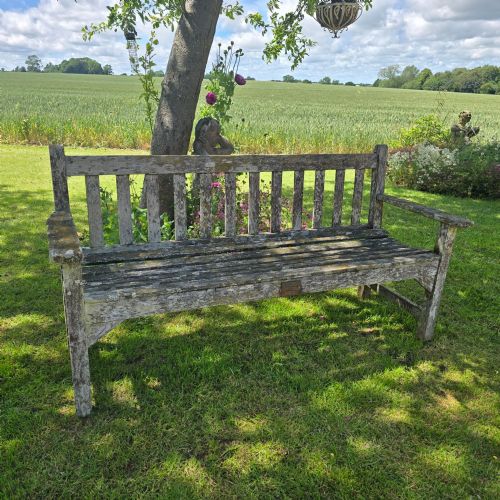
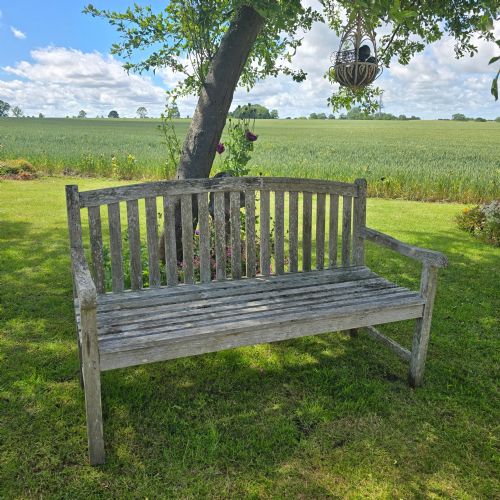
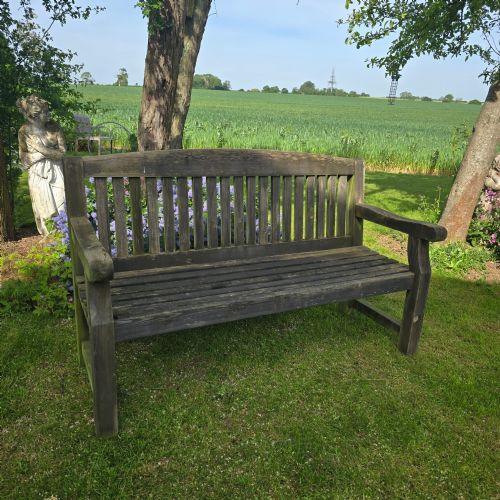
Makers utilised durable timbers such as teak, oak, mahogany, elm, and pine for the main structures and slatted surfaces. Many pieces combine these woods with cast iron or wrought iron frames to enhance structural stability.
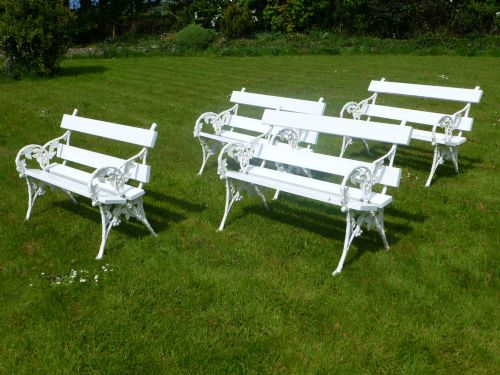
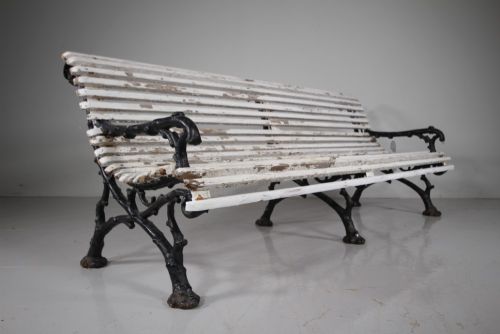
Joinery methods range from simple farmhouse carpentry to shaped mahogany work and detailed cast iron foundry designs with blackberry and leaf motifs. Surfaces appear weathered, silvered, painted in French grey, or finished in rustic styles.
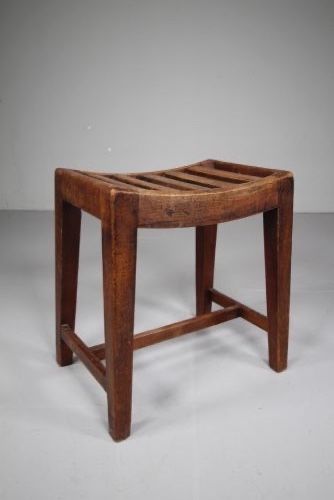
Recorded forms include garden benches, settle benches, dining chairs, armchairs, and stools originating from English and French traditions.
Distinctions in quality
Quality depends upon the selection of timber and the integrity of the joinery connecting the slats to the frame. Dense hardwoods like teak and well-figured mahogany indicate superior material choice compared to standard pine.
Refinement in design separates standard utility items from finer examples, such as shaped stool components, cast iron foundry details, and unusual orangery bench forms.
Falkirk foundry
The Slatted Timber Seat Glossary
- Slatted
- A surface constructed from narrow strips of wood spaced at intervals. This technique allows water drainage on garden seating and reduces overall weight.
- Teak
- A dense, durable tropical hardwood prized for outdoor use. It weathers to a silvered patina when exposed to the elements.
- Settle Bench
- A high-backed wooden bench with solid sides and a storage box or enclosed seat base. These items provided shelter from drafts in older interiors.
- Orangery
- A large glass-walled extension used for protecting exotic plants. Benches placed in these spaces combined indoor refinement with garden utility.
- Cast Iron
- Molten metal poured into a mould to create decorative and structural supports. Foundries utilised this technique for bench ends featuring botanical motifs.
Slatted Timber Seat: Frequently Asked Questions
What defines a slatted timber seat?
A slatted timber seat is any chair, bench, or stool featuring a sitting surface made of individual wooden laths or slats. These pieces appear in both indoor domestic settings and outdoor gardens.
The design allows air circulation and moisture drainage, making wood slats particularly suitable for exterior seating exposed to weather.
How should I care for outdoor teak benches?
Teak benches require minimal maintenance due to the natural oils present in the timber. Over time, exposure to sunlight turns the warm brown wood into a silvery grey patina.
Leaving the wood untreated allows this weathering process to occur naturally without compromising the structural integrity of the slats.
Where were these benches and chairs used?
These items served a variety of functions across English country houses, gardens, farmhouses, and orangeries. Garden benches furnished lawns and patios, while armchairs and settles warmed interior spaces.
Dining chairs and stools provided practical seating for kitchens and dining rooms across the eighteenth, nineteenth, and early twentieth centuries.
How do I identify a nineteenth century piece?
Nineteenth century examples often display heavy cast iron framing combined with wooden slats, or traditional rustic woodworking techniques. Foundry marks and specific botanical motifs can sometimes indicate this earlier origin.
Comparing the timber type, patination, and construction style against known nineteenth century examples helps confirm the period.