


Traditional Outdoor Bench
A traditional outdoor bench grounds a garden with enduring form, offering a sturdy place to sit while the seasons turn.
Traditional Outdoor Bench
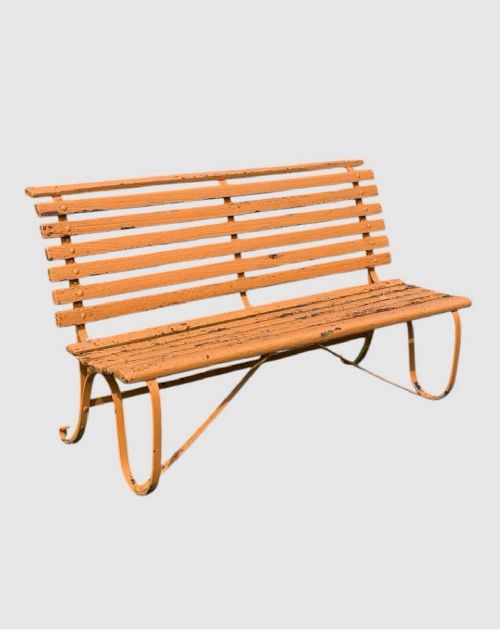
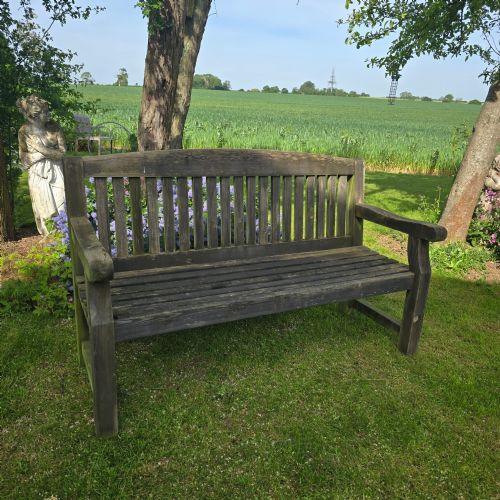
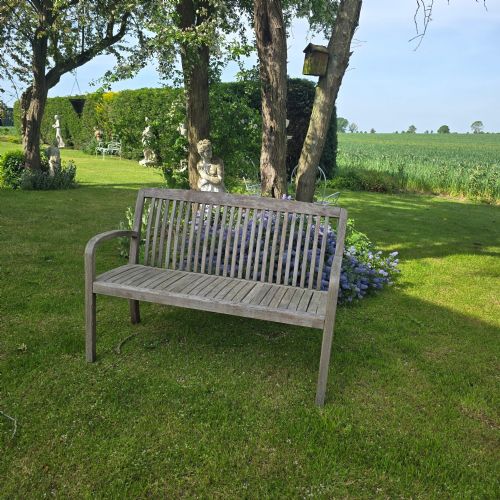
A traditional outdoor bench provides functional seating designed for gardens, parks, and patios using durable materials meant to withstand the weather. When searching for a traditional outdoor bench, buyers encounter various historical examples spanning from the mid-nineteenth century through to the early twentieth century.
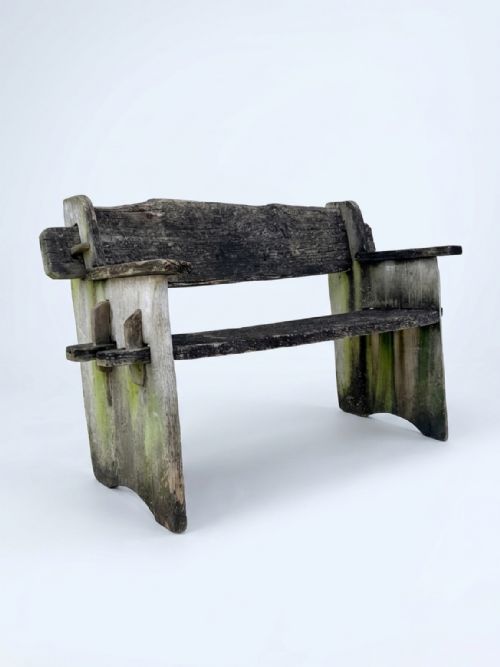
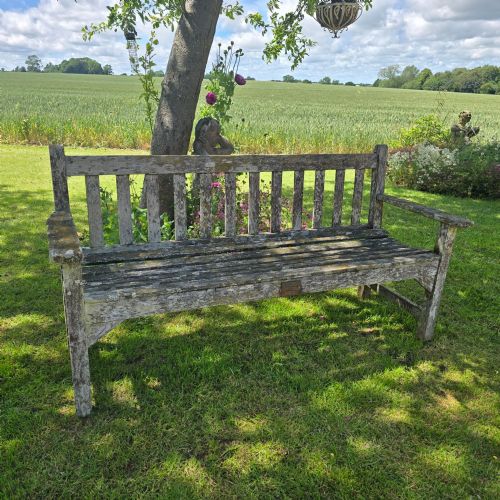
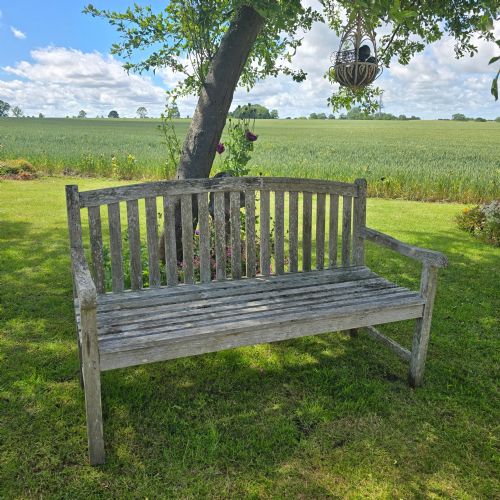
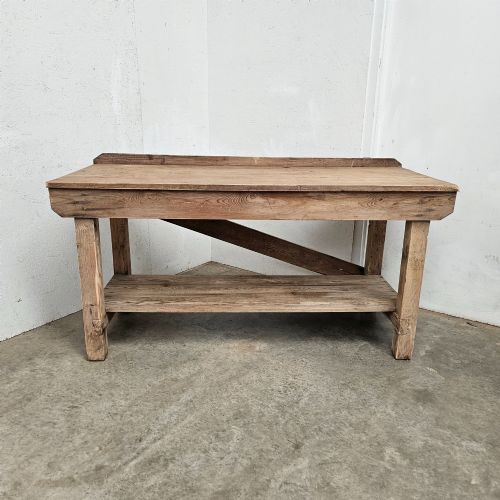
The selections on this page showcase classic English garden aesthetics, including Victorian, Edwardian, and rustic country styles. Forms range from straight slatted garden seats and strap-work designs to circular tree benches and occasional potting tables.
How they were made
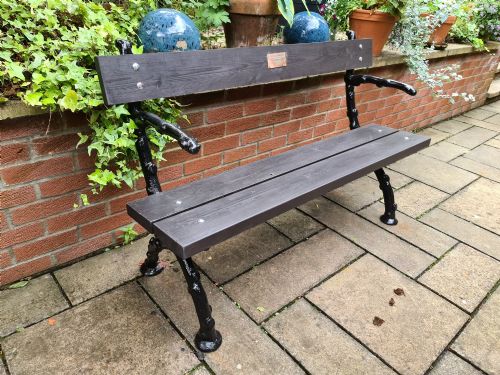
Construction relies heavily on durable hardwoods like teak and oak alongside softwoods such as pine and general timber for slats and frames. Many pieces utilise cast iron and wrought iron for structural ends, supports, and decorative strap-work.
Surfaces often show natural weathering, silvered patinas from age and exposure, or remnants of historic paint finishes. Joinery and metal assemblies bind timber components to heavy iron frameworks to create weight and stability.
Listings span from the 1850s to the 1930s, featuring sturdy teak, cast iron, and wrought iron across various English garden styles.
What varies in quality
Quality rests in the integrity of the original materials, particularly the density and deep weathering of old-growth teak or the intricacy of Victorian cast iron frames. Pieces that retain their structural balance and genuine age without excessive modern timber replacement stand higher in the range.
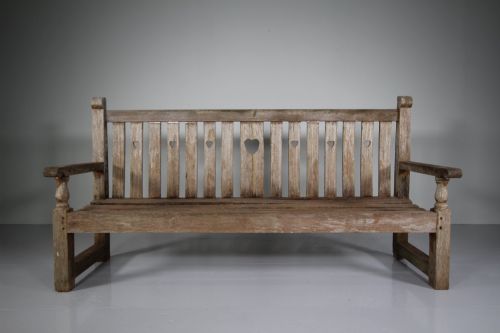
Design details also separate standard utilitarian seating from finer examples, such as heart motifs, strap-work patterns, or unusual forms like tree benches and orangery seats.
The Traditional Outdoor Bench Glossary
- Teak
- A dense, durable tropical hardwood prized for outdoor use due to its natural oils that resist moisture and decay. Over time, exposed teak develops a distinctive silvered grey patina.
- Cast Iron
- Molten iron poured into a mould to create rigid, ornate structural ends and bench supports. It provides the heavy weight necessary to keep garden seating firmly anchored.
- Wrought Iron
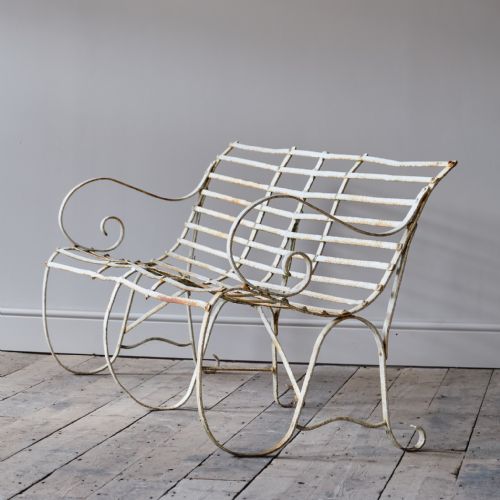
- Iron beaten and worked by hand into bars and strap-work for decorative and structural elements. This material offers flexibility and strength compared to brittle cast variants.
- Tree Bench
- A circular or polygonal garden seat built to encircle the trunk of a mature tree. This form allows seated occupants to face outwards while incorporating the natural landscape into the furniture.
Traditional Outdoor Bench: Frequently Asked Questions
How do I care for a weathered teak bench?
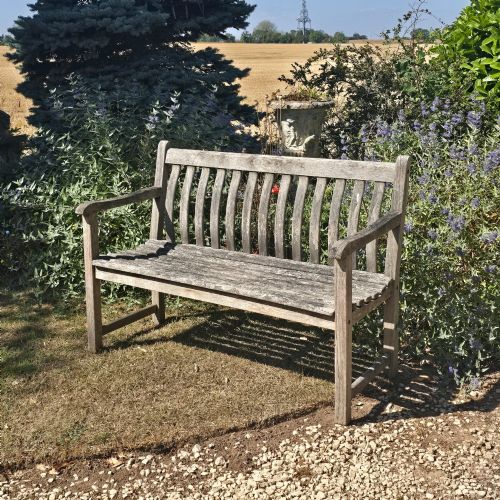
Weathered teak requires very little intervention, as the natural silvered patina protects the wood beneath from further sun and rain damage. Simply wash the surface occasionally with mild soapy water and a soft brush to remove accumulated dirt or moss.
Applying oils or sealants is optional and mostly serves to alter the colour back to a warmer brown hue, though this requires regular ongoing maintenance.
Can these benches stay outside all winter?
Traditional outdoor benches constructed from teak, cast iron, and treated timber are built to endure harsh outdoor conditions year-round. Their heavy construction prevents them from blowing over in strong winds, and durable materials handle damp winter weather effectively.
To prolong the life of timber pieces, raising the feet slightly off sodden ground during the coldest months prevents excessive moisture absorption.
How do I date an antique garden bench?
Dating relies on examining the materials, construction techniques, and stylistic clues inherent in the design, such as Victorian strap-work or Edwardian proportions. Heavy cast iron supports often bear registration numbers or maker details that help narrow down the period of manufacture.
Changes in timber technology and fastener types also provide reliable indicators of whether a piece dates to the mid-nineteenth century or the early twentieth century.
Are cast iron garden benches very heavy?
Cast iron and timber benches are exceptionally heavy due to the dense metal ends and solid wood slats used in their construction. This substantial weight makes them stable and secure when placed on lawns, gravel, or stone terraces.
Moving these benches usually requires two people to lift and shift them safely without damaging the legs or the ground underneath.