



Slanted Writing Box Oak
Slanted writing box oak pieces are sturdy wooden containers designed for correspondence, offering a sloping lid that provides a convenient surface for writing letters.
Slanted Writing Box Oak
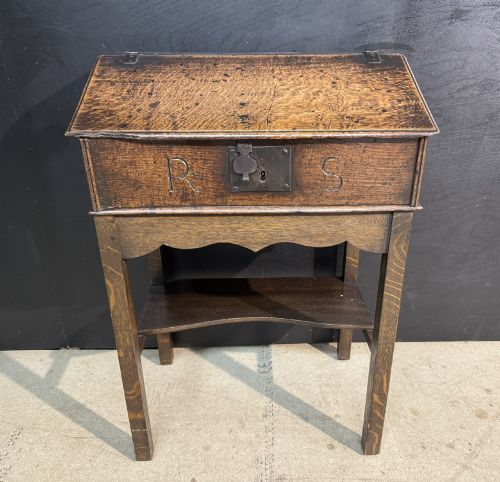
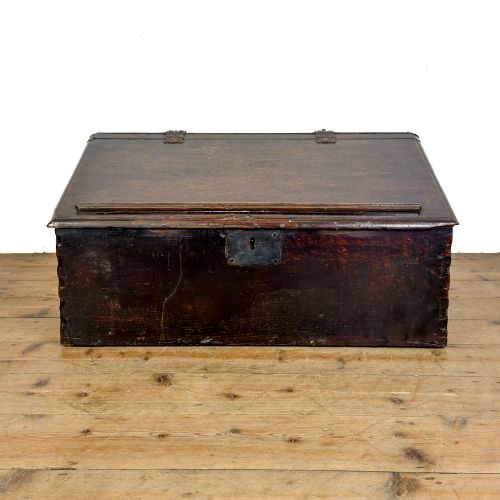
A slanted writing box oak piece is typically encountered as a desk box, bible box, or table top bureau originating from the seventeenth and eighteenth centuries, alongside later Victorian examples. These objects serve as portable or tabletop workspaces equipped with hinged, sloping lids designed to hold writing materials.
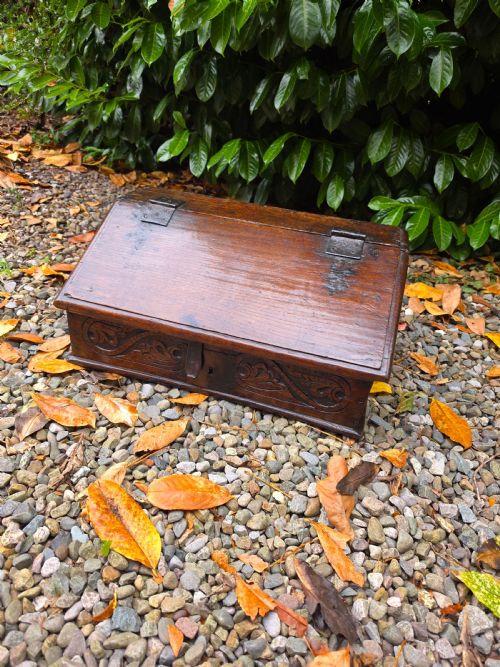
The selection spans robust early forms such as seventeenth-century Jacobean and Georgian vernacular pieces, as well as Victorian stationery cabinets and light oak writing boxes. Regional variations include Welsh examples, featuring initials, dates, or miniature proportions suited for domestic or ecclesiastical use.
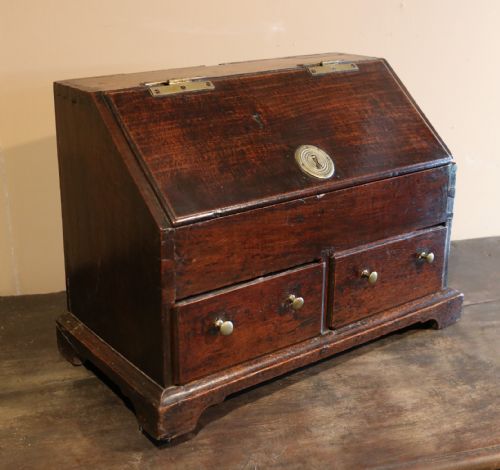
Buyers will find items ranging from simple seventeenth-century desk boxes to more elaborate William and Mary table top bureaux with fitted interiors. The forms bridge the gap between utilitarian storage and specialised furniture designed for correspondence.
Materials and construction
The primary material across these pieces is oak, frequently paired with secondary woods like elm, while hardware typically incorporates brass and iron for hinges, escutcheons, and locks. Paper and leather occasionally line the interior compartments or writing surfaces of later Victorian iterations.
Joinery methods reflect the period of manufacture, moving from seventeenth-century boarded and panelled construction to nineteenth-century cabinetry techniques. The combination of dense hardwoods and functional metalwork ensures the structural survival of these boxes over centuries.
Several boxes preserve the original owner's personal initials and specific dates carved directly into the oak by seventeenth-century hands.
Evaluating quality and condition
Quality in a slanted writing box oak piece rests on the integrity of the timber, the originality of the stands or mounts, and the crispness of any period carving or initials. Early seventeenth-century examples with untouched surfaces and original hardware sit at the higher end of the spectrum.
Later Victorian stationery cabinets and light oak boxes vary according to the complexity of their internal compartments and the presence of functional additions like adjustable dates. Alterations, such as nineteenth-century desks placed on later stands, distinguish vernacular conversions from unified period pieces.
The Slanted Writing Box Oak Glossary
- Bible box
- A hinged wooden box originally designed to hold sacred texts, frequently repurposed or constructed with a sloping lid to serve as a desk. These early pieces often feature carved fronts and sturdy oak construction.
- Table top bureau
- A small desk form featuring a sloping fall-front that opens to reveal internal drawers and pigeonholes. They sit directly upon tables or stands rather than resting on the floor.
- Vernacular
- Objects made by local craftsmen following regional traditions rather than high-style metropolitan designs. Georgian vernacular pieces often display straightforward construction and robust utility.
- Stationery cabinet
- A nineteenth-century desk accessory designed to hold paper, envelopes, and writing implements upright. These late Victorian versions often incorporate elaborate internal dividers and calendar mechanisms.
Slanted Writing Box Oak: Frequently Asked Questions
What is a slanted writing box oak used for?
These boxes were utilised for storing writing materials, documents, and paper while providing an angled surface for letter writing. Owners kept correspondence and valuables inside the enclosed compartment beneath the sloping lid.
In earlier centuries, similar boxes doubled as repositories for family Bibles or important records. Their portable nature allowed writers to move their workspace between rooms or tables.
How do I date an oak writing box?
Dating relies on examining the construction methods, hardware, and style of carving or moulding present on the wood. Seventeenth-century examples often display pegged joinery, heavy oak boards, and geometric mouldings.
Later Victorian pieces from the nineteenth century feature machine-sawn timber, different brass hinge types, and fitted stationery compartments. Initials and carved dates found on pieces can also provide a direct clue to their age.
Are these writing boxes portable?
Many of the earlier desk boxes and bible boxes were designed to be carried from room to room or transported during travel. Their compact dimensions allowed them to sit on any sturdy surface for writing.
Some examples later acquired stands, transforming them into stationary pieces of furniture rather than portable boxes. The presence of original carrying handles or side brackets indicates portability.