


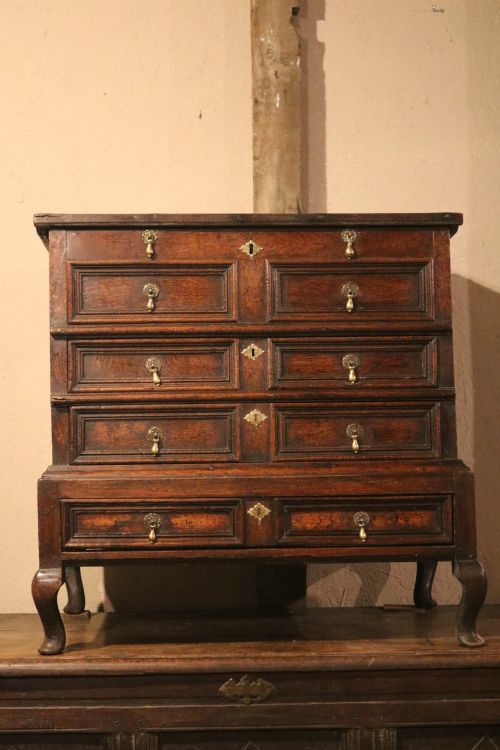


Small Oak Desktop Chest
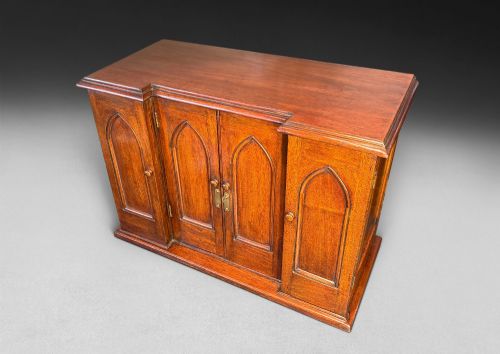
A small oak desktop chest is a compact piece of period furniture designed to hold letters, specimens, or valuables within easy reach.
Small Oak Desktop Chest
A small oak desktop chest brings traditional cabinet-making into a portable scale, functioning as a miniature bureau, collector cabinet, or specimen case. These pieces emerge from periods spanning the eighteenth, nineteenth, and early twentieth centuries, reflecting the domestic and professional needs of their eras.
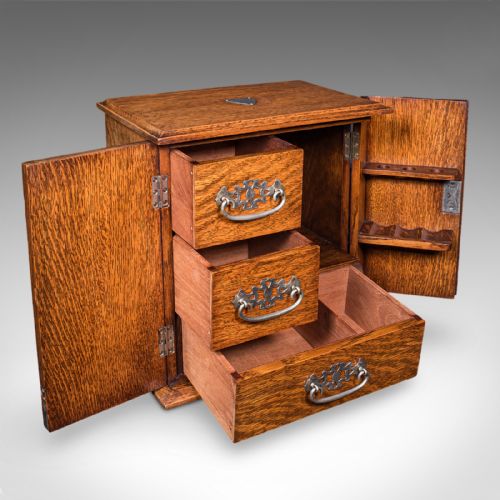
Makers designed these items for specific practical uses, from holding apothecary supplies and doctor's requisites to storing watchmaker components or legal papers. The surviving inventory shows regional variations, including Welsh oak tallboys and bureau forms alongside standard English tabletop boxes.
How they were made
Carpenters constructed these desktop pieces using solid timber, frequently selecting oak alongside burr oak, walnut, and inlaid woods for decorative effect. They joined the carcases with traditional woodworking joints to withstand daily desktop use.
Metal fittings in brass, iron, and glass provided structural security and operational hardware, including drop handles, escutcheons, locking mechanisms, and glazed doors. Makers often incorporated tambour shutters or sloped writing lids to enclose the interior compartments.
Surface finishes relied on polishing the natural timber grain rather than heavy paint, sometimes highlighting golden oak or figured sections through careful planing and assembly.
Several Victorian specimens still wait to sort your stray buttons with the same gravity they once afforded apothecary powders.
What varies in quality
The standard of a small oak desktop chest depends upon the precision of its joinery and the selection of the timber. Pieces featuring figured oak, burr oak panels, or intricate inlay demonstrate higher craftsmanship than utilitarian filing boxes.
Original hardware, including working locks with keys and matched brass drawer pulls, elevates the integrity of a piece. Altered interiors or replaced drawer linings alter the historic balance of the object.
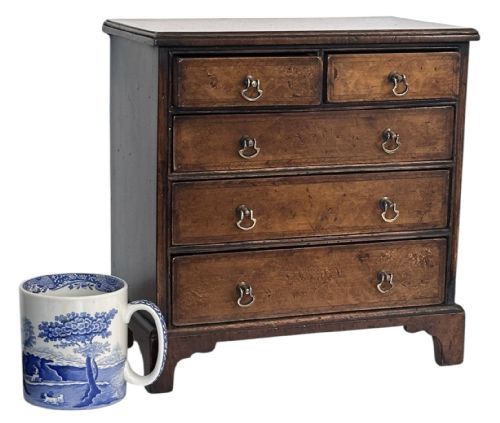
Proportion and scale distinguish fine miniature furniture from simpler utility boxes. Cabinet-makers who maintained correct architectural proportions on a small scale produced superior work that endures.
The Small Oak Desktop Chest Glossary
- Apprentice piece
- A small item of furniture demonstrated by a journeyman to prove skill before joining a trade guild.
- Collector cabinet
- A specialised piece containing multiple shallow drawers intended for organising specimens, coins, or geological samples.
- Humidor
- A desktop box lined to preserve humidity for cigars, often fitted with tight doors or a tambour shutter.
- Tallboy
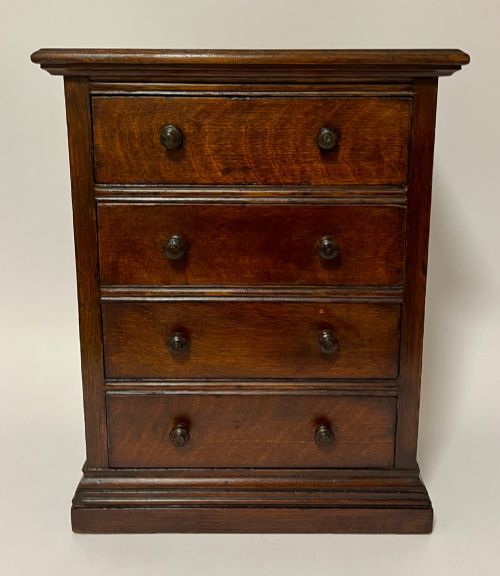
- A miniature chest featuring a tall stack of drawers, replicating full-size bedroom furniture in a table-top format.
- Tambour
- A flexible shutter formed of narrow vertical strips of wood glued to canvas, allowing curved closure on small cabinets.
Small Oak Desktop Chest: Frequently Asked Questions
What were small oak desktop chests used for?
These chests served various domestic and professional purposes, acting as desktop storage for correspondence, writing instruments, and ledgers. Professionals such as doctors and watchmakers utilised smaller compartmented versions for specialised instruments and components.
Collectors also employed them to house coins, stamps, and botanical specimens safely on a study table. Their enclosed drawers protected delicate items from dust and light.
How do I date an oak desktop chest?
Dating relies on observing construction methods, timber selection, and hardware styles across different periods. Eighteenth-century examples often feature hand-cut dovetails and regional Welsh or English stylistic traits, while Victorian and Edwardian pieces incorporate machine-sawn elements and different lock types.
Stylistic revivals like Gothic Revival or Arts and Crafts also provide clues through decorative carving and strapwork hinges. Comparing the drawer linings and backboards to known period standards helps narrow the decade.
Where should I place a desktop chest at home?
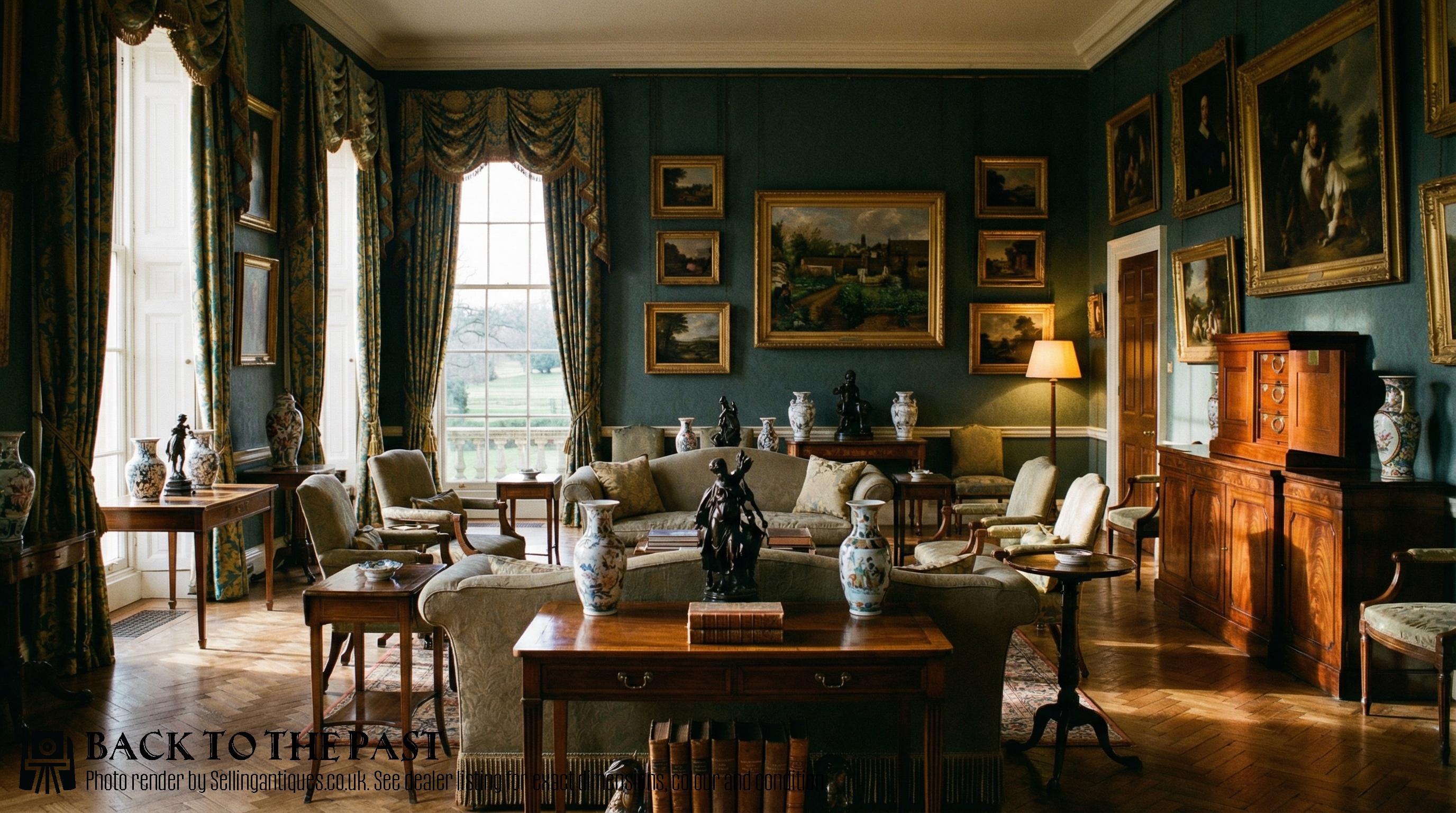
These pieces fit naturally upon desks, sideboards, or console tables where their proportions can be appreciated. They require a stable surface away from direct heat sources and strong sunlight to protect the oak timber and any historic polish.
Because they provide actual storage, placing them where you need to access small items makes them functional as well as decorative. The flat top surface can also serve to display small objects.
What is the difference between an apprentice piece and a miniature chest?
An apprentice piece represents a skilled demonstration item created under guild supervision to test a woodworker's mastery of scaling down full-sized joints. A miniature chest was typically produced for commercial sale to fit restricted spaces or serve as a salesman's sample.
Both share diminutive proportions, but apprentice pieces often display exceptional attention to difficult joinery details. Collectors evaluate both by the quality of timber and construction rather than strict origin.