


Oak Desktop Box
An oak desktop box provides sturdy organisation for correspondence and valuables, bringing traditional craftsmanship directly to the writing surface.
Oak Desktop Box
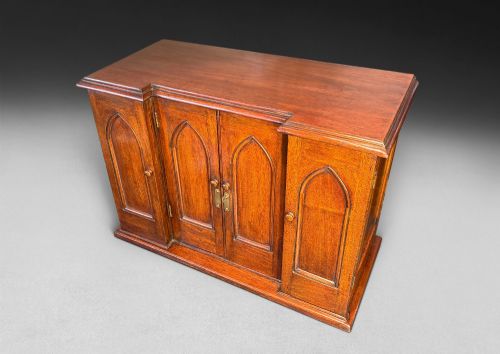
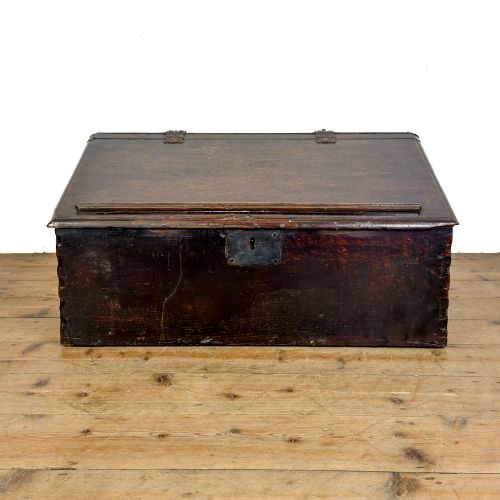
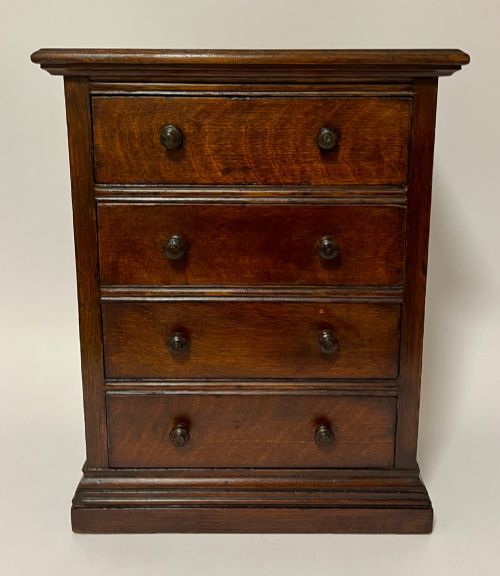
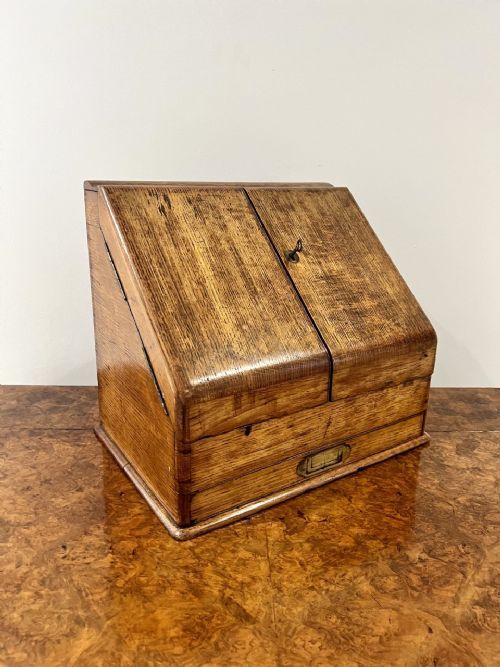
An oak desktop box encompasses functional desk accessories designed for period writing environments, ranging from simple Bible boxes to elaborate stationery cabinets and miniature chests of drawers. These pieces emerge predominantly from the eighteenth, nineteenth, and early twentieth centuries, spanning Georgian, Victorian, Edwardian, and Arts and Crafts aesthetics.
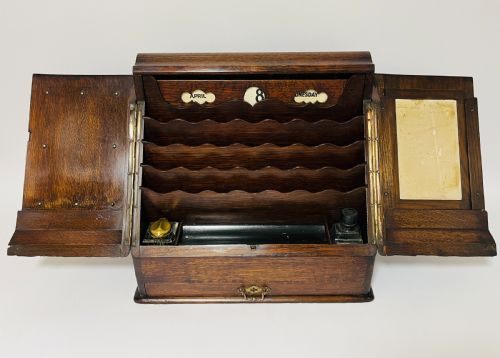
The most common formats encountered on this page include letter boxes, correspondence cabinets, and slope-front writing boxes. Makers constructed these items for domestic studies, country houses, and offices to store ink, paper, and small documents securely.
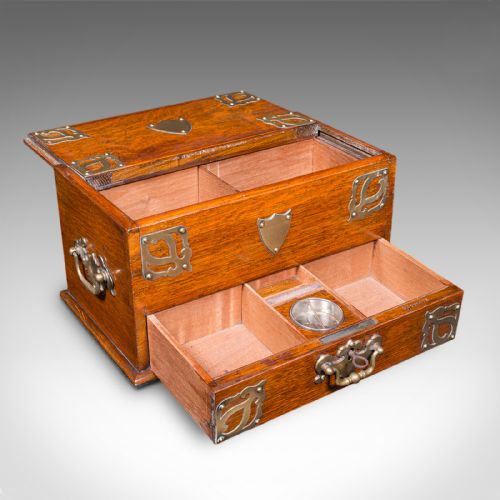
Specialised variations also appear in the record, such as watchmaker's cabinets, humidor cases, and apothecary or spice chests adapted for desktop use. Each style reflects the specific organisational needs of past writing and collecting practices.
Materials and Construction
Makers built these pieces primarily using solid oak and golden oak, occasionally incorporating decorative veneers such as pollard oak or burr oak alongside contrasting inlays like holly and bog oak. The choice of dense timber ensures structural longevity for items handled daily on writing desks.
Metal hardware plays a functional and structural role, with brass hinges, mounts, and lock escutcheons appearing frequently across the selection. Iron and copper elements also support the construction of handles, hinges, and internal locking mechanisms.
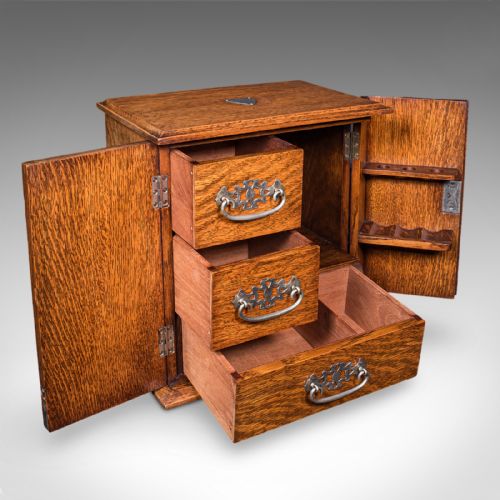
Joinery techniques range from exposed dovetails on eighteenth-century Bible boxes to applied carving and tambour doors on later Edwardian and Arts and Crafts examples. Interior fitments often include glass panels, adjustable dates, secret drawers, and fitted pigeonholes.
Several boxes conceal secret drawers behind hidden panels, designed to guard small treasures from curious household guests.
Craftsmanship and Proportion
The calibre of a piece depends heavily on the precision of its joinery and the selection of timber figures, where quartersawn oak grain and matched veneers elevate the visual impact. Superior examples display thoughtful proportions and integrated secondary timbers rather than hurried assembly.
Hardware execution marks another division in standard, distinguishing cast brass handles and operational locks with keys from plain replacement fittings. Original internal divisions and intact fitted interiors preserve the integrity of the design.
Manoah Rhodes & Sons Ltd
The Oak Desktop Box Glossary
- Bible box
- A sloping-lidded wooden box originally used to hold sacred texts and writing materials. These early forms often rest flat on a desk or table.
- Stationery cabinet
- An upright desktop piece with doors or a fall front concealing pigeonholes and slots for paper and envelopes. They gained popularity during the Victorian era.
- Apprentice piece
- A miniature item of furniture created by a craftsman to demonstrate mastery of skills before joining a trade guild. They show the same detail as full-scale furniture.
- Tambour
- A sliding door constructed from narrow strips of wood glued to a fabric backing. This mechanism allows access to compartments on curved or compact desk furniture.
- Escutcheon
- A protective plate surrounding a keyhole, usually fashioned from brass. It prevents the wood around the lock from splitting during regular use.
Oak Desktop Box: Frequently Asked Questions
What fits inside an oak desktop box?
These boxes accommodate modern stationery, letters, pens, and small collectables within their original compartments and drawers. Many feature designated slots for envelopes and paper.
Larger stationery cabinets and collector chests provide deeper space for documents, while smaller Bible boxes suit flat items and notebooks.
How do I maintain the finish?
Apply a traditional beeswax polish occasionally to nourish the oak and maintain a soft lustre. Avoid placing the box near direct heat sources to prevent the timber from warping.
Dust regularly with a soft cloth and keep brass hardware clean using appropriate non-abrasive methods.
How do I tell Victorian from Edwardian boxes?
Victorian pieces tend to feature heavier proportions, dark oak finishes, Gothic Revival motifs, or elaborate brass mounts. They often include traditional sloping lids and stationary slots.
Edwardian designs frequently display lighter golden oak, cleaner Arts and Crafts lines, or simpler geometric inlays reflecting changing domestic tastes.