
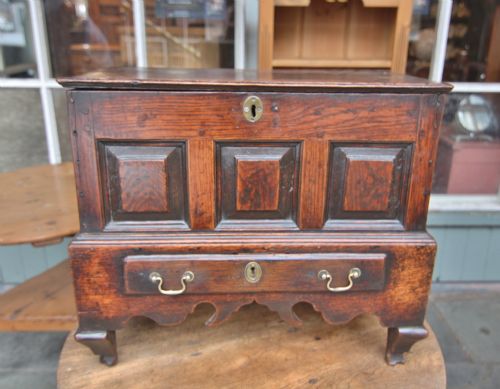
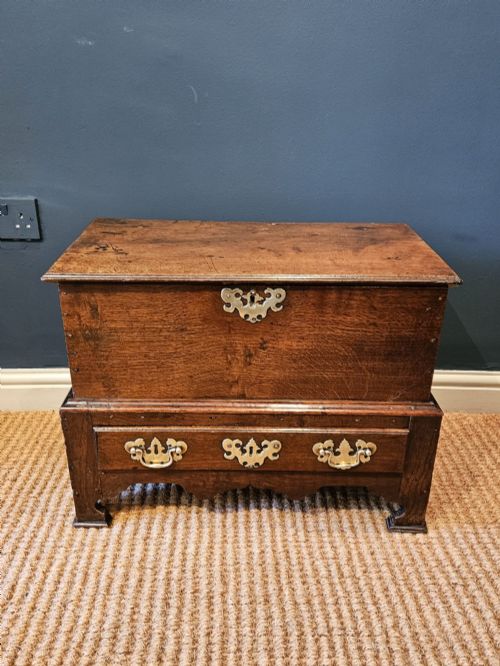


Miniature Oak Trunk
A miniature oak trunk represents the height of domestic craftsmanship, offering small-scale storage crafted from native timber during the eighteenth century.
Miniature Oak Trunk
The versions you are most likely to meet on this page span the Georgian period, dating from around seventeen hundred to the late seventeen hundreds. They typically feature hinged lids, boarded or panelled construction, and occasionally small drawer sections set into the base.
Makers produced these smaller chests using the same traditional joinery techniques as full-sized furniture, resulting in sturdy lidded boxes that served domestic utility and ceremonial gift-giving alike.
How they were made
Craftsmen built these small chests predominantly from native oak, utilising plank construction or frame-and-panel methods suited to miniature proportions. Workshops shaped the timber using hand saws and planes, leaving subtle tool marks visible on internal surfaces.
Iron and brass hardware, including hinges, strap work, and small locks, fastened the lids and secured the contents. Artisans frequently embellished the exterior surfaces with wood inlay, fruitwood details, and occasional bone accents to create contrasting geometric patterns.
Some miniature trunks feature hidden compartments cleverly built behind false drawer fronts to outsmart curious house guests.
What varies in quality
The standard of timber selection and decorative detail largely separates the finer examples from simpler vernacular work. Superior pieces exhibit carefully matched oak grain, finely executed inlay, and well-proportioned mouldings that reflect the maker's skill.
The integrity of the original hardware and the survival of interior compartments influence the overall character of a piece. Differences lie in the crispness of the joinery and the restraint or elaboration of the surface ornamentation.
The Miniature Oak Trunk Glossary
- Coffer bach
- A Welsh term translating to little coffer, denoting a small tabletop chest with a hinged lid often featuring drawers beneath. These pieces frequently served as marriage gifts or presentation items in rural communities.
- Mule chest
- A traditional storage chest fitted with one or more drawers in the base beneath the main compartment. Miniature versions replicate this functional layout on a reduced scale.
- Vernacular furniture
- Domestic pieces made by local craftsmen using regional traditions and readily available materials rather than following metropolitan stylistic dictates. This approach defines much of the eighteenth-century output.
- Fruitwood inlay
- The practice of inserting contrasting pieces of dense fruitwood into recesses cut into the primary oak surface. This technique created decorative borders and geometric motifs.
- Boarded construction
- A method of building boxes or chests by joining flat planks directly at the edges rather than using a separate frame and panel system. It represents an early and direct form of carpentry.
Miniature Oak Trunk: Frequently Asked Questions
What was a miniature oak trunk used for?
These small chests served domestic purposes for keeping precious documents, currency, and small personal valuables securely stored in the home.
Their tabletop scale allowed them to sit within easy reach in a parlour or bedroom, often functioning as portable repositories for family records.
How do you date an eighteenth century coffer bach?
Dating relies on examining the construction methods, nail types, hinge styles, and overall stylistic vernacular. Eighteenth-century examples display hand-cut joinery and aged timber patination distinctive to the period.
Changes in inlay patterns and drawer configurations from seventeen hundred to the end of the century also provide helpful chronological markers.
Where were most miniature oak trunks made?
The majority originate from Welsh regional workshops, where the tradition of the coffer bach flourished throughout the Georgian era. English makers also produced comparable miniature mule chests and desktop boxes.
Rural joiners adapted urban furniture styles to smaller dimensions using locally sourced timber.
How should I care for an antique oak box?
Maintain stable indoor humidity levels and keep the piece away from direct heat sources and strong sunlight to prevent timber movement. Periodic application of traditional wax polish helps nourish the historic wood surface.
Avoid using modern liquid cleaners that might penetrate open grain or strip the accumulated patination.