

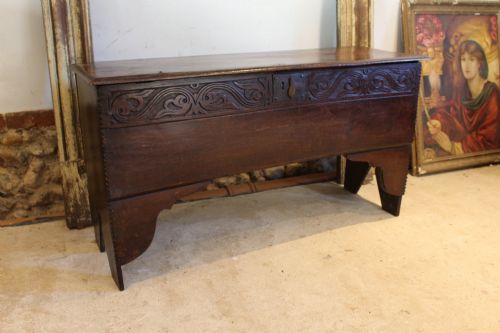


Six Plank Blanket Chest
These six plank blanket chest pieces are rugged early storage boxes built to last centuries, prized for their honest construction and deep historical character.
Six Plank Blanket Chest
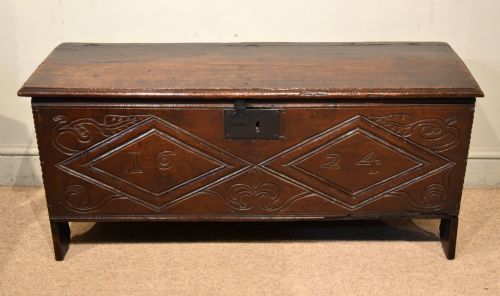
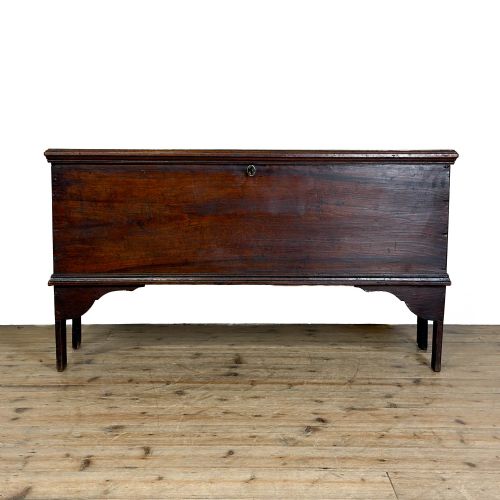
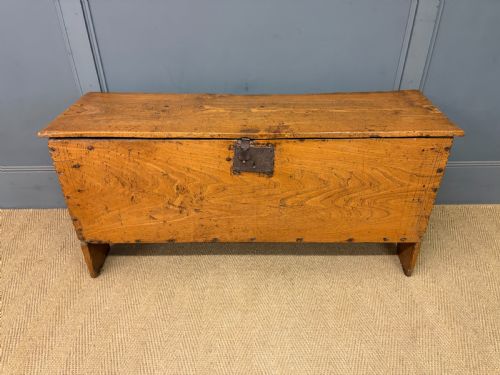
When you search for a six plank blanket chest, you encounter some of the earliest and most direct forms of vernacular furniture surviving today. These utilitarian boxes are constructed from single vertical planks forming the front, back, sides, bottom, and lid, held together with simple butt joints and often secured with original iron hardware.
You are most likely to meet seventeenth-century oak examples on this page, alongside regional elm variants from the eighteenth century. Makers built these chests for domestic storage, often placing them at the foot of beds or beside hearths for heavy woollens and linens.
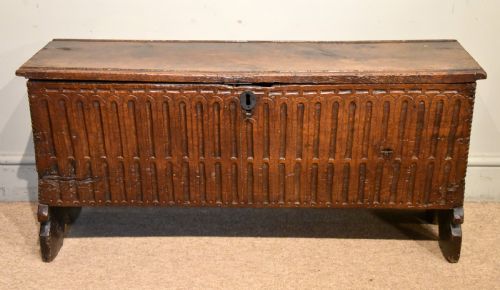
The aesthetic is resolutely functional, though occasional examples feature carved fluting, inlay, or regional quirks that reveal the hand of a country joiner. Their survival relies entirely on this robust plank construction, which required no complex joinery to endure generations of daily use.
How they were made
The primary material across these pieces is solid oak, supplemented by regional timbers like elm and pollard oak in vernacular works. Timbers were split or sawn straight from the log rather than milled to thin boards, giving each plank a thick, substantial weight.
Construction relies on edge-to-edge nailing, dowelling, or dovetailing at the corners, frequently reinforced with heavy wrought iron strap hinges and matching lock plates. Surfaces finished by hand-adzing or plane left subtle tool marks that remain visible across the wood grain today.
Six Plank Blanket Chest Retail Price Guide 2026
Typical asking prices for six plank blanket chest among the pieces listed under this phrase on Sellingantiques today, from the lower quarter to the upper quarter. They describe what is for sale here now, not the wider market.
Early Welsh joiners occasionally utilised local elm because stubborn cross-grains made it wonderfully resistant to the village carpenter's clumsy apprentice.
What varies in quality
The distinction between a standard utility box and a finer survival rests on timber selection and the retention of original structural elements. Thicker planks, undisturbed surface patina, and untouched wrought iron hinges elevate an example above one with replaced boards or modern fixings.
Proportion and regional character also dictate distinction, as West Country and Welsh pieces demonstrate local vernacular traditions that depart from standard metropolitan joinery. The presence of period surface treatments, such as early wax or dry historic polish, preserves the visual depth that collectors value.
Jack Grimble
The Six Plank Blanket Chest Glossary
- Six plank construction
- A method of building a box using six flat boards joined directly at the edges without internal framing. This technique represents the earliest and most straightforward form of chest building.
- Coffer
- A heavy wooden chest traditionally used for storing valuables, documents, or textiles. The term often interchanges with blanket chest or trunk in early inventories.
- Vernacular furniture
- Domestic pieces made by local craftsmen for everyday regional use rather than high-style workshop production. These items often display idiosyncratic local construction methods and native timbers.
- Wrought iron
- Iron beaten into shape by hand while hot, producing a textured surface with slight irregularities. It appears on these chests in the form of strap hinges, brackets, and hasps.
- Pollard oak
- Timber taken from an oak tree that has been pruned at a height above animal browsing, producing dense wood with unusual grain patterns. It provides a highly decorative surface on specific later revival pieces.
Six Plank Blanket Chest: Frequently Asked Questions
What is a six plank blanket chest?
It is a simple storage box constructed from six individual boards joined at right angles to form the body and lid. These chests represent early domestic furniture made before complex framing techniques became standard.
Craftsmen built them primarily to hold textiles, blankets, and household valuables securely near the floor.
How old are these chests usually?
The examples on this page span from the sixteenth century through the seventeenth and eighteenth centuries, with occasional later vernacular revivals. Early pieces show the marks of hand-riving and simple ironwork typical of the Tudor and Stuart periods.
Later regional variants continue these traditional forms well into the Georgian era and beyond.
Where were these placed in a home?
Historical domestic settings placed these chests in bedchambers for heavy woollen blankets or in main living spaces as seating and table surfaces. Their sturdy construction allowed them to double as benches when closed.
They sat directly on floorboards or stone flags near hearths to keep textiles dry.
How do I care for antique oak?
Maintain a stable room temperature away from direct heat sources and strong sunlight to prevent the timber from splitting. Apply a traditional beeswax polish occasionally to nourish the dry wood surface.
Avoid modern liquid cleaners that can strip the historic patina accumulated over centuries.