




Six Drawer Table
A six drawer table brings practical work-surface space and generous storage together in one piece, spanning refined library desks and robust farmhouse designs.
Six Drawer Table
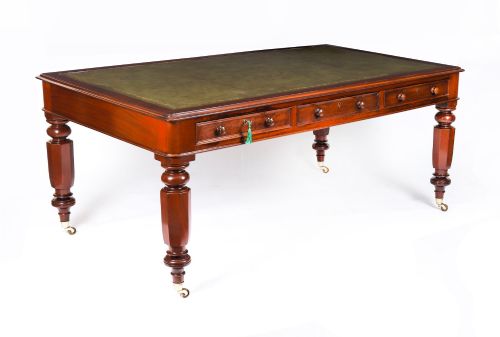
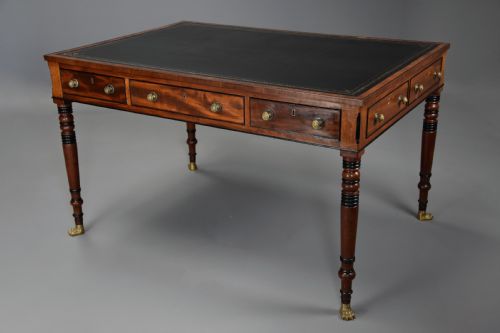
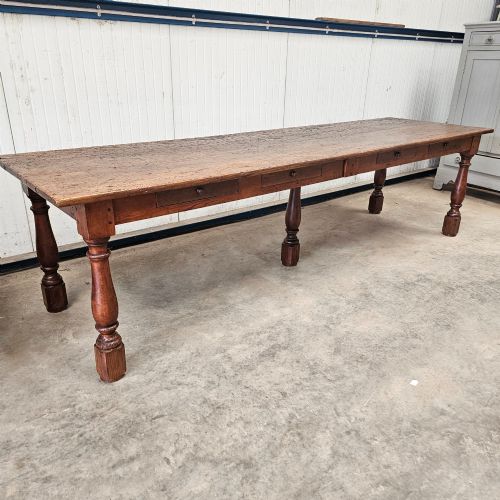
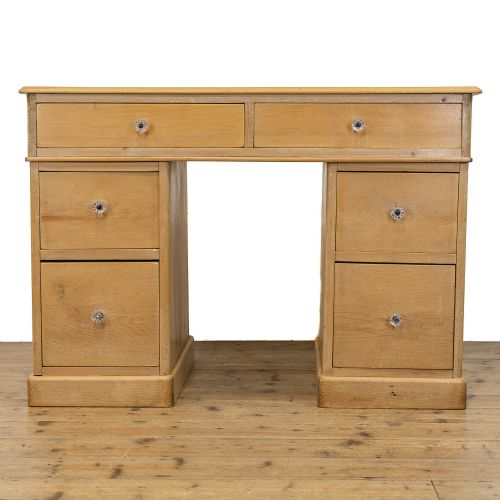
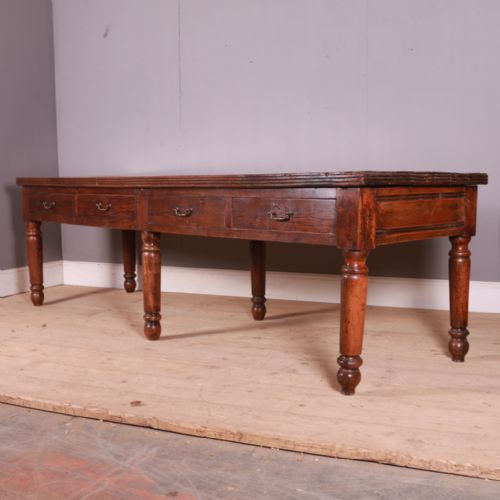
A six drawer table combines surface workspace with banks of drawers, appearing in forms such as partners writing library tables, kneehole desks, side cabinets, and farmhouse tables. When searching for a six drawer table, buyers most frequently encounter 19th-century and Regency mahogany library pieces alongside oak and pine country examples.
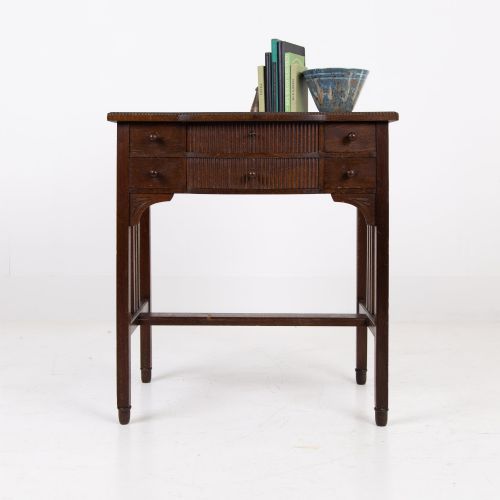
The evidence shows these tables crossing multiple domestic and study settings, from large dining and kitchen preparations to dedicated writing desks. Period pieces range from formal Regency and William IV mahogany library tables to 1930s modernist oak designs and rustic farmhouse variants.
How they were made
Cabinetmakers built these tables using primary hardwoods like mahogany, oak, cherrywood, and chestnut, paired with secondary timbers such as pine for internal drawer construction. Brass hardware, including handles and key escutcheons, provides functional and decorative accents across the drawer fronts.
Surfaces frequently incorporate inset leather writing pads on desk and library variants, while kitchen and farmhouse versions rely on thick timber tops joined for heavy daily use.
Several partners tables retain their original matching sets of working brass locks, suggesting centuries of confidential correspondence.
What varies in quality
The distinction between standard examples and the finest pieces rests upon the choice of timber figure, such as faded mahogany or well-grained oak, and the crispness of construction detail. Superior tables display balanced proportions, integrated drawer linings, and original brass fittings that complement the overall age of the wood.
Patina dictates much of the visual appeal, where decades of handling leave a soft sheen on the timber, contrasting with utilitarian or later pieces that lack the depth of surface wear seen on Regency and 19th-century library tables.
The Six Drawer Table Glossary
- Partners desk
- A large double-sided writing table designed for two people to work opposite each other, featuring banks of drawers on both sides.
- Library table
- A large freestanding table used primarily for reading and writing, often finished on all four sides with panelled or dummy drawers.
- Patina
- The surface sheen and mellowing developed by wood and leather over years of use and exposure to light.
- Kneehole desk
- A desk featuring a central recess for the user's legs, flanked by two vertical banks of drawers.
- Regency
- A British architectural and decorative style spanning the early 19th century, known for classical restraint and elegant proportions.
Six Drawer Table: Frequently Asked Questions
Where did six drawer tables get used?
These tables served in grand libraries, studies, and administrative offices as partners desks, or functioned in large country kitchens and farmhouses for daily preparation work.
Their substantial storage made them ideal for working environments that required multiple people to access documents or utensils simultaneously.
How do I identify a Regency library table?
Regency library tables typically feature rich mahogany timber, elegant turned or reeded legs, and drawers configured for dual-sided access.
They display classical proportions and fine brass hardware characteristic of the early 19th century.
Can these tables be used for dining?
Certain forms like oak farmhouse and refectory tables offer the length and knee clearance needed for seating diners comfortably.
Library tables and partners desks are generally too deep or feature central drawer pedestals that restrict legroom for dining chairs.
What woods were used in these tables?
Mahogany dominates the formal library and partners desks from the Regency and Victorian periods, while oak, pine, and chestnut appear frequently in farmhouse and country pieces.
Cherrywood and modern oak also feature in specific 20th-century and Edwardian examples.
How do I care for the leather top?
Leather inserts benefit from occasional cleaning with a damp cloth followed by a neutral leather cream to maintain flexibility.
Avoid placing hot cups or liquids directly onto the leather surface to prevent staining and drying.