


Six Drawer Cabinet
A six drawer cabinet brings practical storage to a room, appearing in forms from tall Wellington chests to compact collectors' pieces.
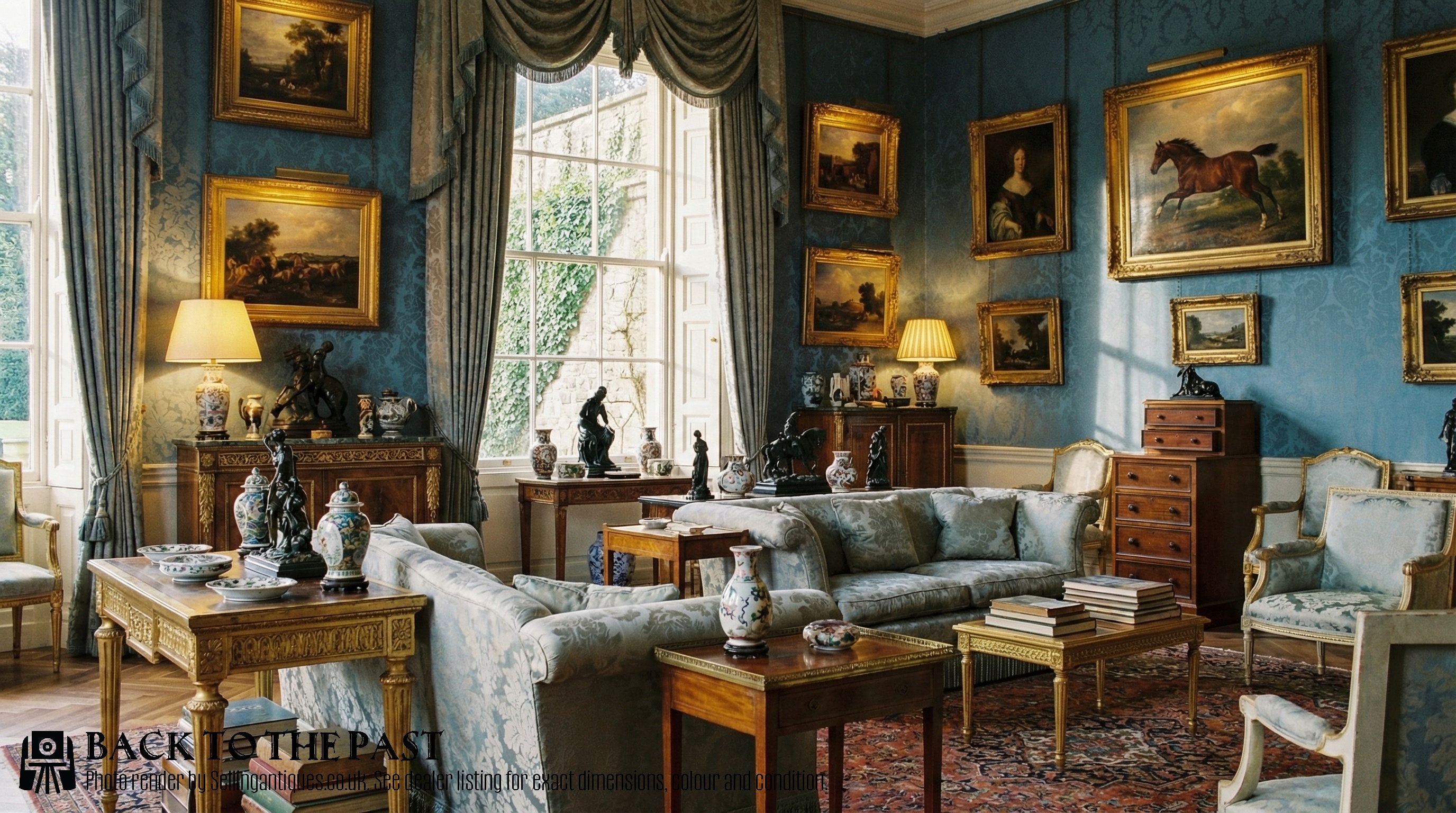
Six Drawer Cabinet
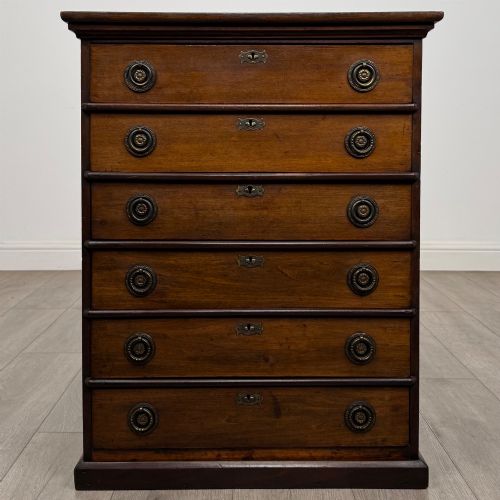
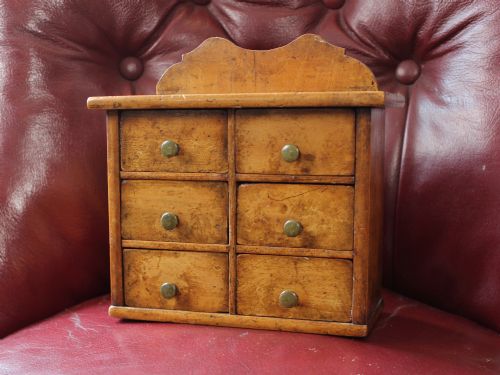
A six drawer cabinet offers tall or compact storage configurations across various historical periods, serving purposes from general clothes storage to specialised collection housing. Buyers searching for a six drawer cabinet encounter items ranging from standard bedroom chests to narrow Wellington designs and small spice drawers.
Victorian and Edwardian examples dominate the selection, frequently constructed in mahogany, pine, or walnut. Alongside traditional chests of drawers, the evidence records specialised forms such as glass-fronted collectors' cabinets, tallboys, and office filing cabinets.
Materials and construction
Timbers such as mahogany, walnut, pine, and fruitwood form the primary structure of these pieces, often enhanced with satinwood, burr walnut, or marquetry inlay. Cabinet makers utilised solid woods and veneers to create robust frames capable of supporting six stacked compartments.
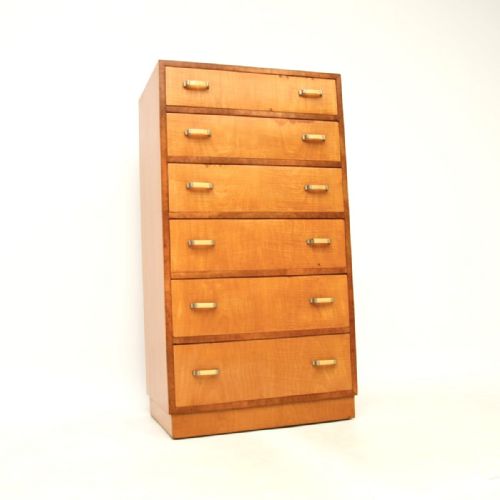
Listings feature items from the 18th, 19th, and 20th centuries, spanning Victorian, Edwardian, Art Deco, and Queen Anne styles in woods including mahogany, pine, and walnut.
Distinctions in quality
Construction details such as drawer depth, original brass fittings, and specialised locking mechanisms on Wellington chests elevate certain items. The presence of maker attribution and intact glass doors further separates standard domestic furniture from high-grade cabinets.
James Gardner
The Six Drawer Cabinet Glossary
- Wellington chest
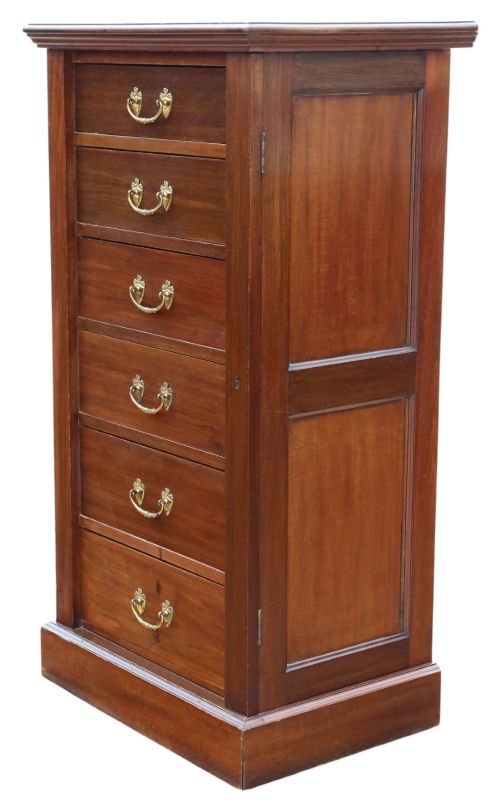
- A tall, narrow chest of drawers typically secured by a hinged locking side pilaster. This form usually comprises six or seven graduated drawers.
- Tallboy
- A tall chest of drawers traditionally made by stacking one cabinet section on top of another. Examples in the record include Dutch marquetry and painted variants.
- Collectors chest
- A specialised cabinet featuring multiple shallow or deep drawers designed to store specimens, coins, or small objects. These often include glass fronts or fitted interiors.
- Marquetry
- The art and craft of applying decorative veneer pieces to a structure to form intricate designs. 18th century Dutch pieces frequently display this technique.
- Bow-front
- A convex curved cabinet front that projects outward in the centre. This curved facade appears on Edwardian mahogany examples.
Six Drawer Cabinet: Frequently Asked Questions
What is a Wellington chest?
A Wellington chest is a tall, narrow style of six drawer cabinet featuring a hinged wooden locking bar on one side. This bar secures all the drawers simultaneously when locked with a key.
Originating in the 19th century, this locking mechanism kept private papers or valuable items secure in a compact footprint.
How were collectors cabinets used?
Collectors cabinets housed natural history specimens, coins, medals, or small antiquities within their multiple drawers. The deep drawers provided secure storage for delicate items.
Many featured glass-fronted doors to display contents while protecting them from dust.
What woods were used for these cabinets?
Cabinet makers utilised a variety of timbers depending on the period and intended use. Mahogany and walnut appear frequently in fine furniture, while pine served for utility and country pieces.
More decorative items incorporated satinwood, fruitwood, burr walnut, and intricate marquetry veneers.
How do I date an antique cabinet?
Dating relies on stylistic clues, construction methods, and the timber choices characteristic of specific eras like the Victorian or Edwardian periods. Architectural details and hardware also indicate age.
Makers' marks or stamps, when present, provide definitive dates or workshop attributions.