


Six Arm Gilt Chandelier
A six arm gilt chandelier brings brilliant illumination and stately presence to a room, cast in gleaming metal and crystal.
Six Arm Gilt Chandelier
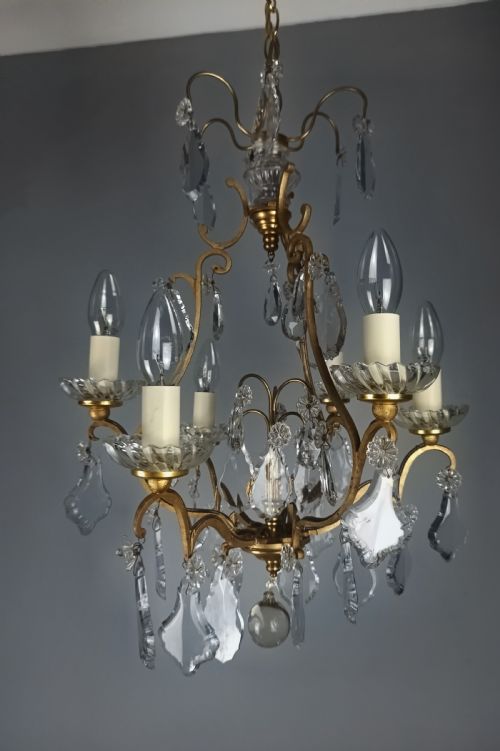
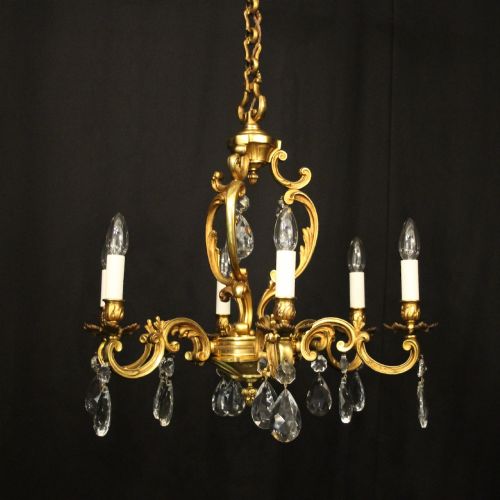
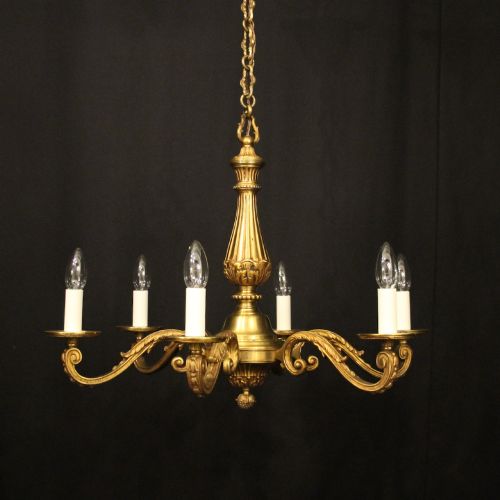
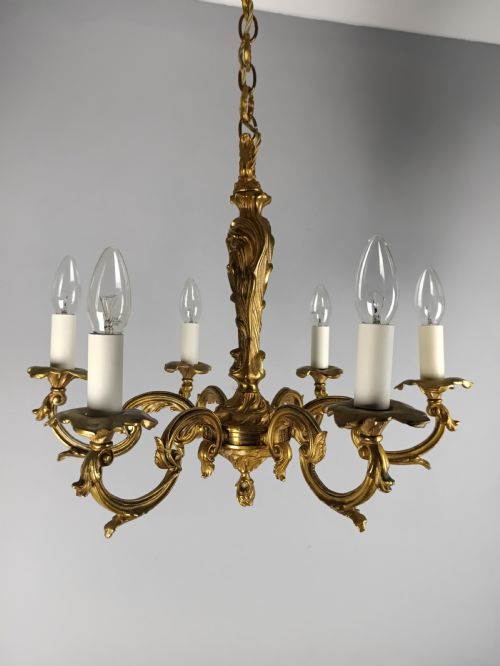
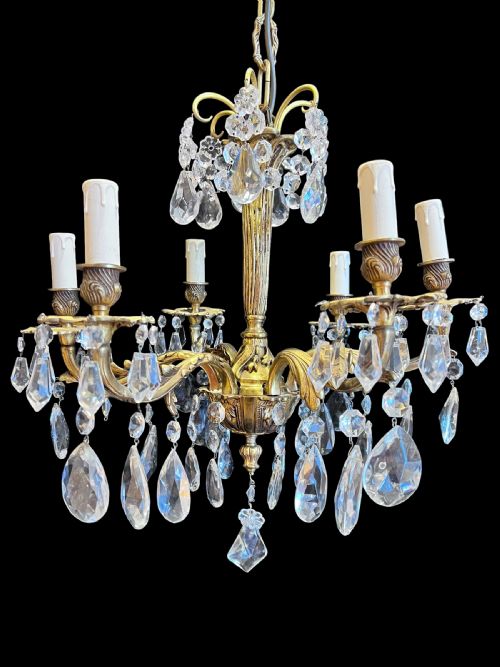
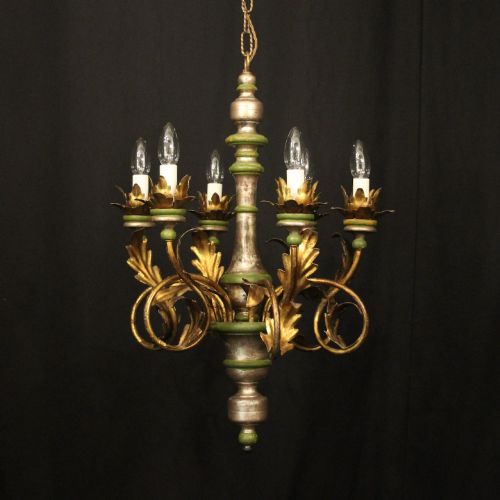
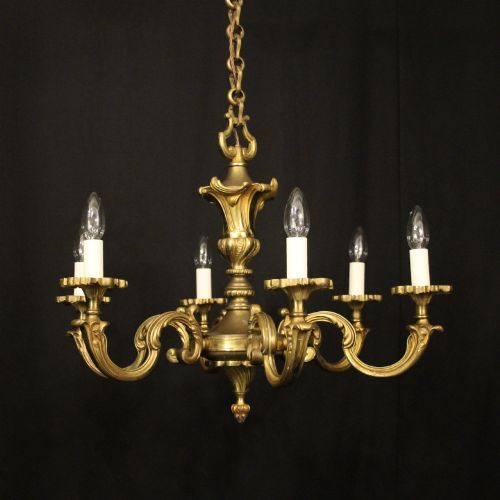
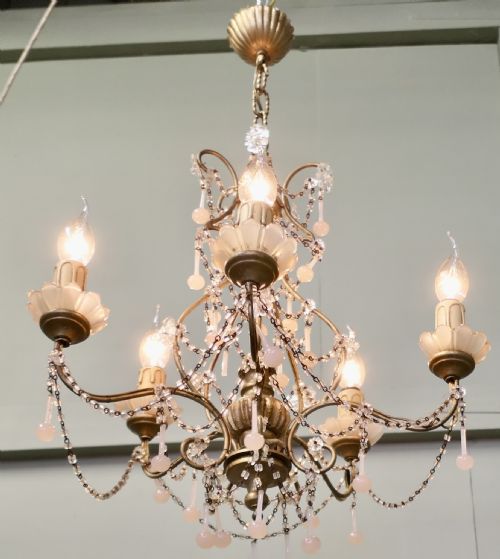
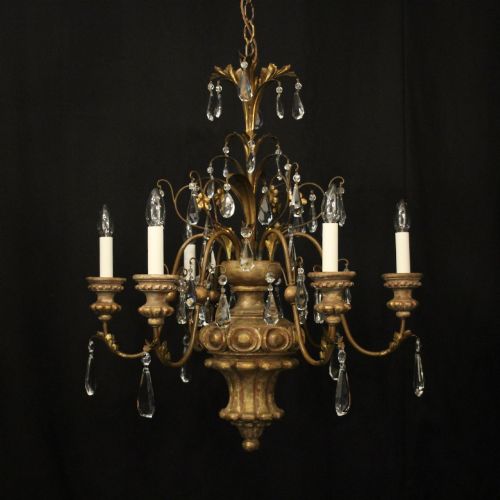
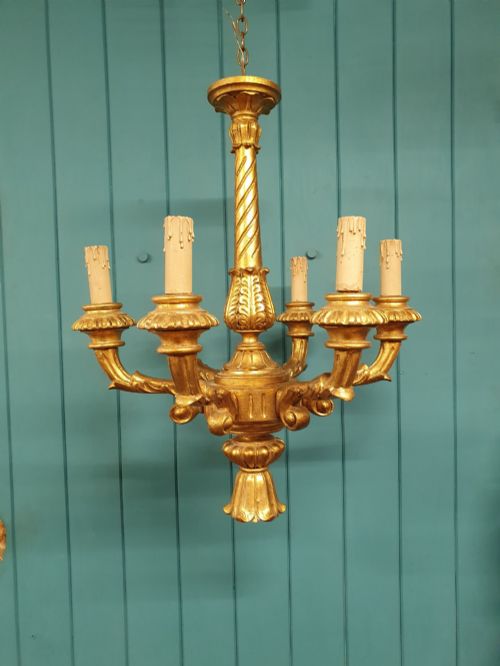
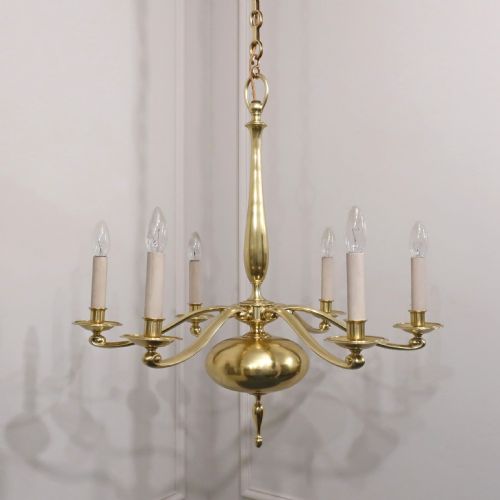
A six arm gilt chandelier is a grand overhead light fixture designed with six branches and a gilded surface finish. When searching for a six arm gilt chandelier, buyers encounter pieces spanning from the nineteenth century through the early decades of the twentieth century. These fixtures emerge predominantly from French and Italian workshops, adopting styles such as French Empire, Rococo, and Florentine Baroque.
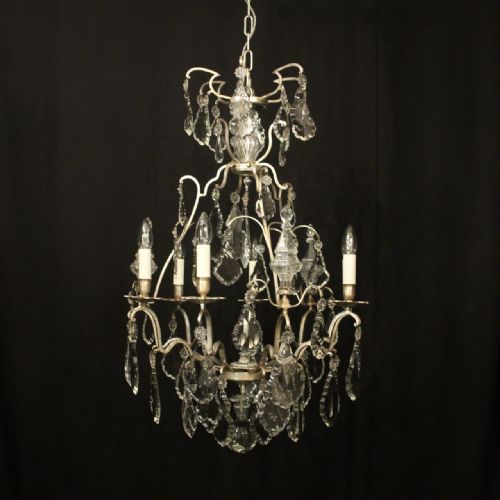
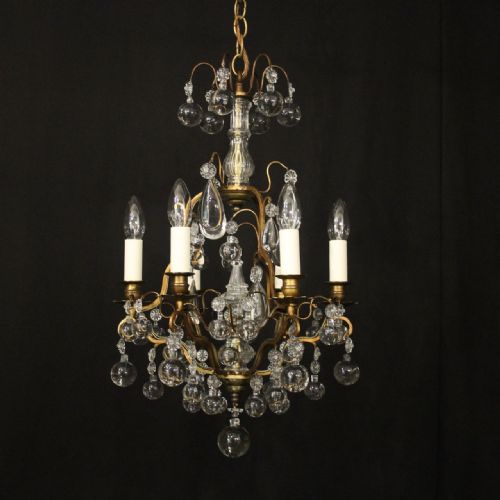
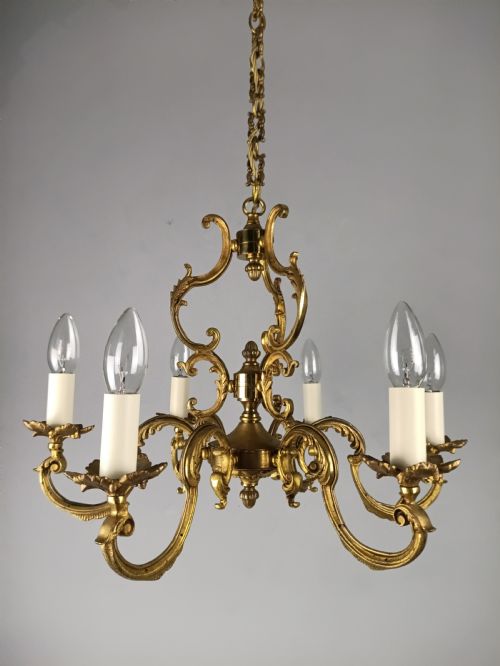
The most common examples on this page are French pieces rendered in gilded bronze, ormolu, and brass, often accented with sparkling crystal drops or birdcage frames. Alongside these, Italian Florentine giltwood and wrought iron variants appear, demonstrating regional decorative tastes. Each piece provides six distinct points of light, creating an expansive glow suited to principal reception rooms.
Materials and construction
Craftsmen built these fixtures using sturdy base metals including cast bronze, brass, wrought iron, and gesso over wood. These structural components received surface treatments of gold leaf, gilding, or ormolu to achieve a brilliant metallic sheen. Artisans then joined the arms centrally, integrating internal wiring where updated or mounting candle-form drip pans.
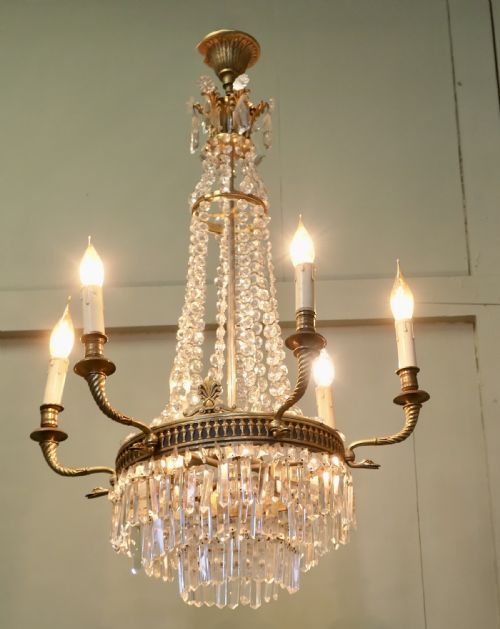
Many examples incorporate transparent elements such as glass and crystal drops, arranged in tent and waterfall configurations or suspended as pendants. Italian workshops utilised carved giltwood and gilt framing, while Venetian pieces integrated coloured glass elements. The combination of heavy cast metal frames and delicate crystal droplets defines the physical construction of these chandeliers.
Six Arm Gilt Chandelier Retail Price Guide 2026
Typical asking prices for six arm gilt chandelier among the pieces listed under this phrase on Sellingantiques today, from the lower quarter to the upper quarter. They describe what is for sale here now, not the wider market.
The listings span the nineteenth century, 1900, 1910, 1920, and 1930, capturing decades of decorative metalwork.
Assessing quality and craftsmanship
The refinement of the casting and carving separates standard production from exceptional work. Finer pieces display crisp, deeply chased details in the bronze or ormolu, whereas simpler items rely on smoother brass or basic pressed metal forms. Hand-carved giltwood and intricate gesso work on Florentine and Victorian examples indicate higher artisan input.
The integration and quality of the hanging elements also dictate the tier of the piece. Superior examples utilise high-clarity cut crystal drops that refract light cleanly, sometimes featuring coloured fruits or elaborate birdcage frames. The weight and rigidity of the central frame further separate robustly constructed fixtures from lighter alternatives.
G.E.C
The Six Arm Gilt Chandelier Glossary
- Ormolu
- A finely ground high-carat gold amalgam applied to a bronze base, creating a rich golden surface finish. This technique was widely utilised by French makers for decorative metalwork.
- Giltwood
- Timber that has been coated with a thin layer of gold leaf, frequently employed in Italian Florentine and Victorian framing. It provides a warm, textured metallic appearance.
- Tent and waterfall
- A chandelier configuration where upper crystal strands form a tent shape above a cascading arrangement of drops. This design maximises light refraction across the room.
- Birdcage
- An open wirework framework of metal that structures the central body of a chandelier, often embellished with crystal garlands. This form is characteristic of specific French lighting designs.
- Gesso
- A plaster-like mixture applied to wood surfaces as a base for gilding, allowing for intricate moulded relief details. It is commonly found on nineteenth-century giltwood fixtures.
Six Arm Gilt Chandelier: Frequently Asked Questions
How do I clean a crystal chandelier?
Dust the fixture gently with a soft feather duster or microfibre cloth to remove loose particles. For a deeper clean, apply a mild soapy solution to a cloth and wipe each crystal component by hand.
Avoid spraying liquids directly onto the metal frame or electrical components to protect the gilding and wiring. Allow all parts to dry completely before restoring power to the light.
What ceiling height do I need?
These chandeliers require adequate vertical space to hang safely and look properly proportioned within a room. Standard installation usually places the bottom of the fixture at least seven feet above the floor.
High ceilings in nineteenth-century and early twentieth-century properties accommodate the hanging drop length of tent and waterfall designs. Measure the drop of the specific fixture against your room dimensions prior to purchase.
How do I date an antique chandelier?
Dating relies on stylistic markers, manufacturing techniques, and the specific metal alloys employed. Pieces from the nineteenth century often feature heavy cast bronze and hand-chased details, whereas 1920s and 1930s examples may incorporate brass, art deco coloured glass, or distinct wrought iron elements.
Examining the construction of the arms, fixings, and any maker stamps provides further chronological context. Comparing the decorative vocabulary to known period styles helps narrow the manufacturing decade.