

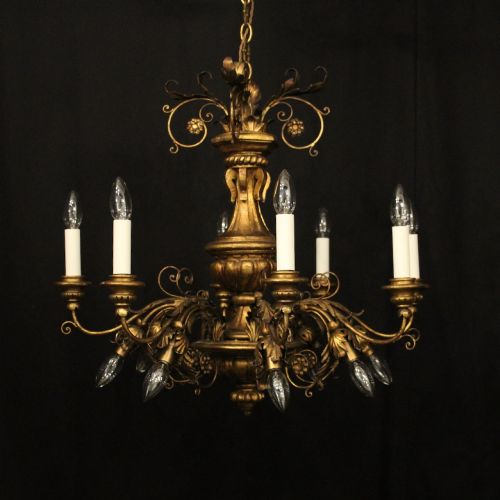
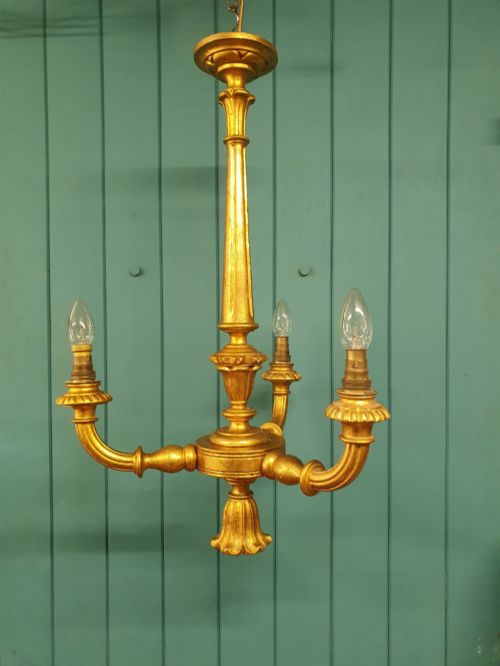
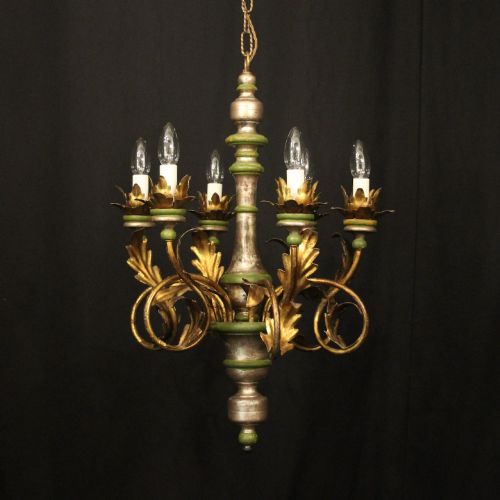
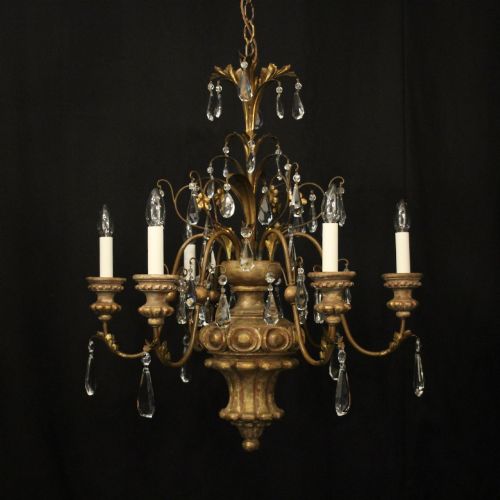
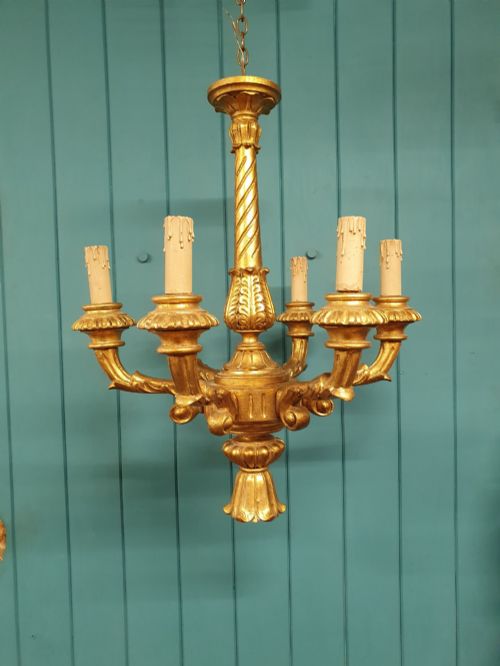


Gold Giltwood Chandelier
These gold giltwood chandelier pieces bring grand illumination and classical warmth to a room, offering substantial historic presence through carved timber and metallic leaf.
Gold Giltwood Chandelier
A gold giltwood chandelier is a hanging light fitting defined by a carved wooden core finished with metallic leaf or gesso. When searching for a gold giltwood chandelier, buyers encounter examples ranging from compact domestic fixtures to large multi-arm statement pieces.
The selection includes items spanning the eighteenth century through to the early twentieth century. Florentine designs and Italian interpretations appear frequently alongside French chateau and Victorian styles.
Most pieces on offer utilise multiple light branches or candle arms, though hanging lantern forms also exist. Dating runs from eighteenth-century origins to Edwardian and nineteen-thirties revivals.
Materials and construction
Carved wood provides the structural base for these fittings, shaped into scrolling arms, floral motifs, and architectural profiles. Gesso often serves as a smooth preparation layer applied directly to the timber before gilding.
Gold leaf is then laid over the prepared surface to create a brilliant reflective finish that catches candlelight and electric illumination alike. Secondary materials such as wrought iron, glass, and painted elements appear on specific structural and decorative components.
Gold Giltwood Chandelier Retail Price Guide 2026
Typical asking prices for gold giltwood chandelier among the pieces listed under this phrase on Sellingantiques today, from the lower quarter to the upper quarter. They describe what is for sale here now, not the wider market.
Even the dark side of a room gets lucky when an ebonised giltwood arm catches the flicker of an evening candle.
Assessing quality and craftsmanship
The refinement of the carving dictates much of the visual character, distinguishing fluid, deeply undercut foliage from simpler moulded or block-cut shapes. Hand-carved detail displays crisp edges and organic asymmetry that machine-produced work lacks.
The application and survival of the gold leaf layer also determine overall merit. Intact, burnished leaf with natural ageing reads very differently from flat, modern overpainting.
The Gold Giltwood Chandelier Glossary
- Giltwood
- Wood that has been decorated with gold leaf or powder. This surface finish gives the chandelier its bright, reflective quality.
- Gesso
- A plaster-like mixture applied to wood as a base for gilding. It provides a smooth surface for laying gold leaf.
- Pricket candle chandelier
- A lighting fixture that supports candles on upward-pointing metal spikes rather than in sockets. These designs often reference earlier ecclesiastical lighting forms.
- Florentine style
- An aesthetic originating in Florence characterised by ornate carved scrollwork and classical Italian motifs. Many chandeliers in this tradition feature multiple light arms.
- Ebonised
- Wood finished to resemble ebony through dark staining or painting. This treatment creates a high-contrast pairing alongside gold giltwork.
Gold Giltwood Chandelier: Frequently Asked Questions
What rooms suit a giltwood chandelier?
These decorative fixtures work well in dining rooms, high-ceilinged reception spaces, and grand hallways where their scale can be appreciated. The reflective gold surface helps brighten darker corners by bouncing ambient light around the space.
Parks and period properties complement the traditional aesthetic, though modern interiors often use them as a striking focal point. Proportion remains the primary consideration when matching a fixture to room dimensions.
How do I clean a giltwood chandelier?
Dusting requires a soft, dry brush or feather duster used gently across the carved surfaces to avoid disturbing fragile leaf. Moisture should be kept away from the gilding to prevent lifting or water spotting.
Harsh chemical cleaners must be avoided entirely because they strip the historic finish. Professional conservation cleaning is recommended if deeper grime accumulates over decades.
How can I tell the age of a chandelier?
Dating relies on examining the tool marks left by carvers, the composition of the gesso base, and the style of the wooden armature. Eighteenth-century examples display hand-wrought iron supports and distinct tool signatures compared to later revivals.
Twentieth-century pieces often integrate modified wiring channels and more uniform machine-assisted cuts. Comparing the decorative motifs to known regional styles helps narrow down the period of manufacture.