

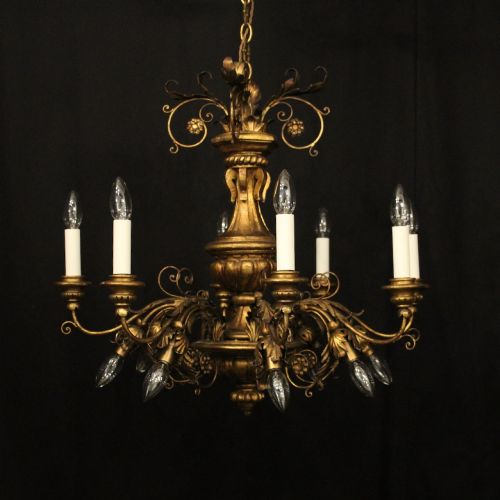
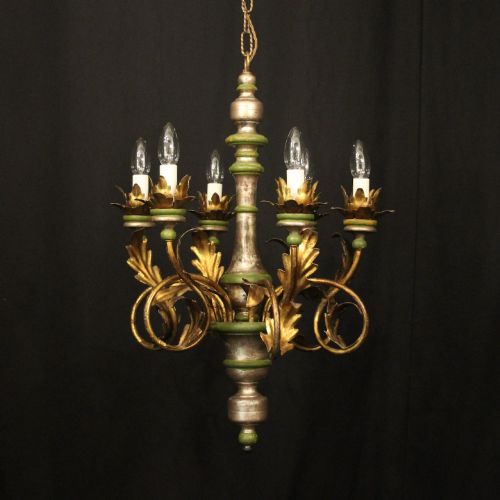
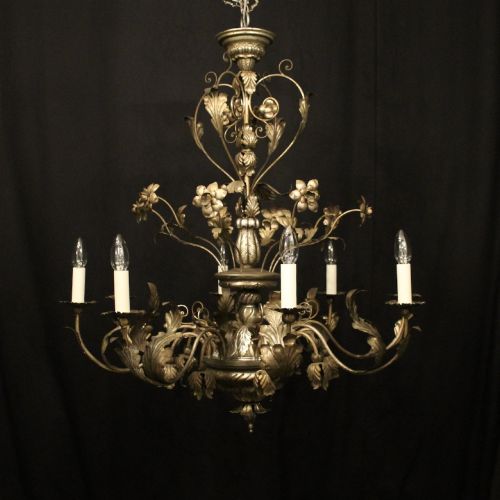
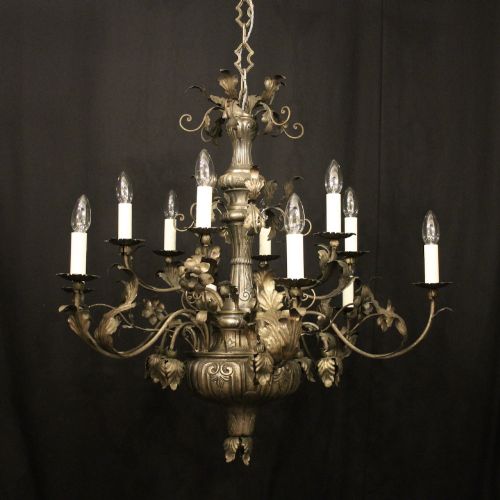
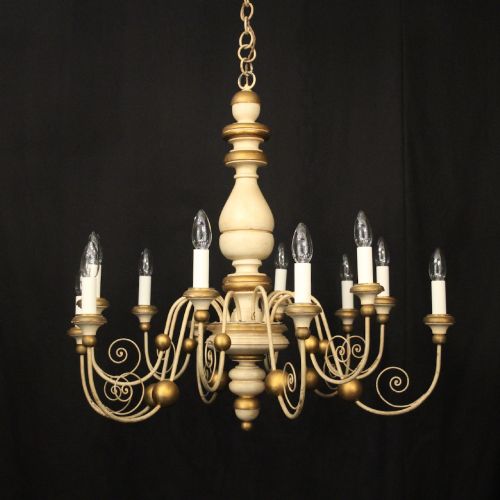
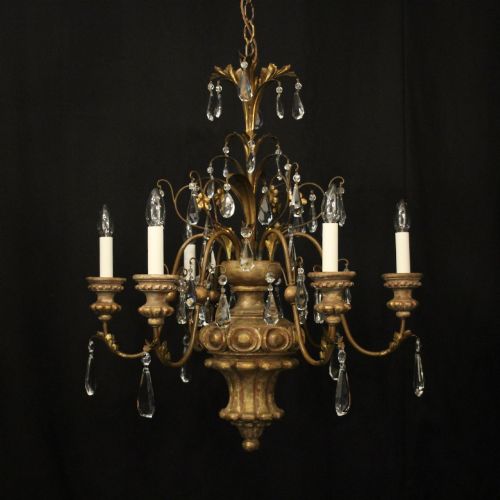


Italian Carved Ceiling Fixture
An italian carved ceiling fixture brings genuine regional warmth and historic presence overhead, combining rich wood carving with gilded finishes.
Italian Carved Ceiling Fixture
When buyers search for an italian carved ceiling fixture, they find grand overhead lighting forms spanning multi-light chandeliers and hanging lanterns. These pieces originate primarily from historic centres like Genoa and Florence, reflecting strong regional craft traditions.
The selection ranges from robust eighteenth-century examples to early twentieth-century creations from the nineteen-twenties and nineteen-thirties. Chandeliers dominate the current offerings, alongside occasional hanging lanterns designed to anchor large spaces.
Buyers most frequently encounter early twentieth-century interpretations, particularly Florentine and Genoese pieces carrying multi-light configurations. These fixtures maintain traditional aesthetic qualities while adapting to domestic room proportions.
How they were made
Giltwood forms the primary structural and decorative material, shaped through traditional wood carving techniques before receiving applications of gold leaf or fluid gilding. Artisans also incorporated wrought iron and standard metal frames to provide necessary internal support for heavy glass and multiple light branches.
Surface treatments vary from bright gold leaf to polychrome finishes, silvered metal, and contrasting ebonised details. These combined techniques allowed makers to achieve rich textural depth and contrasting metallic sheens across the carved surfaces.
Italian Carved Ceiling Fixture Retail Price Guide 2026
Typical asking prices for italian carved ceiling fixture among the pieces listed under this phrase on Sellingantiques today, from the lower quarter to the upper quarter. They describe what is for sale here now, not the wider market.
Some fixtures manage to combine up to twelve lights with intricate polychrome finishes.
What varies in quality
The depth and crispness of the wood carving distinguish superior examples from simpler production, separating skilled sculptural work from mechanical shaping. Elaborate acanthus scrolls, pierced elements, and balanced proportions denote workshop output of higher ambition.
The application and preservation of the gilded or polychrome surface dictate visual impact. Intricate layering of gold leaf over gesso creates a warm, luminous quality that flat modern paints or worn metallic applications cannot replicate.
The Italian Carved Ceiling Fixture Glossary
- Giltwood
- Wood that has been coated with gold leaf or a gold-coloured metallic finish. This surface treatment provides the signature radiance seen across traditional chandeliers and lanterns.
- Polychrome
- Decorated in multiple colours. This technique adds painted detail alongside gilded elements to create pictorial richness.
- Ebonised
- Wood finished to resemble ebony through dark staining or painting. This treatment offers a stark contrast against bright giltwood details.
- Genoa
- A major Italian port city associated with distinct regional lighting design. Pieces from this origin often feature expansive light arms and silvered metal components.
- Florentine
- Pertaining to the city of Florence and its specific artistic heritage. This style frequently utilises elaborate carved leaf motifs and rich gilding.
Italian Carved Ceiling Fixture: Frequently Asked Questions
What periods do these fixtures come from?
The available selection spans from the eighteenth century through to the early twentieth century, specifically covering the nineteen-twenties and nineteen-thirties.
Earlier eighteenth-century pieces offer deep historical carving, while twentieth-century examples maintain traditional Florentine and Genoese stylistic elements.
How were these lights used originally?
These fixtures served as central illumination sources in grand rooms, dining halls, and high-ceilinged entries across Italian residences.
They were designed to hold multiple candles or bulbs, distributing light downward while reflecting radiance from their gilded surfaces.
How do I identify a Florentine piece?
Florentine fixtures typically feature characteristic carved giltwood elements, often drawing upon floral or acanthus leaf motifs.
These pieces frequently incorporate regional finishing techniques like polychrome decoration or contrasting ebonised touches.
What materials are used in construction?
Construction primarily relies on carved wood finished with gold leaf, giltwood, or silvered metal.
Iron and wrought metal frequently form the internal armature, while glass components complete the light fittings.