






Silvered Chapter Ring
A silvered chapter ring gives a clock face its crisp numerals and brilliant metallic contrast against darker brass or timber.
Silvered Chapter Ring
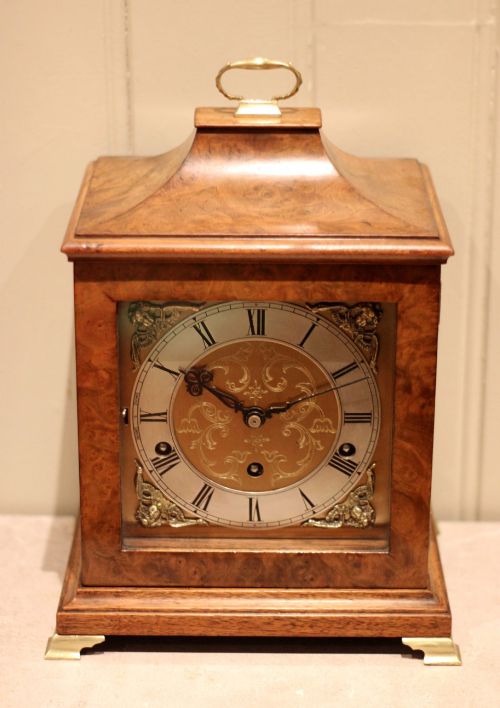
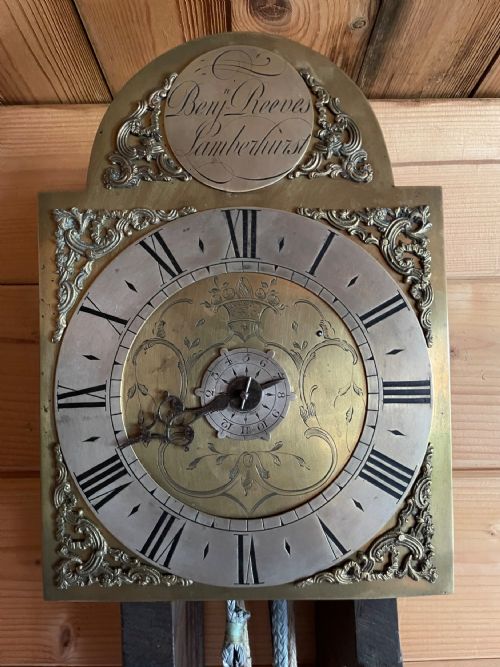
A silvered chapter ring forms the circular outer band of a clock face that bears the hour and minute numerals. Buyers seeking a silvered chapter ring encounter these rings mounted on longcase clocks, bracket clocks, and lantern clocks spanning the seventeenth, eighteenth, and nineteenth centuries. The examples recorded here appear within Georgian and Victorian periods, alongside earlier William and Mary pieces.
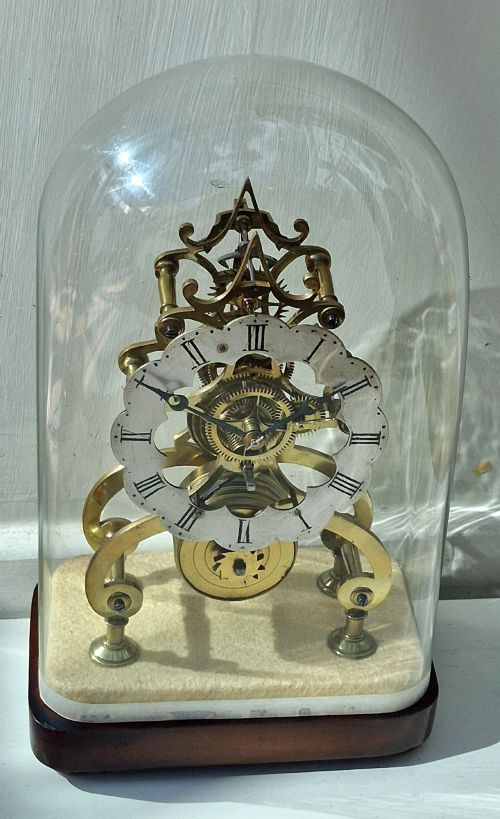
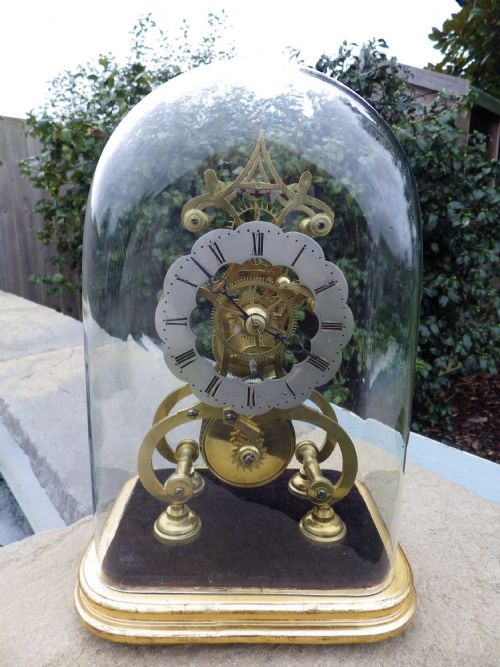
The objects carrying these rings range from complete table clocks housed in ebony or mahogany cases to longcase clock dials and skeleton clocks under glass domes. Most pieces originate from English workshops, frequently featuring brass dials where the silvered ring provides distinct legibility. These components represent centuries of clockmaking tradition, preserved either on working movements or as standalone dials.
Materials and construction
Makers construct these chapter rings primarily from brass, applying a silvering chemical process to the metal surface to achieve a bright, reflective finish. Engravers then cut the numerals and minute markings directly into the metal before filling the incisions with black wax to ensure sharp contrast against the silvered background.
The underlying clock structures combine brass movements with wooden cases fashioned from ebony, mahogany, walnut, and oak. Dial assemblies frequently incorporate glass domes for skeleton clocks, marble bases, and steel components within the intricate gear trains.
Silvered Chapter Ring Retail Price Guide 2026
Typical asking prices for silvered chapter ring among the pieces listed under this phrase on Sellingantiques today, from the lower quarter to the upper quarter. They describe what is for sale here now, not the wider market.
Current listings feature materials including brass, silvered brass, glass, steel, wood, ebony, marble, and mahogany across bracket, wall, and table clocks.
Judging quality and craftsmanship
Quality rests in the precision of the engraving upon the chapter ring and the clarity of the remaining silvered finish. Finer pieces display deeply cut, hand-engraved numerals filled cleanly with black wax, whereas lesser examples show worn surfaces where the delicate silvering has faded through centuries of cleaning.
Mappin & Webb·Jonathon Lowndes·Thwaites of London·John Pepys London·William Speakman·Benj Reeves Lamberhurst·Winterhalder & Hofmeier·Standring of Bolton·Joseph Lum of London·Thomas King of Alnwick
The Silvered Chapter Ring Glossary
- Chapter ring
- The metal ring on a clock face that displays the hour numerals. It sits on the dial surrounding the hands.
- Fusee
- A conical pulley used in spring-driven clocks to maintain equal power as the mainspring unwinds. This mechanism ensures steady timekeeping throughout the running period.
- Skeleton clock
- A clock built with an open framework that exposes the gear train and movement plates. These are frequently displayed beneath a glass dome.
- Lantern clock
- An early form of brass chamber clock designed to sit on a wall bracket or table. They typically feature weight-driven movements and distinct top bell arrangements.
- Bracket clock
- A portable table clock originally designed to sit on a wall bracket or furniture piece. Many incorporate striking or chiming mechanisms housed in timber cases.
Silvered Chapter Ring: Frequently Asked Questions
What is a silvered chapter ring?
A silvered chapter ring is the circular metal band on a clock face containing the hour numerals. The silvered finish provides a bright metallic contrast against the darker brass dial plate.
These rings are found on various clock types, including longcase, bracket, and lantern clocks, dating from the seventeenth century onwards.
How do you clean a silvered chapter ring?
Cleaning requires extreme caution because aggressive polishing removes the thin layer of silvering entirely. Dusting with a soft, dry cloth is generally recommended to preserve the historical surface.
Professional restoration is usually necessary if the black wax within the engraved numerals begins to flake or fade.
Are these clocks still in working order?
Many antique clocks retain their operational movements and function correctly after routine servicing. Some pieces survive as movements or dials without their original cases.
Listings specify whether an object is a complete timepiece, a movement, or a dial assembly.
How can I tell the age of a clock dial?
Dating relies on the style of the engraving, the typography of the numerals, and the materials used in the dial construction. Seventeenth and eighteenth-century dials often feature ornate spandrels and signature placement by the maker.
Comparative study of known maker signatures and regional design styles helps narrow the period of manufacture.