



Silver Vegetable Serving Server
A silver vegetable serving server brings weight and polish to the table, and these pieces span grand Victorian tureens and Edwardian entree dishes.
Silver Vegetable Serving Server
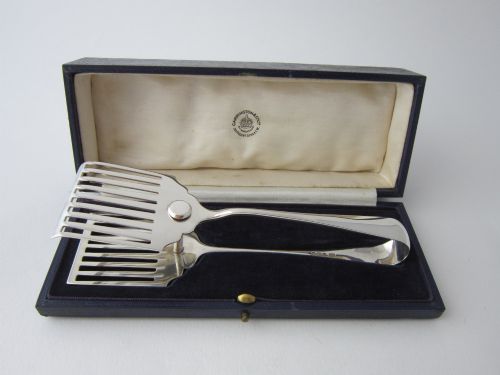
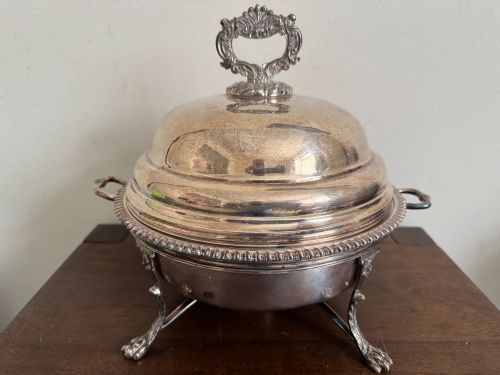
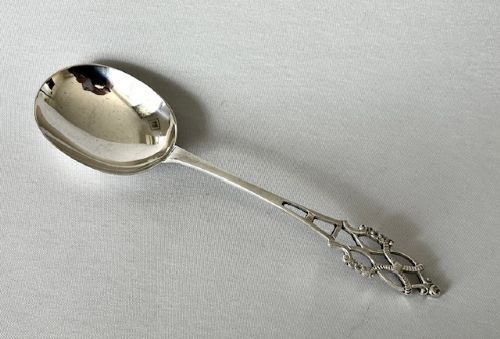
A silver vegetable serving server encompasses practical tableware such as entree dishes, tureens, asparagus dishes, and serving spoons designed for dining service. The selection relies heavily on silver plated and electroplated nickel silver items from the Edwardian and Victorian eras, alongside sterling silver examples.
Entree dishes and covered serving dishes form the core of what appears in this category, often featuring fitted lids and stands. Pieces range from straightforward George V asparagus tongs to elaborate Regency-influenced supper dishes with lampstands.
Origins stretch from the 19th Century through the early decades of the 20th Century, capturing periods like Art Deco, George V, and Edwardian design. Buyers encounter both single serving items and matched pairs intended for formal table presentation.
Materials and construction methods
Makers utilised a foundation of copper or nickel silver, applying methods such as Old Sheffield plating or electroplating to bond a layer of silver over the base metal. Sterling silver pieces were fashioned from solid precious metal rather than plated substrates.
Silversmiths constructed covered dishes and tureens with removable lids, handles, and occasional frames or lampstands to keep food warm during service. Surface details were achieved through casting, hammering, and applied decorative borders typical of Victorian and Edwardian workshops.
Listings feature items from the 19th Century through 1930, utilising Silver Plate, Sterling Silver, and Copper.
Markers of quality and execution
Quality rests in the crispness of applied borders, the balance of handles, and the resilience of the silver coating over the base metal. Superior items maintain the integrity of their plating without thin patches revealing the copper or nickel underneath.
Maker marks from established firms indicate workshop standards and careful finishing of hinges, feet, and lids. Heavier gauge metalwork provides structural rigidity that distinguishes finer serving dishes from lighter utilitarian ware.
Mappin and Webb·Matthew Linwood·William Hutton and Sons·Walker and Hall·Christofle Gallia
The Silver Vegetable Serving Server Glossary
- Entree dish
- A covered vessel designed for serving portions of food at the dining table. These often feature detachable handles to allow the base to function as an open platter.
- Old Sheffield Plated
- An early method of fusing a thin sheet of silver to a thicker copper core by heat and pressure. This technique produces a characteristic warm glow and distinct edge graining where the base metal shows.
- EPNS
- Electroplated Nickel Silver, a common base material introduced in the nineteenth century. Manufacturers deposited a layer of pure silver electrically onto a durable nickel alloy foundation.
- Tureen
- A deep bowl with a cover utilised for serving soups, stews, or vegetables. They frequently sit upon matching stands or warmers.
Silver Vegetable Serving Server: Frequently Asked Questions
What is an entree dish used for?
An entree dish served main courses and side dishes at formal dining tables, keeping food warm with a fitted cover.
Many examples feature dual compartments or removable lids that double as secondary serving platters.
How do I clean silver plate?
Silver plate requires gentle cleaning with a specialised non-abrasive polish and a soft cloth to protect the thin metallic layer.
Avoid harsh dips that strip the plating and accelerate wear on antique surfaces.
What is Old Sheffield Plate?
Old Sheffield Plate is an early fusion material made by rolling a sheet of silver onto copper under intense heat.
Pieces made this way show subtle traces of copper along cut edges, a detail valued by collectors.
How do I identify an Edwardian piece?
Edwardian items date from the reign of Edward VII between nineteen hundred and nineteen ten, favouring refined revival styles.
Maker marks and registration numbers stamped into the base often help pinpoint the exact year of manufacture.