




Edwardian Silver Serving Tray
An edwardian silver serving tray brings practical elegance to the table, combining generous proportions with refined period ornamentation.
Edwardian Silver Serving Tray
An edwardian silver serving tray encompasses a variety of practical forms designed for tea service, cocktails, and formal entertaining. The pieces listed here span the Edwardian period alongside late Victorian and George V eras, reflecting the social habits of the early twentieth century.
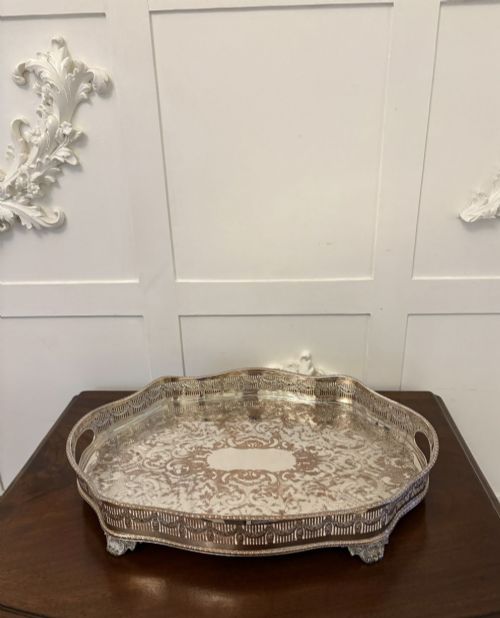
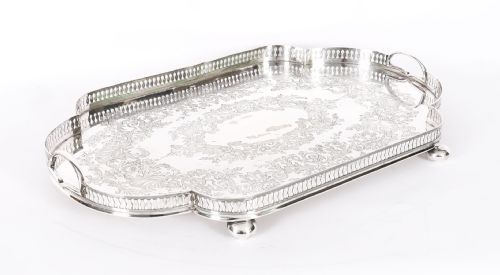
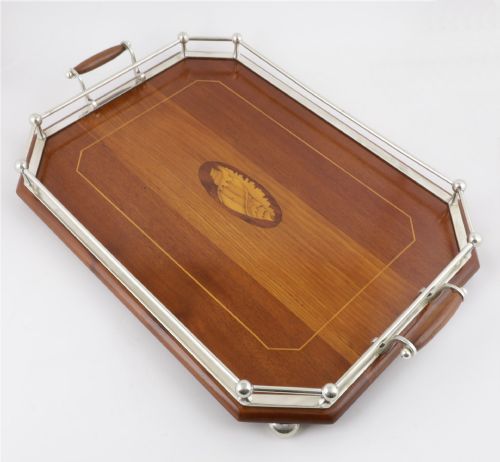
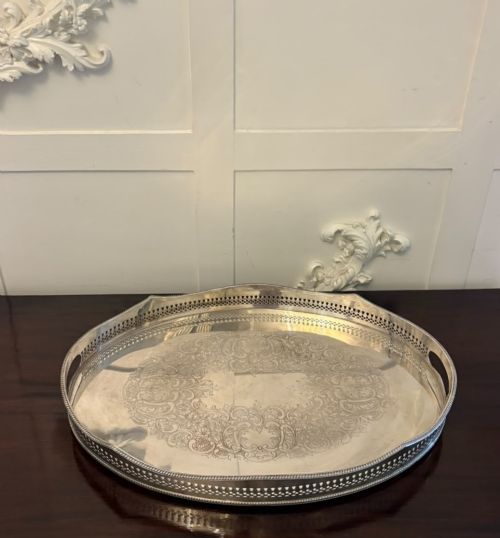
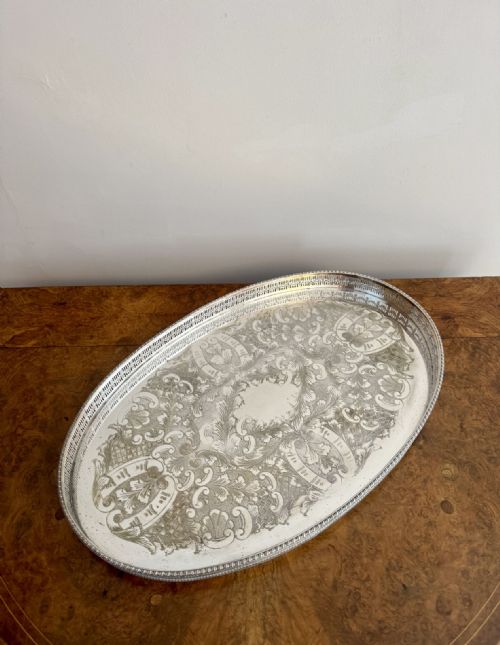
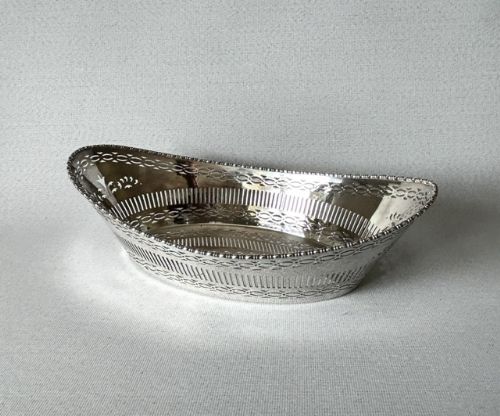
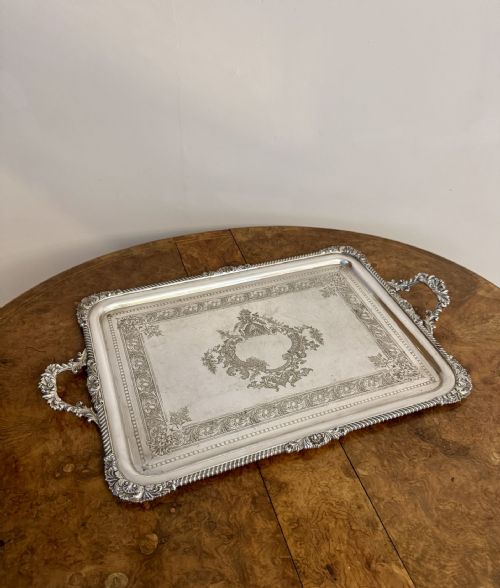
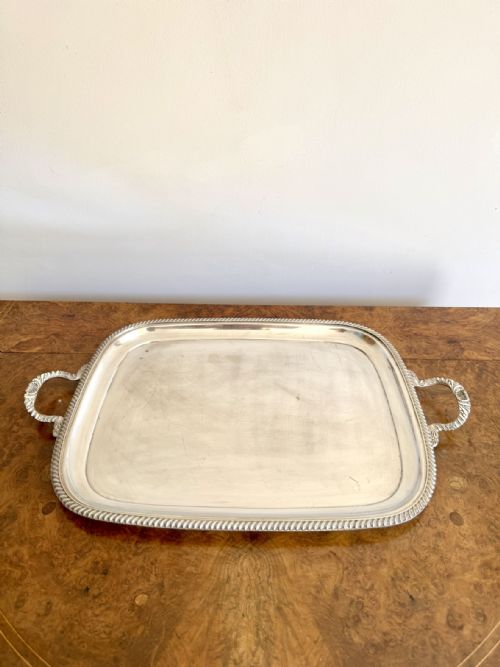
The most common version met on this page is the silver plated gallery tray featuring pierced borders, integrated handles, and engraved surfaces. Alongside these are substantial oval and octagonal platters, often incorporating wooden bases made from mahogany or oak.
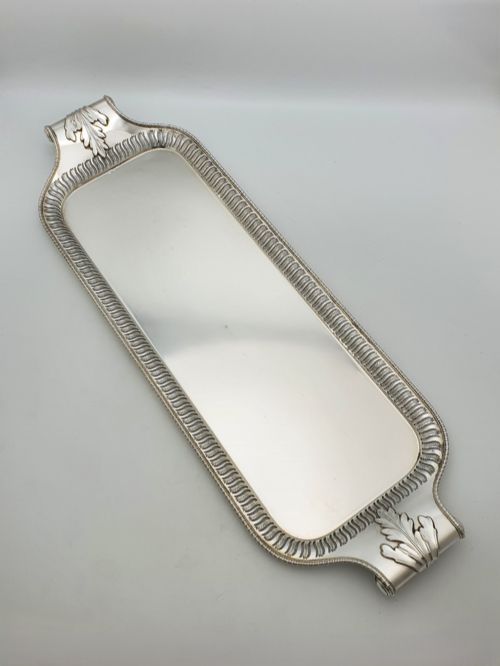
Makers utilised these trays for diverse serving functions, ranging from large tea platters and decanter holders to smaller dishes for bread, asparagus, and strawberries. Their origins remain rooted in English manufacturing centres such as Sheffield, where traditional metalworking trades flourished.
Materials and Technique
Craftsmen built these items using a foundation of base metal, nickel silver, or electroplated nickel silver, which received a durable coating of silver plate through industrial plating techniques. Sterling silver examples also occur, demonstrating solid metal construction from hallmarks dating to the Edwardian decade.
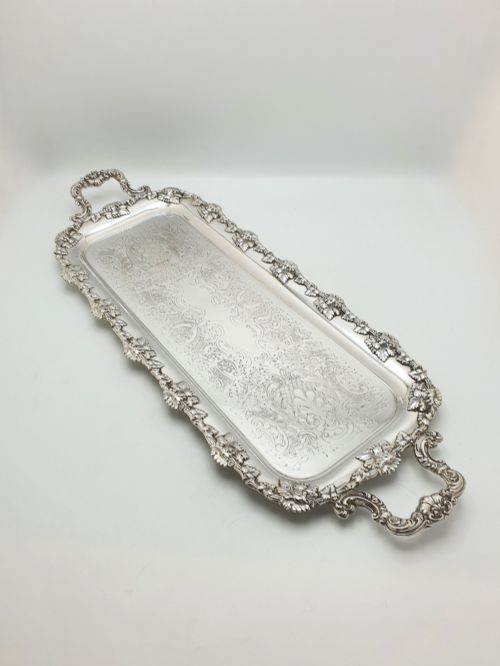
Many serving trays incorporate organic elements, pairing silver plated mounts and galleries with contrasting wooden bases of polished mahogany or oak. Details such as shell inlay, engraved foliage, pierced borders, and grapevine motifs were applied by hand to enhance the visual appeal of the metalwork.
Some trays were built strictly for asparagus, proving that Edwardian dining left nothing to chance.
Judging Quality
The calibre of a tray rests upon the crispness of its engraving and the structural integrity of its pierced gallery work. Pieces bearing recognisable maker marks from established firms generally demonstrate superior weight and more deliberate attention to decorative detail.
The integration of mixed materials also distinguishes the range, where tight joins between the silver plated metal and inlaid wooden bases show competent workshop execution. Preservation of the original plating layer without extensive wear to the underlying base metal marks the better surviving examples.
James Deakin·William Hutton and Sons·Mappin and Webb·Harrison Bros·Hukin and Heath·Walker and Hall
The Edwardian Silver Serving Tray Glossary
- Silver Plate
- A base metal coated with a thin layer of silver to provide the appearance and lustre of solid silver at a lower manufacturing cost. This technique became widespread during the nineteenth and twentieth centuries.
- Gallery Tray
- A shallow tray featuring an elevated pierced or solid metal rail around its perimeter to secure glassware and teacups during transport. These borders often include integrated handles.
- EPNS
- An abbreviation for electroplated nickel silver, denoting a strong alloy core plated with silver through an electrical current. It serves as the primary material for many domestic serving items.
- Salver
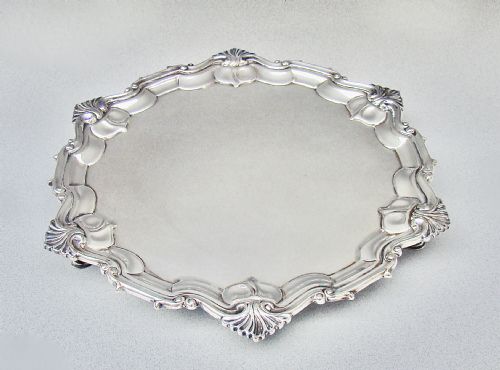
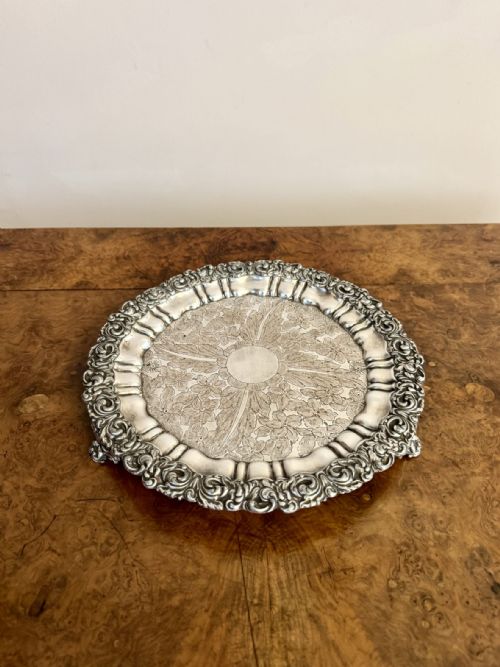
- A flat serving tray, typically circular and raised on small feet, traditionally used for presenting drinks, letters, or calling cards. They often feature shaped or scalloped rims.
- Sheffield Plate
- A composite material made by fusing a sheet of silver to a thicker copper ingot before rolling them into sheets. Although largely superseded by electroplating, the term remained associated with quality manufacturing in Sheffield.
Edwardian Silver Serving Tray: Frequently Asked Questions
What were edwardian silver serving trays used for?
These trays served primarily in domestic hospitality for carrying tea services, decanters, and cocktail glasses across formal rooms. Households utilised them during social gatherings and afternoon teas to protect furniture and ease entertaining.
Larger versions accommodated full tea sets with teapots, cream jugs, and sugar basins, while smaller variants held individual dishes or drinks. Their raised rims and sturdy handles ensured safe transport by domestic staff.
How do I clean and care for a silver plated tray?
Maintenance requires gentle washing with warm soapy water and a soft cloth to remove dust and daily residues. Avoid harsh abrasive cleaners that can wear away the thin silver layer.
Applying a specialist silver polish occasionally helps maintain the lustre without damaging the underlying metal or wood components. Store the tray in a dry environment to prevent tarnishing.
How can I tell sterling silver from silver plate?
Sterling silver items display official hallmarks indicating the purity of the metal, the assay office, and the date of manufacture. These small stamped marks are usually found near the rim or base.
Silver plated items lack these specific purity hallmarks and often bear stamps denoting the plating method or maker initials. Over time, heavy use on plated trays may reveal the yellowish or grey base metal underneath.