


Silver Vegetable Dish Cover
A silver vegetable dish cover brings proportion and polish to a dining service, keeping joints and sides warm beneath gleaming metal.
Silver Vegetable Dish Cover
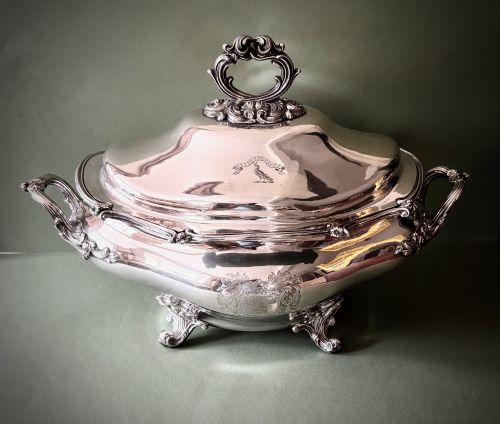
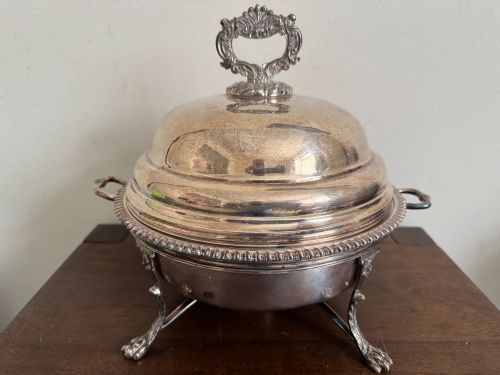
When you search for a silver vegetable dish cover, you encounter substantial lidded vessels and serving pieces designed to retain heat at the table. These range from substantial soup tureens and supper dishes down to rectangular or oval entree dishes.
The versions most frequently met on this page date from the Georgian, Victorian, and Edwardian eras, spanning periods such as 1800, 1880, and 1900. Makers produced them in matched pairs or single configurations for formal dining.
Forms include deep tureen bodies paired with domed covers, alongside warming dishes and serving dishes equipped with handles and feet. Styles track through George III, Regency, and Art Deco designs.
Materials and construction methods
Silversmiths constructed these pieces from sterling silver or fused copper layers known as Old Sheffield Plate, alongside later developments like electroplated nickel silver and standard silver plate.
The manufacturing process involved hammering, rolling, and soldering metal sheets into robust vessels, often featuring applied cast borders, handles, and finials. Plated items relied on depositing silver over base metals or fusing silver sheets to copper cores.
Materials documented across the inventory include sterling silver, Old Sheffield Plate, copper, and electroplated nickel silver.
Distinctions in craftsmanship
Quality reveals itself in the weight of the metal, the balance of the cover when seated on the base, and the crispness of chased or cast ornamentation. Pieces bearing clear hallmarks or recognised maker marks demonstrate superior workshop standards.
The integrity of the plating or solid metal gauge dictates longevity, whilst hand-finished details such as cast handles and gadroon borders separate standard production items from finer dining silver.
Mappin and Webb·William Grundy·Hamilton and Inches·Edward and John Barnard·Walker and Hall·Elkington·Matthew Linwood·William Hutton and Sons·Cresswick·Christofle / Gallia·Hukin and Heath
The Silver Vegetable Dish Cover Glossary
- Old Sheffield Plate
- A material created by fusing a thin sheet of silver to a copper ingot before rolling them together into sheets. This early plating method often reveals thin lines of copper along exposed edges.
- Entree dish
- A shallow vessel with a fitted cover used for serving side dishes and courses at the dining table. These typically take rectangular or oval forms.
- Tureen
- A deep, bowl-shaped serving vessel equipped with handles and a matching lid, used historically for soups, sauces, or vegetables. They sit upon fixed bases, feet, or separate lampstands.
- Electroplated Nickel Silver
- A base metal alloy of copper, nickel, and zinc coated with a layer of silver via an electrical current. This technique superseded older plating methods during the nineteenth century.
- Gadroon border
- A decorative, embossed convex band often cast or stamped along the rims of dishes and covers. It provides a textured edge reflecting light across the service.
Silver Vegetable Dish Cover: Frequently Asked Questions
What is a silver vegetable dish cover used for?
These covers kept roasted vegetables, potatoes, and other side dishes warm between the kitchen and the dining table. They sat directly over matching serving dishes or formed the lid component of an entree dish.
At formal meals, the domed shape trapped steam and heat while maintaining a uniform appearance alongside larger tureens and meat platters.
How do I clean a silver vegetable dish cover?
Clean these items using a soft cloth and a reputable silver cream designed to lift tarnish without abrading the surface. Avoid harsh chemical dips, particularly on plated items where excessive rubbing can expose the base metal underneath.
Wash the pieces in warm soapy water immediately after use and dry them thoroughly with a lint-free cloth to prevent water spots.
How can I tell Old Sheffield Plate from later silver plate?
Old Sheffield Plate shows subtle traces of copper along cut edges, wear points, or seams where the fused silver layer has thinned over the underlying copper core. This method predates nineteenth-century electrical plating techniques.
Later electroplated nickel silver items display a uniform white metal base beneath any worn areas of the silver coating, lacking the distinct warm coppery hue.
Can I use antique silver covers for modern dining?
These dishes and covers function effectively for modern serving, provided you handle them with care and wash them by hand. They bring historical character and practical warmth to contemporary dining tables.
Ensure acidic foods are not left in contact with the metal for extended periods to protect the silver surface from unnecessary pitting.