
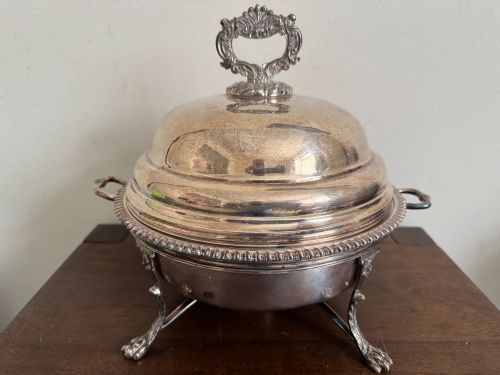


Covered Silver Serving Bowl
A covered silver serving bowl brings table service from the Georgian, Victorian, and Edwardian eras into active domestic use.
Covered Silver Serving Bowl
A covered silver serving bowl functions as a lidded vessel for presenting dishes at the table, spanning forms such as entree dishes, soup tureens, warming dishes, and supper dishes. When searching for a covered silver serving bowl, buyers encounter pieces originating from the Georgian, Regency, Victorian, Edwardian, and Art Deco periods, alongside Indian Colonial examples.
The objects recorded here include two-handled punch bowls, sauce tureens, and lidded serving dishes combined with cut glass or lampstands. Makers represented in these listings range from firm names like Mappin and Webb to silversmiths such as William Bennett and Daniel and Arter.
Most items on this page lean towards silver plated and Old Sheffield plate construction rather than solid sterling silver. Forms vary from small pairs of serving tureens to large warming dishes and substantial soup tureens.
Materials and construction methods
Makers utilised sterling silver, base metal, copper, and electroplated nickel silver to construct these serving vessels. Techniques such as Sheffield plating fused a silver sheet onto a copper base, whilst later methods adopted electroplating on nickel silver.
Construction frequently incorporated applied handles, fitted lids, and sometimes lampstands or cut glass inserts. Workshop production across Birmingham, London, and Sheffield employed skilled metalworking traditions to shape tureens and entree dishes.
Judging quality in antique serving vessels
Quality differentiates by the crispness of applied cast mounts, handles, and borders against the underlying body. Superior pieces retain their original silver plating thickness and show balanced proportions without distortion.
Maker attribution and engraved crests or heraldry elevate a piece, distinguishing standard commercial production from workshops of high repute. The integrity of internal joints and the weight of the metal further mark out better examples.
Mappin and Webb·Hamilton and Inches·Daniel and Arter·Dan Holy·William Bennett·Birchall and Hayne·Christofle / Gallia
The Covered Silver Serving Bowl Glossary
- Entree dish
- A shallow lidded vessel designed for serving portions of food at the dining table. These typically rest on a base or warming stand.
- Old Sheffield plate
- A composite material made by fusing a thin sheet of silver onto a heavier copper core. This technique predates modern electroplating.
- EPNS
- Electroplated Nickel Silver, a common base metal composition coated with a thin layer of silver through an electrical process. It became widespread in the Victorian period.
- Soup tureen
- A large, deep serving bowl with a fitted lid and usually two handles, intended for holding and presenting soup. They often sit upon an integrated foot or matching stand.
- Lampstand
- A metal frame equipped with a burner beneath, designed to hold a tureen or dish and keep the contents warm during a meal.
Covered Silver Serving Bowl: Frequently Asked Questions
How were covered silver serving bowls used?
These vessels transported food from the kitchen to the dining table whilst retaining heat beneath a fitted lid. Diners served themselves or had servants dish portions directly from the container.
Larger pieces like soup tureens and supper dishes sat centrally, whilst smaller entree dishes flanked the table for specific courses.
How do I clean a silver plated tureen?
Maintenance requires mild soapy warm water and a soft cloth to remove dust and grease without abrasive scrubbing. Chemical dips should be avoided on plated items to preserve the remaining silver layer.
Gentle application of a dedicated silver cream helps maintain the shine on sterling and plated surfaces alike.
Are these bowls suitable for daily use?
Many antique serving pieces remain robust enough for regular dining service, provided they are washed by hand promptly after use. Care must be taken with Old Sheffield plate to protect the underlying copper where silver has worn thin.
Using wooden or plastic utensils prevents scratching the interior base of the bowl.
How can I tell Sheffield plate from electroplate?
Old Sheffield plate often reveals a faint line of copper visible along the cut edges or worn high points where the silver sheet has thinned. Electroplated nickel silver shows a uniform white metal base beneath worn areas rather than reddish copper.
Weight and manufacturing date clues also help separate the fusion technique from nineteenth-century electrical plating.