
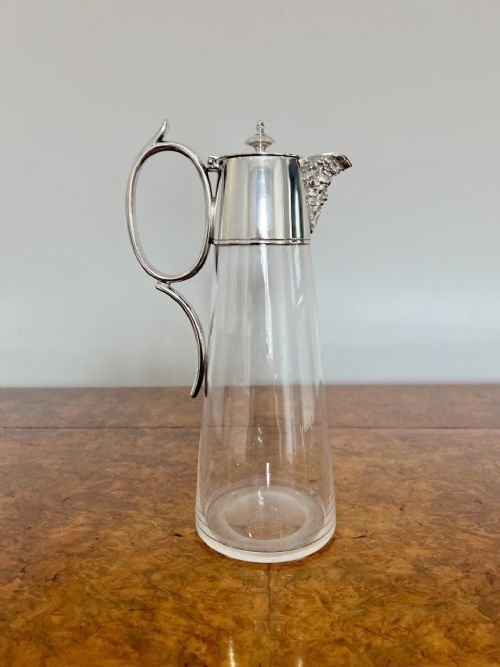


Silver Topped Glass Vessel
A silver topped glass vessel brings together the clarity of glass and the gleam of metal for the table or dressing surface.
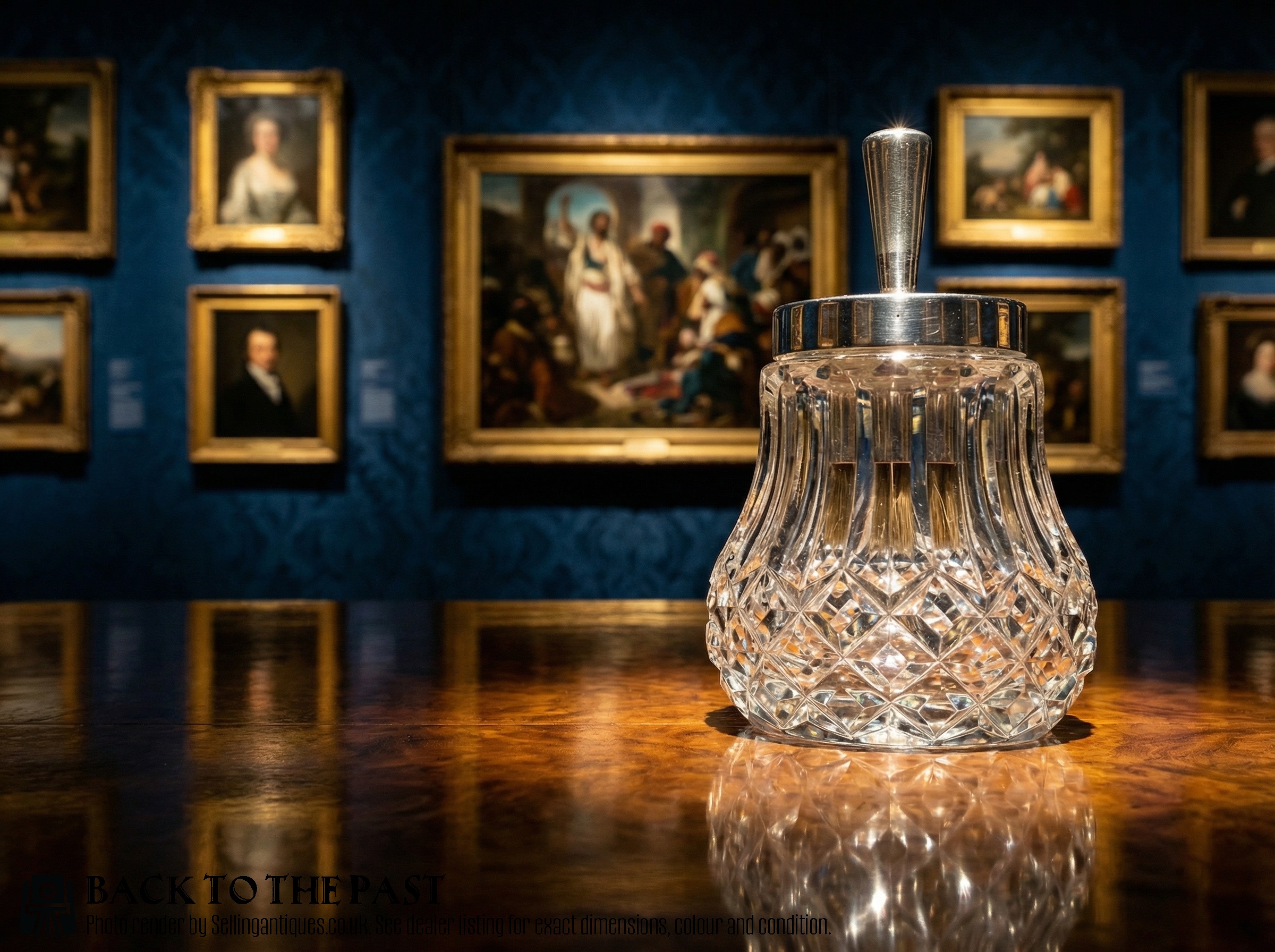
Silver Topped Glass Vessel
A silver topped glass vessel covers a practical and decorative range from claret jugs and cocktail shakers to scent bottles, trinket boxes, and preserve jars. You will regularly encounter claret jugs, condiment jars, and trinket boxes as you browse through these offerings.
The objects span multiple periods, drawing on Victorian, Edwardian, and Art Deco styles alongside mid-century modern pieces. Forms include tall wine jugs and small vanity jars, showing how metal mounts were applied to glass across several decades.
Materials and construction
Makers combined cut glass, crystal, and cranberry glass with sterling silver, silver plate, and enamel mounts. Glass vessels were blown or moulded, sometimes featuring deep cut patterns to catch the light.
Metal components were shaped as rims, collars, lids, and mounts, often hallmarked to record the assay office and year of manufacture. Enamel work occasionally added colour to the silver lids on smaller items like scent bottles and trinket boxes.
Listings feature items spanning from the Victorian era through the Edwardian period and into the mid-twentieth century.
Distinguishing quality across pieces
Quality rests on the crispness of the glass cutting and the weight of the metal used for the mounts and lids. Heavier silver gauge and precise fitting between the glass and the metal indicate superior manufacture.
Makers such as Hukin & Heath or Asprey brought high standards of design and metalwork to their vessels. The clarity of the glass and the intact preservation of enamel or plating further distinguish finer examples.
Hukin & Heath·Asprey
The Silver Topped Glass Vessel Glossary
- Sterling silver
- A silver alloy containing 92.5 percent pure silver by mass, widely used for the lids and mounts on these vessels.
- Claret jug
- A large pouring vessel designed for wine, typically featuring a glass body with a silver handle, spout, and hinged lid.
- Cranberry glass
- A rich red glass created by adding gold chloride to the molten batch, seen on decorative trinket boxes.
- Cut glass
- Glass decorated by grinding facets and patterns into the surface using wheels, enhancing its brilliance.
- Hallmark
- An official stamp applied to precious metals indicating the standard of purity, assay office, and year of making.
Silver Topped Glass Vessel: Frequently Asked Questions
What are silver topped glass vessels used for?
These vessels served various domestic and personal functions, ranging from serving wine and cocktails at the dining table to storing preserves, condiments, and toiletries.
Smaller items like scent bottles and trinket boxes were kept on dressing tables, while larger claret jugs and cocktail shakers were designed for entertaining.
How do I clean the glass and silver?
Cleaning requires separate care for the two materials to protect both the glass and the metal mounts. Use warm soapy water for the glass and avoid abrasive cloths on the silver or enamel surfaces.
Keep moisture away from any glued joints where the silver mount meets the glass body to prevent weakening the adhesive over time.
How can I tell the period of a piece?
Dating often relies on hallmarks stamped onto the silver mounts, which indicate the assay office and exact year of production. Stylistic details also help, such as the geometric lines of Art Deco pieces or the heavy ornamentation typical of Victorian designs.
Comparing the cut of the glass and the form of the vessel against known historical periods provides further confirmation of age.
Are all the silver mounts solid silver?
Mounts and lids vary between solid sterling silver and silver plate over a base metal. Hallmarks on the metal will typically clarify whether the piece is solid sterling or plated.
Maker marks alongside the silver stamps help identify the standard of the metal used in the construction of the mount.