


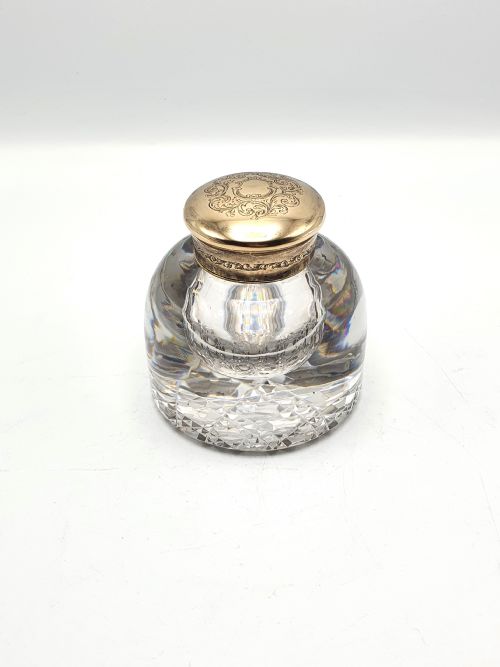


Cut Glass Desk Pot
A cut glass desk pot is a heavy, refractive receptacle for ink or glue, and you want one for its brilliant facet work and sterling silver mounts.
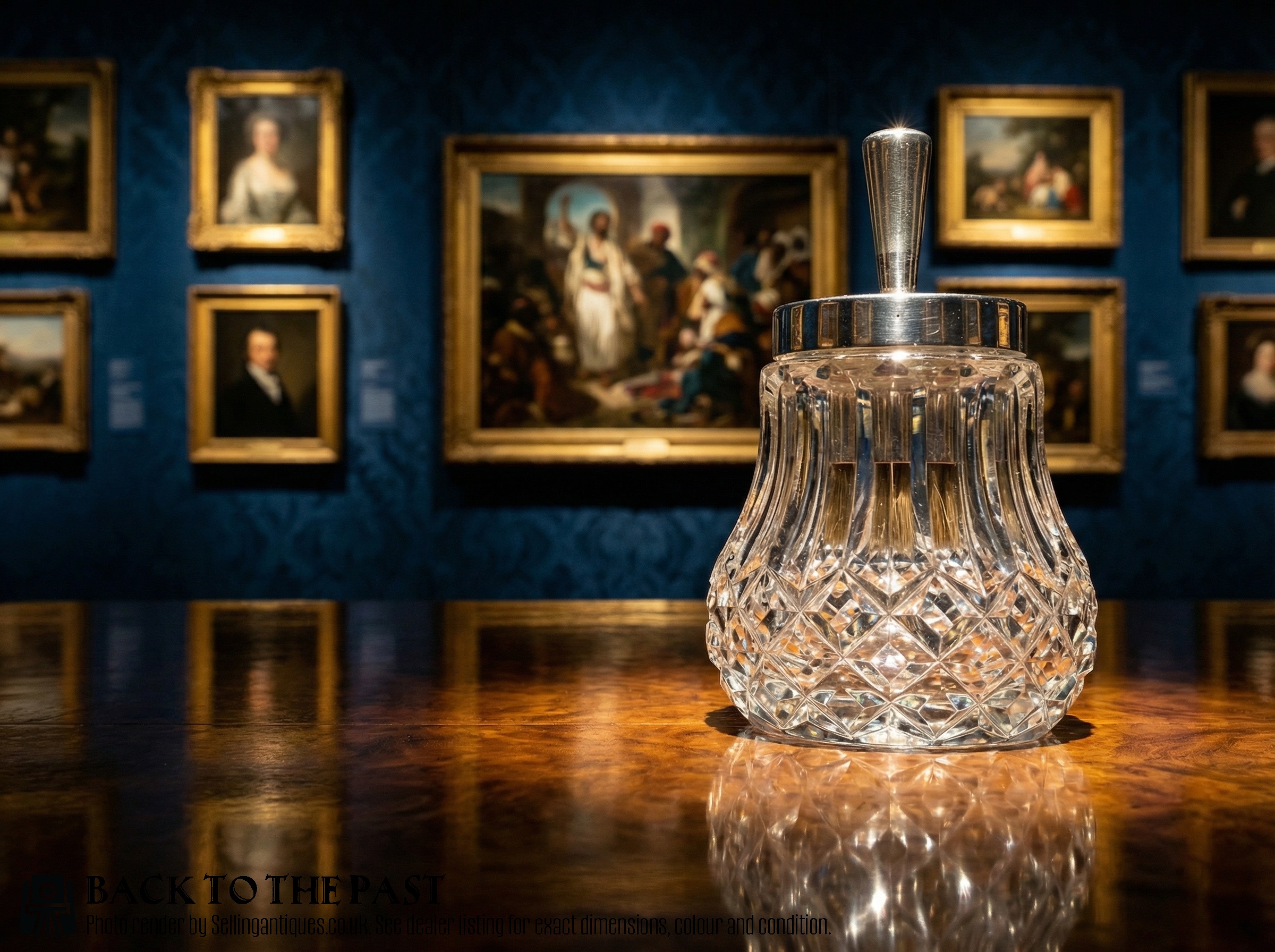
Cut Glass Desk Pot
When you search for a cut glass desk pot, you encounter practical desk accessories fashioned from heavy glass or crystal and mounted with precious metals. These vessels served the writers of the nineteenth and early twentieth centuries, holding ink for dipping pens or liquid glue for sealing correspondence.
The pieces appearing on this page span several decades, reaching from the Regency era through the Victorian period into Edwardian and Art Deco designs. Inkwells and inkstands dominate the selection, accompanied by specialised glue pots and desk sets designed for the writing table.
You are most likely to meet Victorian and Edwardian examples featuring thick glass bodies with deep surface cutting and hinged sterling silver or plated lids. Some incorporate brass work, oak bases or multiple glass dishes arranged on a stand.
How they were made
Makers shaped the heavy glass bodies of a cut glass desk pot by blowing molten metal into moulds or gathering it freehand before cutting geometric facets across the surface. These deep cuts catch the light and provide a tactile grip.
Silversmiths then fitted sterling silver, silver plate or vermeil mounts, collars and hinged lids to the glass necks. Hallmarks stamped into the silver reveal assay office marks and date letters corresponding to years like 1809, 1813 or 1909.
Internal components sometimes included glass liners, bristle brushes for glue pots or ceramic wells to contain the ink without staining the outer vessel.
Some Edwardian glue pots still retain their original bristle brushes, surviving a century of desk work intact.
What varies in quality
The depth and crispness of the glass cutting separate a fine cut glass desk pot from a plain one. Sharp, well-defined facets refract light cleanly, whereas softer edges indicate hurried production or heavy wear.
The weight and gauge of the metal lid matter significantly. Solid sterling silver mounts with secure hinges and crisp hallmarks elevate a piece above standard plated or base metal alternatives.
Completeness dictates standing within the range. Pieces retaining original glass liners, matching bristle brushes or matching silver mounts command greater interest than assembled or altered examples.
Tiffany and Co·W M F·Asprey
The Cut Glass Desk Pot Glossary
- Cut Glass
- Glass shaped and patterned by holding the surface against rotating abrasive wheels. It creates brilliant geometric facets that define these desk pieces.
- Sterling Silver
- An alloy of silver containing 92.5 percent pure silver by mass. It provides the durable, lustrous material used for the hinged lids and collars of better pots.
- Inkwell
- A small jar or container for holding ink on a desk. They often feature protective metal collars to prevent chipping during frequent pen dips.
- Glue Pot
- A specialised desk pot equipped with a brush for applying adhesive. These vessels mirror the size and cut glass decoration of inkwells.
- Hallmark
- A mark or series of marks struck on precious metal items. It certifies the standard of purity and records the assay office and year of manufacture.
Cut Glass Desk Pot: Frequently Asked Questions
What is a cut glass desk pot used for?
These vessels held liquid ink or adhesive glue on writing desks during the nineteenth and early twentieth centuries. They kept writing fluids accessible while preventing rapid evaporation.
Today, they function as decorative objects, paperweights or practical containers on modern desks and dressing tables.
How do I date a cut glass desk pot?
Examination of the silver mounts offers the most reliable dating method. Hallmarks stamped onto the metal lid or collar reveal the exact assay year and maker.
The style of the glass cutting and the overall silhouette also point toward specific periods such as Regency, Victorian or Art Deco.
Are the lids made of solid silver?
Many lids on these pieces consist of solid sterling silver bearing British hallmarks or foreign import marks. Others utilise silver plate, brass or vermeil over base metal.
Checking the interior of the lid for stamps helps determine the metal composition.
How should I clean a cut glass desk pot?
Wash the glass gently in warm, soapy water using a soft cloth to remove dust or old ink residue. Avoid harsh abrasives that might scratch the surface.
Polish the silver mounts separately with a dedicated silver cloth, taking care not to let harsh cleaning pastes touch the glass.