



Silver Inkwell Pot
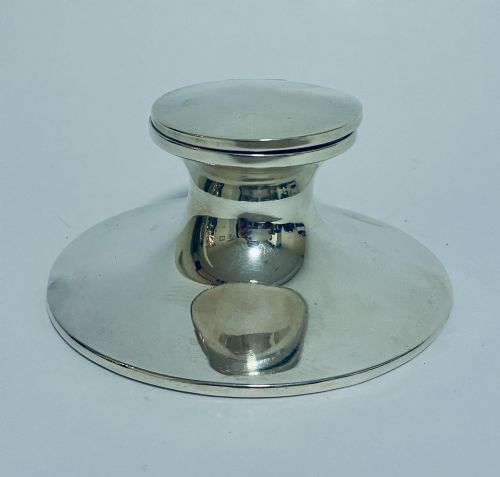
A silver inkwell pot anchors a desk with substance and utility, offering a tactile connection to handwritten correspondence across eras from the Regency to Art Deco.
Silver Inkwell Pot
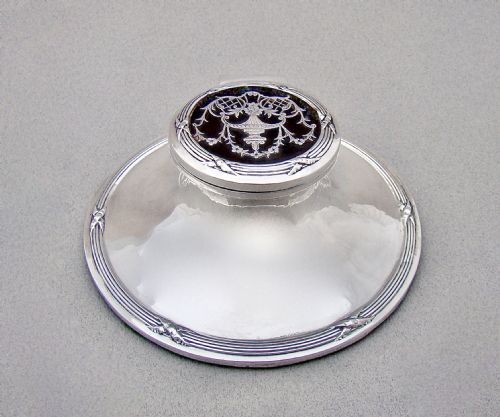
A silver inkwell pot encompasses functional desk accessories designed to hold liquid ink safely while providing a dipping reservoir for a pen. The selection on this page ranges from compact glass vessels with silver mounts to substantial capstan designs and novelty shapes.
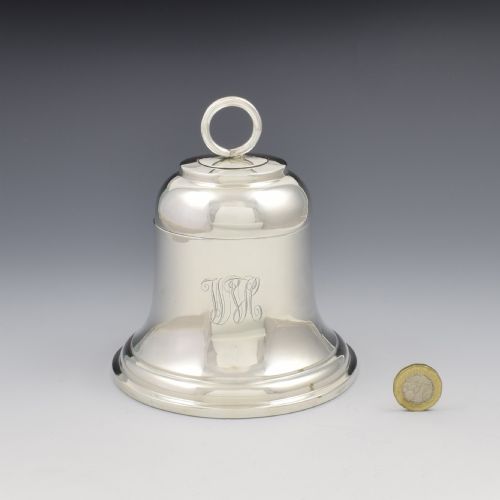
Victorian and Edwardian examples dominate the offerings, spanning the late nineteenth and early twentieth centuries alongside earlier Regency and William IV pieces. Buyers encounter various configurations, including single capstan pots, bell-shaped desk pieces, and multi-component inkstands with accompanying trays.
Makers utilised distinct regional styles, producing everything from simple circular sterling silver pots to elaborate novelty teapot shapes and Gothic Revival stands. Materials shift between solid sterling silver, silver plate, cut glass, and crystal bodies fitted with hinged metal lids.
Materials and construction
Silversmiths formed the metal components using traditional techniques of spinning, casting, and hand-raising sterling silver, silver plate, and vermeil. Hallmarks stamped directly into the metal record the assay office, city, and year of production.
Glass bodies feature heavy crystal or cut glass, often with facet-cut bases to catch the light on a desktop. These transparent reservoirs allowed writers to gauge ink levels easily without opening the lid.
Decorative surface treatments incorporate guilloche enamel, tortoiseshell panels, and cast bronze mounts. Hinged lids often rely on internal glass or ceramic liners to prevent corrosive ink from direct contact with the outer metal.
Some Victorian writers dipped their pens into miniature teapots, proving that morning tea habits infiltrated even the strictest office supplies.
Evaluating craftsmanship and condition
Quality rests upon the weight of the metal and the crispness of any cast decorative motifs, such as floral chasing or heraldic crests. Heavier gauge silver and thick-walled crystal indicate superior workshop standards.
The integrity of the interior fittings dictates practical utility, particularly the presence of original glass liners and well-sealed hinged lids. Hallmarks that remain sharp and legible confirm that polishing has not worn away the maker's mark.
Desirable examples combine precious metals with organic materials like tortoiseshell or delicate enamel work, showing precise fitting between different mediums without gaps or adhesive residue.
Henry Matthews·Tiffany and Co·Maurice Dufrene·Asprey
The Silver Inkwell Pot Glossary
- Capstan inkwell
- A desk vessel shaped like a nautical capstan, featuring a wide weighted base tapering upward to a hinged silver lid. This low-slung profile prevented accidental tipping during use.
- Guilloche enamel
- A decorative technique where geometric patterns are engine-turned into a metal base before translucent enamel is applied over the top. This creates a shimmering, patterned depth of colour.
- Vermeil
- Sterling silver that has been plated with a thin layer of fine gold. It provides the warm appearance of solid gold while utilising a silver core.
- Inkstand
- A complete desktop tray or stand holding one or more ink pots, often accompanied by pen grooves and sanders. These larger pieces formed the centrepiece of a nineteenth-century writing desk.
- Sterling silver
- An alloy consisting of ninety-two point five percent silver and seven point five percent other metals, typically copper. This standard ensures sufficient durability for daily desk use.
Silver Inkwell Pot: Frequently Asked Questions
How do I clean a silver inkwell pot?
Use a soft cloth and a gentle silver polish specifically formulated for metalware, taking care to avoid abrasive pads that scratch the surface. Keep polishes away from glass liners, enamel, and tortoiseshell panels.
For the glass or crystal interior, wash gently with warm soapy water and a bottle brush. Ensure the components are completely dry before reassembling the piece.
Did people use these for travel?
Certain examples were specifically designed as travelling inkwells, featuring screw-down lids and secure inner collars to prevent leaks inside luggage. These portable versions often incorporated folding elements or leather travelling cases.
Standard capstan and bell inkwells remained stationary on desks and writing tables, relying on their weighted bases to stay upright rather than sealing mechanisms.
How do I identify the date?
British pieces typically bear a full set of hallmarks including a date letter, a maker's mark, a standard mark for sterling, and an assay office symbol. Cross-referencing the specific letter shape with published assay tables reveals the exact year of hallmarking.
Stylistic cues such as Art Deco geometric lines or Victorian Gothic motifs also help narrow down the period when hallmarks are rubbed or absent.
Are the glass liners usually original?
Many surviving pieces retain their original glass or ceramic liners, which protected the metal body from ink corrosion. Because glass breaks easily, replacement liners do occur in older desk accessories.
An original liner fits snugly into the silver collar without excess movement and matches the period manufacturing techniques of the outer mount.