


Silver Top Glass Pot
A silver top glass pot sits upon the dressing table or desk, combining utilitarian glass with precious metal work from the Georgian period to the mid-twentieth century.
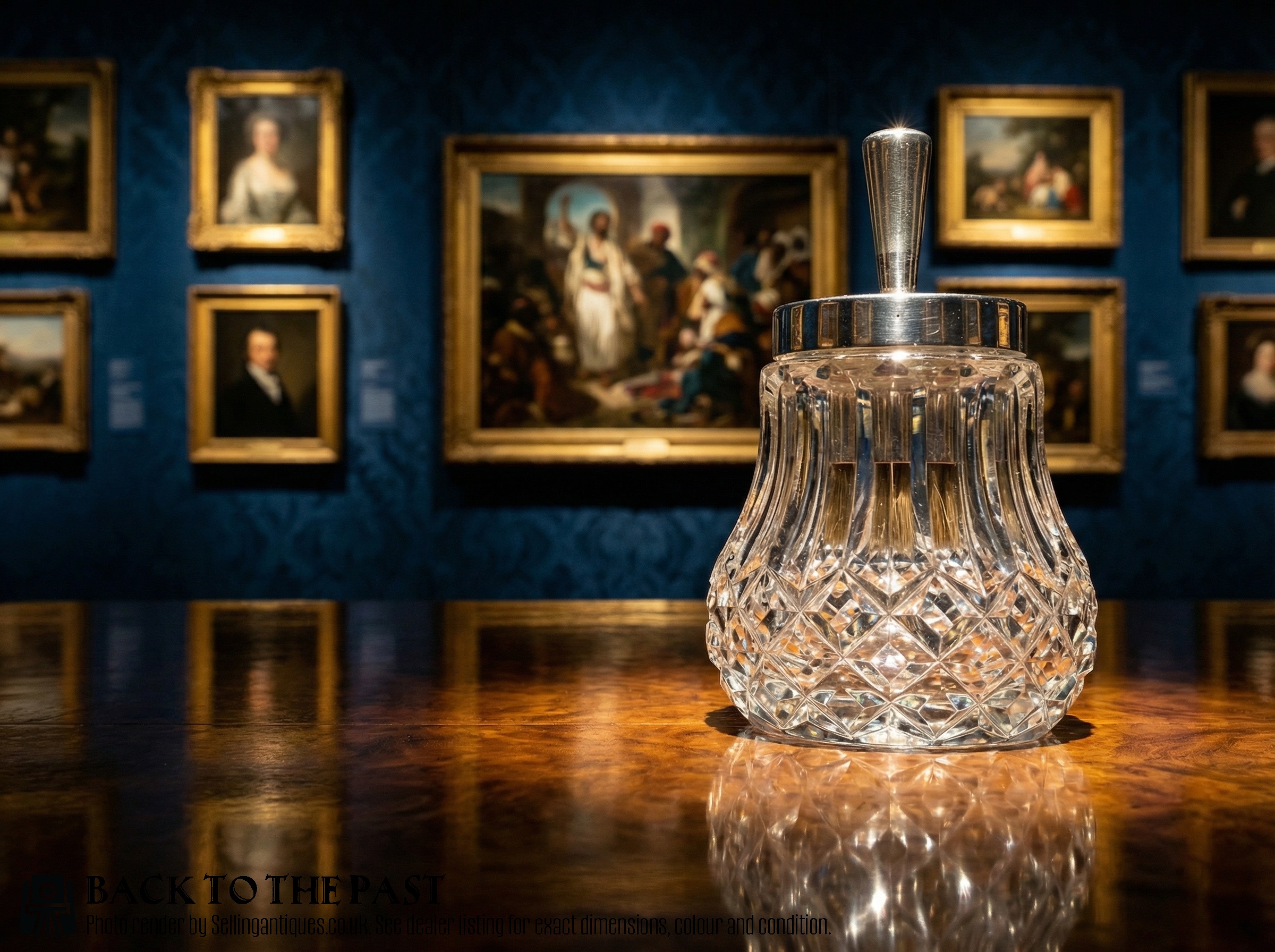
Silver Top Glass Pot
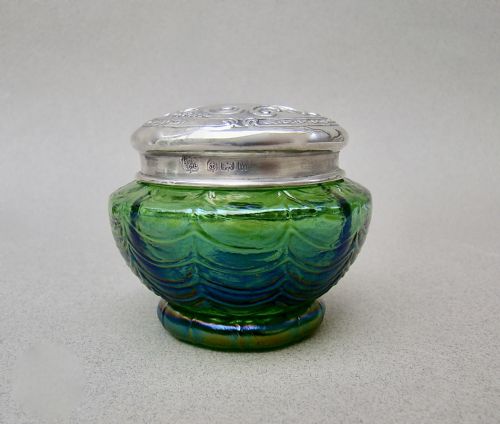
A silver top glass pot functions as a container for vanity items, condiments, or desktop supplies, uniting a heavy glass body with a hallmarked silver lid or mount. The selection spans dressing table jars, trinket boxes, inkwells, preserve pots, and condiment sets.
Most examples encountered here originate from the late nineteenth century through the Art Deco and George V eras, bearing hallmarks from Birmingham, Sheffield, London, and Chester. Forms range from simple facet-cut cylinders to large heart-shaped crystal boxes and coloured glass vessels.
The objects serve as functional accessories for the desk, dining table, or dressing room, retaining their utility while displaying the shifting decorative styles of successive British and continental periods.
How they were made
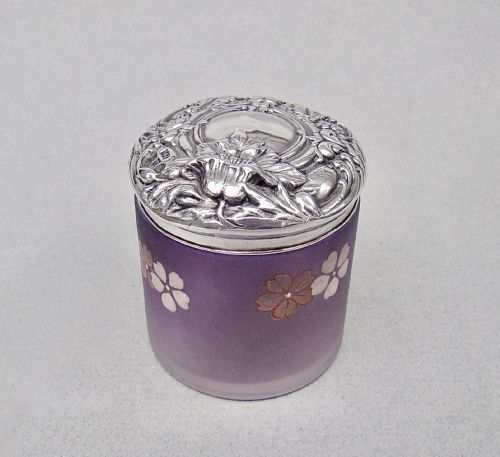
The glass bodies are formed through mould-blowing, pressing, or heavy cutting, yielding deep hobnail patterns, facet cuts, or smooth surfaces in clear crystal, cranberry glass, frosted glass, or Kralik glass. Makers then mounted these vessels with fitted sterling silver or silver-plated lids, secured by collars or threaded necks.
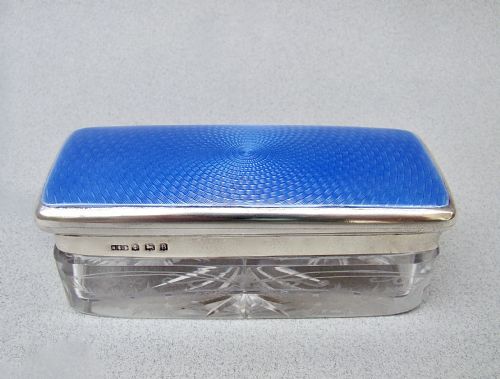
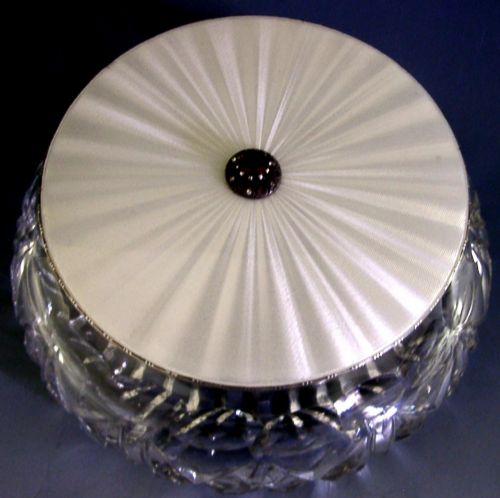
Lids and mounts often incorporate additional ornamentation, such as guilloché enamel in blue or other tones, tortoiseshell inlay, or applied Art Nouveau and Art Deco motifs beaten and chased by silversmiths.
Several items double as glue pots, proving Victorians took their stationery bonding with utmost seriousness.
What varies in quality
Quality rests in the weight and clarity of the glass, whether standard pressed ware or heavy hand-cut crystal with sharp, clean facets. Thicker glass vessels with substantial sterling silver lids demonstrate superior manufacture compared to thin silver-plated alternatives.
The intricacy of the metalwork and associated decorative techniques determine the standing of an individual piece. Intact guilloché enamel, tortoiseshell panels, complex glass colouring like cranberry or flashed hues, and clear town hallmarked stamps elevate the standing of the work.
A J Pepper & Co·Henry Clifford Davis·Charles Green·Jonathan Douglas·Asprey
The Silver Top Glass Pot Glossary
- Guilloche enamel
- A decorative technique where translucent enamel is layered over engine-turned metal engraving. This creates a repeating geometric pattern visible beneath the coloured glass-like surface.
- Hobnail cut
- A protruding diamond-shaped facet pattern cut into the exterior of glassware. It provides both tactile grip and brilliant light refraction.
- Hallmark
- An official stamp applied to precious metals indicating the standard of purity, the assay office, and the date letter. British silver bears these marks on the lid and frequently on the collar.
- Kralik glass
- Bohemian art glass produced by the Wilhelm Kralik Sohn factory, known for iridescent finishes and organic forms. Pieces appear mounted in silver settings from the early twentieth century.
- Trinket box
- A lidded receptacle designed for storing small jewellery or personal accessories on a dressing table. They frequently feature hinged silver tops.
Silver Top Glass Pot: Frequently Asked Questions
What were glass pots with silver tops used for?
These vessels served various domestic and personal functions across the dressing room, desk, and dining table. They held cosmetics, pins, ink, glue, preserves, or mustard depending on their specific form.
Larger boxes contained trinkets, while jars stored powders or creams on Edwardian dressing tables.
How do I date a silver topped glass piece?
Dating relies primarily on the silver hallmarks stamped on the lid or mount, which indicate the assay office and specific year of testing. Stylistic clues such as Art Deco geometric lines or Victorian floral chasing also help establish the period.
The glass manufacturing technique provides a secondary indicator of age.
Are the glass bodies and silver lids original to each other?
Most surviving pieces retain their matched components, fitted tightly together by the original silversmith or retailer. Hallmarks on the silver match the expected production era of the glass vessel.
Collectors examine the collar and rim fit to ensure the mount has not been swapped or replaced over time.
How do I care for silver and glass items?
Cleaning requires mild soapy water for the glass body, taking care to avoid soaking vulnerable materials like tortoiseshell or enamel in the lid. Silver sections benefit from gentle polishing with a soft cloth while avoiding abrasive contact with the glass edges or decorative surfaces.