




Silver Tea Service Vessel
A silver tea service vessel brings timeless proportion and gleaming metal to the table, whether you seek an individual pot or a matched set.
Silver Tea Service Vessel
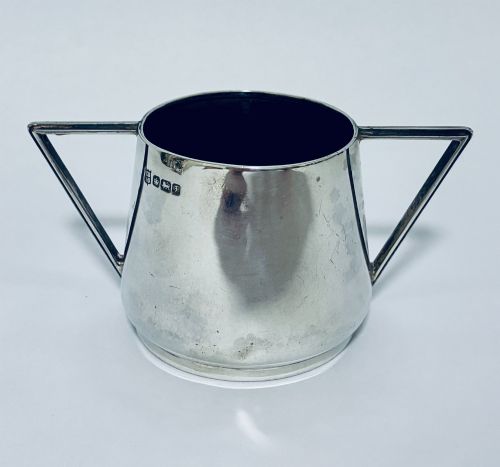
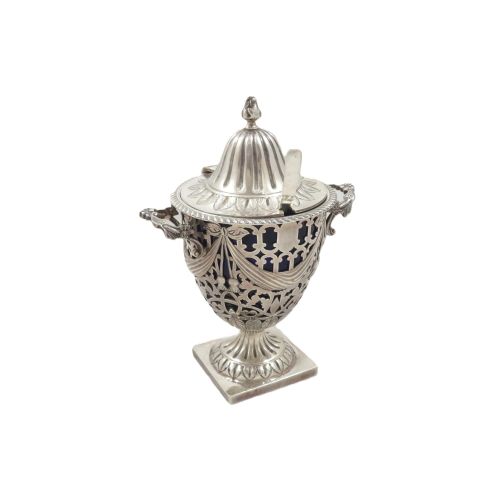
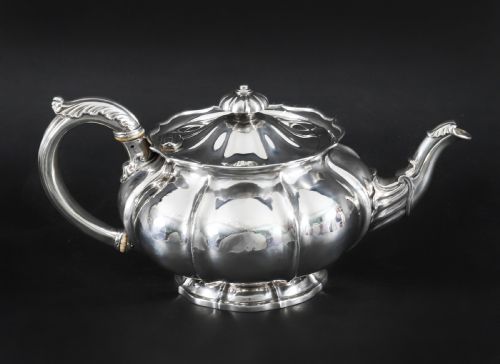
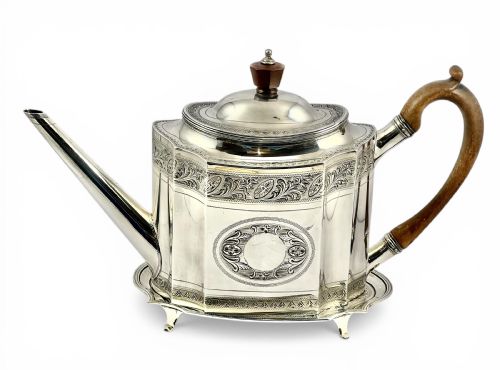
When you search for a silver tea service vessel, you encounter a range of hollowware designed for the preparation and service of tea and coffee. These items include teapots, sugar bowls, cream jugs, milk jugs, sugar baskets, hot water pots, and complete tea and coffee services.
The pieces appearing here span several distinct eras, drawing from the Georgian, Victorian, Edwardian, and Art Deco periods. You are most likely to meet individual teapots and jugs in sterling silver or Old Sheffield plate, alongside occasional matched multi-piece services from the nineteenth century.
Origin and form vary widely across the selection, encompassing provincial English work, London hallmarks, and American production. Makers utilised specific styles such as Neoclassical and William IV, reflecting the prevailing taste of each era.
Materials and construction
The construction of these vessels relies primarily upon sterling silver and Old Sheffield plate, occasionally combined with contrasting elements such as wood handles, bone insulators, cobalt glass liners, and silver-gilt interiors. Metalsmiths shaped these materials through hammering, casting, and soldering to create hollowware bodies that could withstand boiling water.
Detailing often involved intricate chasing, repoussé work, and crisp engraving to define the Neoclassical or Art Deco motifs characteristic of the period. Handles frequently incorporate insulating spacers of wood or bone to prevent the transfer of heat during use.
Silver Tea Service Vessel Retail Price Guide 2026
Typical asking prices for silver tea service vessel among the pieces listed under this phrase on Sellingantiques today, from the lower quarter to the upper quarter. They describe what is for sale here now, not the wider market.
Listings feature sterling silver and Old Sheffield plate items spanning the Georgian, Victorian, Edwardian, and Art Deco periods.
Judging quality and craftsmanship
Quality in these vessels reveals itself in the balance of the piece, the crispness of the chasing, and the structural integrity of the handle joints and finials. Superior examples display careful hand-finishing and clear, legible hallmarks that verify the origin and silversmith.
The weight of the metal and the precision with which spouts and handles are fitted distinguish finer items from standard production. A well-preserved silver-gilt interior or an intact wood handle further enhances the character and standing of the piece.
Paul Storr·Robert Hennell I·Joseph Craddock
The Silver Tea Service Vessel Glossary
- Sterling silver
- A silver alloy containing 92.5 percent pure silver and 7.5 percent other metals, usually copper, chosen for durability in hollowware. This standard has been strictly regulated for centuries through official assay offices.
- Old Sheffield plate
- An early form of composite metal made by fusing a thin sheet of silver to a thicker copper base, common before the invention of electroplating. Pieces made this way often reveal subtle lines of copper where edges meet.
- Silver-gilt
- A layer of gold applied to the interior or exterior surface of a silver vessel, frequently seen inside sugar bowls and cream jugs. This technique protected the silver from the corrosive effects of sugar and dairy.
- Repoussé
- A metalworking technique where the silversmith hammers the design from the reverse side to form raised relief patterns on the body of the pot. It is often combined with chasing to sharpen the details from the front.
Silver Tea Service Vessel: Frequently Asked Questions
How do I clean a silver tea vessel?
Clean your vessel using a gentle, non-abrasive silver polish and a soft cloth to protect the surface details and hallmarks. Avoid harsh chemical dips, which can strip the natural patina accumulated over the centuries.
Rinse the piece thoroughly in warm water and dry it immediately with a soft lint-free cloth. Regular, gentle dusting is often enough to maintain the shine on display pieces.
Can I still use these pots for tea?
Many of these vessels remain structurally sound and can be used for serving tea if inspected and cleaned properly beforehand. Check the interior and handle joints carefully before filling any antique pot with boiling water.
Silver-gilt interiors help protect the metal from staining and corrosion caused by tea and sugar. However, collectors often reserve older or more delicate pieces for display rather than daily service.
How do I identify the date of a silver vessel?
Dating relies on the system of hallmarks stamped directly into the metal by official assay offices. These marks typically include a maker's mark, a standard mark, a town mark, and a date letter.
Comparing the style, such as an Art Deco geometric form or a Georgian Neoclassical urn shape, helps narrow down the era when hallmarks are rubbed or absent. Reference books on British and American silversmiths provide complete charts for deciphering date letters.