


Silver Tea Accessory Box
A silver tea accessory box holds the small implements and containers that complete the table, bringing period craftsmanship directly into daily tea service.
Silver Tea Accessory Box
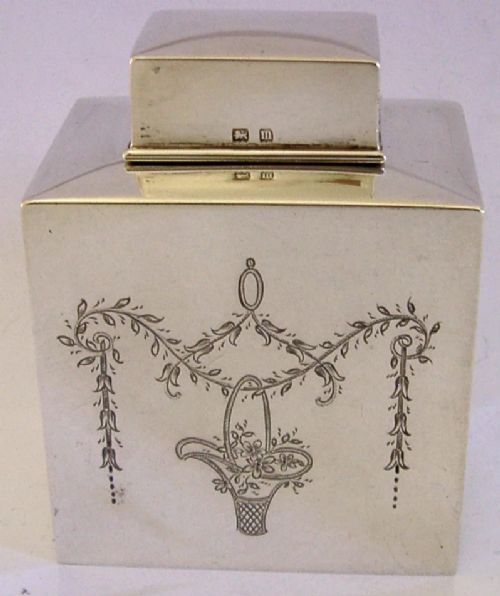
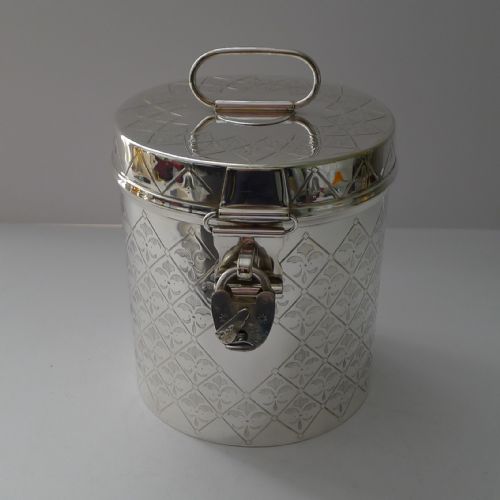
When you search for a silver tea accessory box, you encounter a variety of containers and sets designed for the tea table, spanning from the Georgian period through the Edwardian era. These pieces range from dedicated solid sterling silver tea caddies to larger silver plated biscuit barrels and fitted sugar sets.
The versions most commonly met on this page include Victorian and Edwardian biscuit boxes, often featuring cut glass bodies with silver plated mounts, alongside solid silver caddies bearing hallmarks from London, Chester, and Birmingham. Alongside these containers, the selection occasionally encompasses associated flatware such as teaspoons and sugar tongs.
Originating primarily from English workshops, these items reflect the changing domestic habits of the nineteenth and early twentieth centuries, when tea service became an elaborate ritual requiring specialised vessels for leaves, sugar, biscuits, and fruit.
Materials and construction
The construction of these items relies on solid sterling silver or silver plate applied over a base metal, frequently paired with heavy cut glass to form bodies that catch the light. Interior compartments often utilise delicate linings of silk and velvet to cradle delicate spoons and knives.
Metalworking techniques encompass traditional hand hammering, piercing, and casting for solid sterling items, while electroplated nickel silver provides the foundation for many of the larger nineteenth-century barrels. Fitted boxes incorporate leather exteriors and mother of pearl handles on steel cutlery to complete the presentation.
Listings feature items spanning the Georgian, Victorian, and Edwardian periods, utilising sterling silver, silver plated metal, cut glass, velvet, silk, and leather.
Judging quality and execution
Quality in these pieces rests upon the crispness of the chasing and engraving on the silver mounts, as well as the thickness and clarity of the cut glass used in barrels and caddies. Substantial gauge silver provides a reassuring weight, whereas lesser examples rely on thinner metal subject to denting.
The integrity of the interior fitments, such as original silk or velvet linings and fully functioning locking mechanisms with operational keys, distinguishes exceptional items from standard production pieces. Maker marks from established firms also indicate a higher standard of workshop supervision and material selection.
Zimmermann·Mappin and Webb·P A W Bateman·Walker & Hall
The Silver Tea Accessory Box Glossary
- Hallmark
- Official stamp applied by an assay office to indicate the purity of precious metal, the maker, and the year of testing. These marks provide the primary means for dating solid silver items accurately.
- Biscuit barrel
- A covered vessel designed to hold biscuits on the Victorian or Edwardian tea table, frequently constructed from cut glass with a silver plated swing handle and lid.
- Tea caddy
- A container specifically built to store loose tea leaves securely, often featuring a fitted inner lid to preserve the aroma and flavour of the contents.
- Electroplated nickel silver
- A manufacturing process where a thin layer of silver is deposited onto a base metal alloy composed of copper, nickel, and zinc, widely utilised for larger serving pieces during the Victorian period.
Silver Tea Accessory Box: Frequently Asked Questions
What is the difference between a tea caddy and a biscuit barrel?
A tea caddy is a smaller container designed exclusively for storing loose tea leaves, often equipped with a tight inner lid to keep the contents dry.
A biscuit barrel is a larger, deeper vessel intended for serving biscuits at the tea table, frequently combining a cut glass body with a hinged metal lid.
How do I date a silver tea accessory box?
Dating relies heavily on identifying the hallmarks stamped into solid silver items, which indicate the specific assay office and year of manufacture.
For silver plated pieces lacking full hallmarks, stylistic details such as Victorian aesthetic movement engraving or Edwardian proportions help narrow down the period.
Were these boxes used every day?
These containers formed part of active middle and upper-class domestic life during the Georgian, Victorian, and Edwardian eras, appearing regularly during afternoon tea.
Their sturdy construction in silver plate or solid silver ensured they could withstand regular handling by family members and domestic staff alike.
What is electroplated nickel silver?
Electroplated nickel silver is a base metal alloy composed of copper, nickel, and zinc that has been coated with a thin layer of pure silver using an electrical process.
This technique allowed nineteenth-century manufacturers to produce large, ornate serving items that offered the visual appeal of solid silver at a more accessible cost.
How should I clean silver tea accessories?
Care requires a soft microfibre cloth and a reputable silver polish formulated to remove tarnish without abrading the underlying metal or engraving.
Care must be taken around glass bodies and delicate silk or velvet interior linings to avoid moisture damage during the cleaning process.