



Silver Table Snuff Box
A silver table snuff box is a substantial receptacle designed to hold tobacco, encountered in Georgian, Victorian and continental styles.

Silver Table Snuff Box
A silver table snuff box is a solid container created to sit upon a surface rather than be carried in a pocket. These receptacles date from the eighteenth, nineteenth and early twentieth centuries, spanning Georgian, Victorian and Edwardian eras.
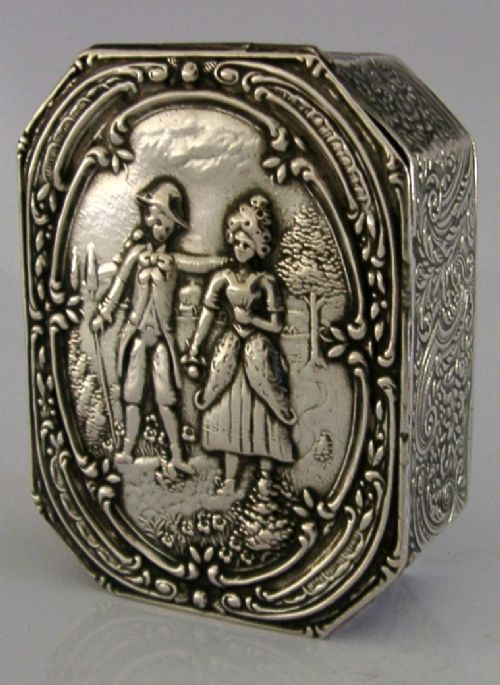
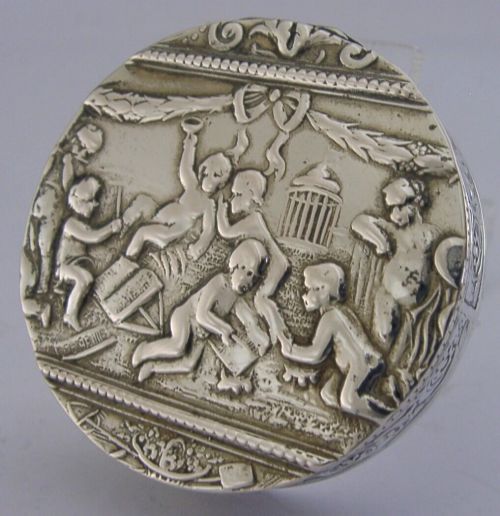
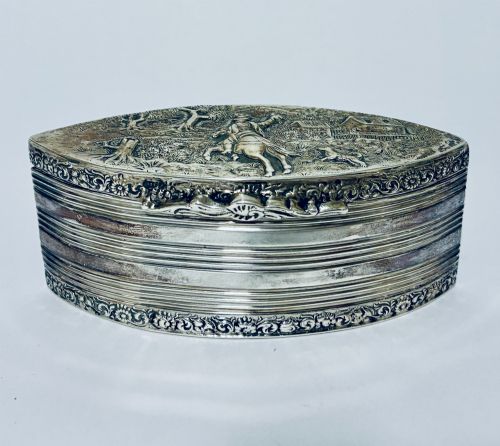
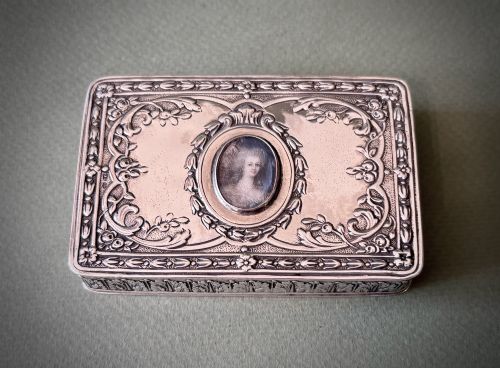
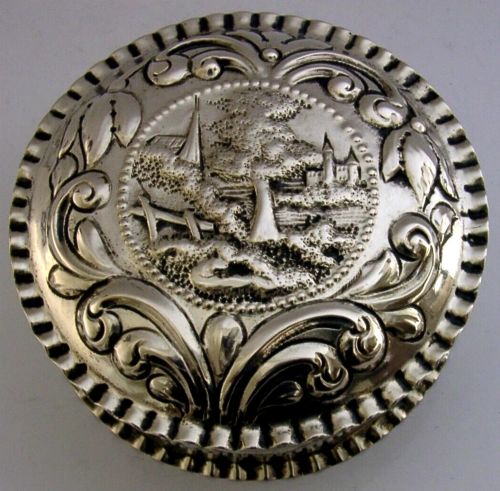
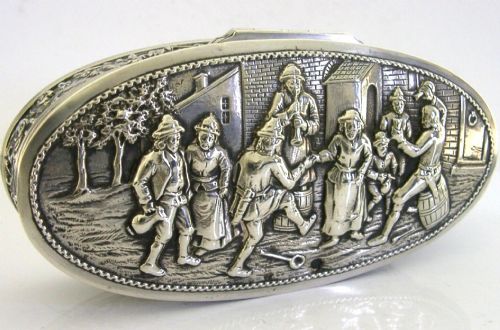
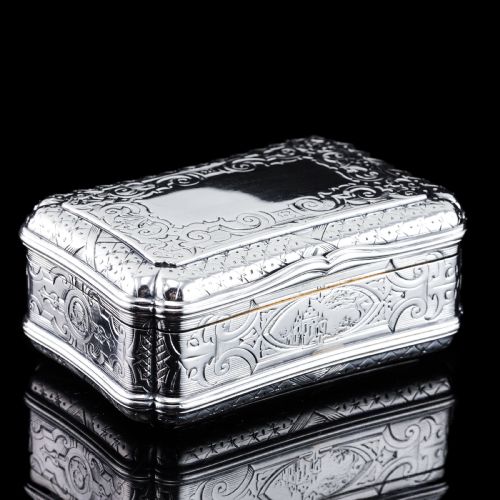
The pieces on this page include heavy cast boxes, engine-turned designs, and pictorial castle-top lids. English examples share space with continental work from Germany, France and Russia.
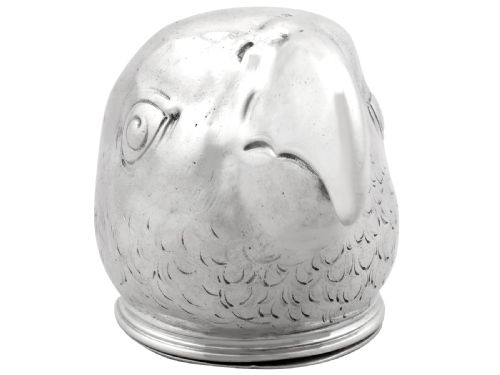
Forms range from simple rectangular table boxes to elaborate figural pieces, shell-shaped vessels and coin-embellished containers. Most examples meet the eye as sterling silver or silver-gilt objects meant for display and utility.
Materials and Techniques
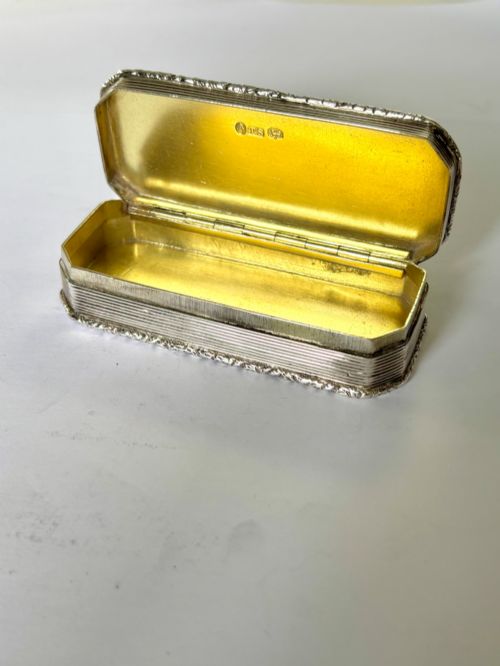
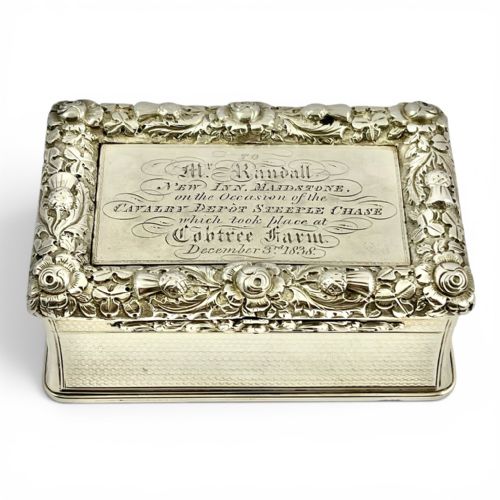
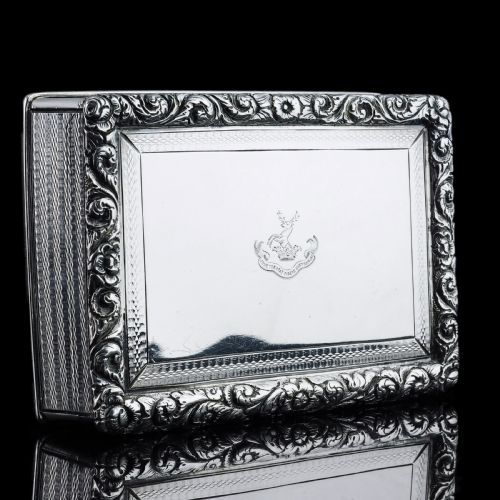
Silversmiths utilised sterling silver and solid silver, frequently applying gold wash known as silver-gilt or vermeil to the interior surfaces. Cast ornamentation, applied acanthus borders, and hand engraving define the construction of these pieces.
Specialised techniques such as niello work provide dark metallic contrasts against engraved silver backgrounds. Other examples incorporate organic materials including tortoise shell, glass, and painted porcelain plaques mounted within the metal framework.
Silver Table Snuff Box Retail Price Guide 2026
Typical asking prices for silver table snuff box among the pieces listed under this phrase on Sellingantiques today, from the lower quarter to the upper quarter. They describe what is for sale here now, not the wider market.
Listings demonstrate a broad span of origins, encompassing English provincial towns, London workshops, continental European centres, and Russian imperial silversmiths.
Distinctions in Quality
The distinction between standard boxes and exceptional pieces rests upon the crispness of the chasing and the depth of the metalwork. Heavy gauge silver provides a substantial weight that lighter stamped versions lack.
Master silversmiths executed detailed figural scenes, high-relief cast borders, and intricate engine-turning by hand. Pieces bearing clear hallmarks and named makers display a higher level of execution than unmarked continental novelties.
Thomas Shaw·Thomas Edwards·Edward Smith·Joseph Willmore·Jane Brownett Alexander Jones·Frederick Mason·Edward Edwards·Edward Farrell·David Pettifer·Nathaniel Mills·Yapp & Woodward·Charles Rawlings & William Summers·William Parker
The Silver Table Snuff Box Glossary
- Silver-gilt
- Sterling silver coated with a thin layer of gold on the interior or exterior. This treatment protected the silver from the corrosive properties of tobacco.
- Niello
- A black metallic alloy of sulphur, silver, lead and copper used to fill engraved designs on metal. It creates sharp graphic contrasts against the bright silver ground.
- Engine-turned
- A geometric pattern mechanically engraved into the metal surface using a rose engine lathe. This decorative texture catches the light and conceals minor handling marks.
- Castle-top
- A pictorial lid featuring a high-relief engraving or casting of a specific architectural landmark. These topographical scenes are particularly sought after by collectors.
- Cartouche
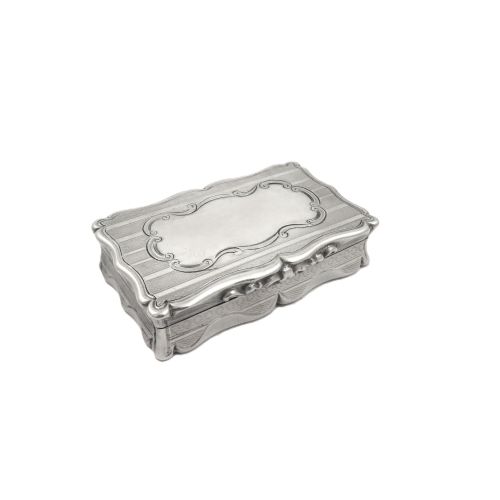
- An ornamental oval or shield-shaped frame usually left blank for an engraved crest or initials. It forms the focal point of many Georgian and Victorian lids.
Silver Table Snuff Box: Frequently Asked Questions
What is a table snuff box?
A table snuff box is a large silver container meant to sit permanently on a surface rather than fit into a pocket. They served as communal receptacles for powdered tobacco in reception rooms.
These pieces were kept filled for guests and household members during the Georgian and Victorian periods. Their substantial weight and decorative lids made them conversation pieces on dining and side tables.
How do I date a silver box?
Dating relies heavily on official hallmarks stamped into the metal, which indicate the assay office, city and year of production. Stylistic clues such as Rococo revival scrolls or Art Deco geometry also point to specific eras.
Maker marks provide further context when cross-referenced against historical silversmith records. Unmarked continental pieces require stylistic comparison to determine their approximate age.
Can I use these boxes for modern items?
These containers adapt easily to holding modern small objects like pills, stamps or cufflinks on a desk or dressing table. The original gilded interiors protect the silver from modern contents.
Care should be taken to clean them gently without abrasive polishes to preserve historical engraving and patination. They function well as decorative desktop accessories today.
Why are some interiors gold?
The gold wash, known as silver-gilt or vermeil, protected the pure silver from tarnishing when exposed to moist tobacco leaves. Acidic residues from snuff could otherwise pit and stain untreated silver.
This application also added a layer of luxury to the piece when opened. Makers applied the gold finish using mercury amalgamation before modern electroplating techniques existed.