
Silver Table Basket
When you search for a silver table basket, you meet a formal dining accessory designed to hold fruit, bread, or sugar.
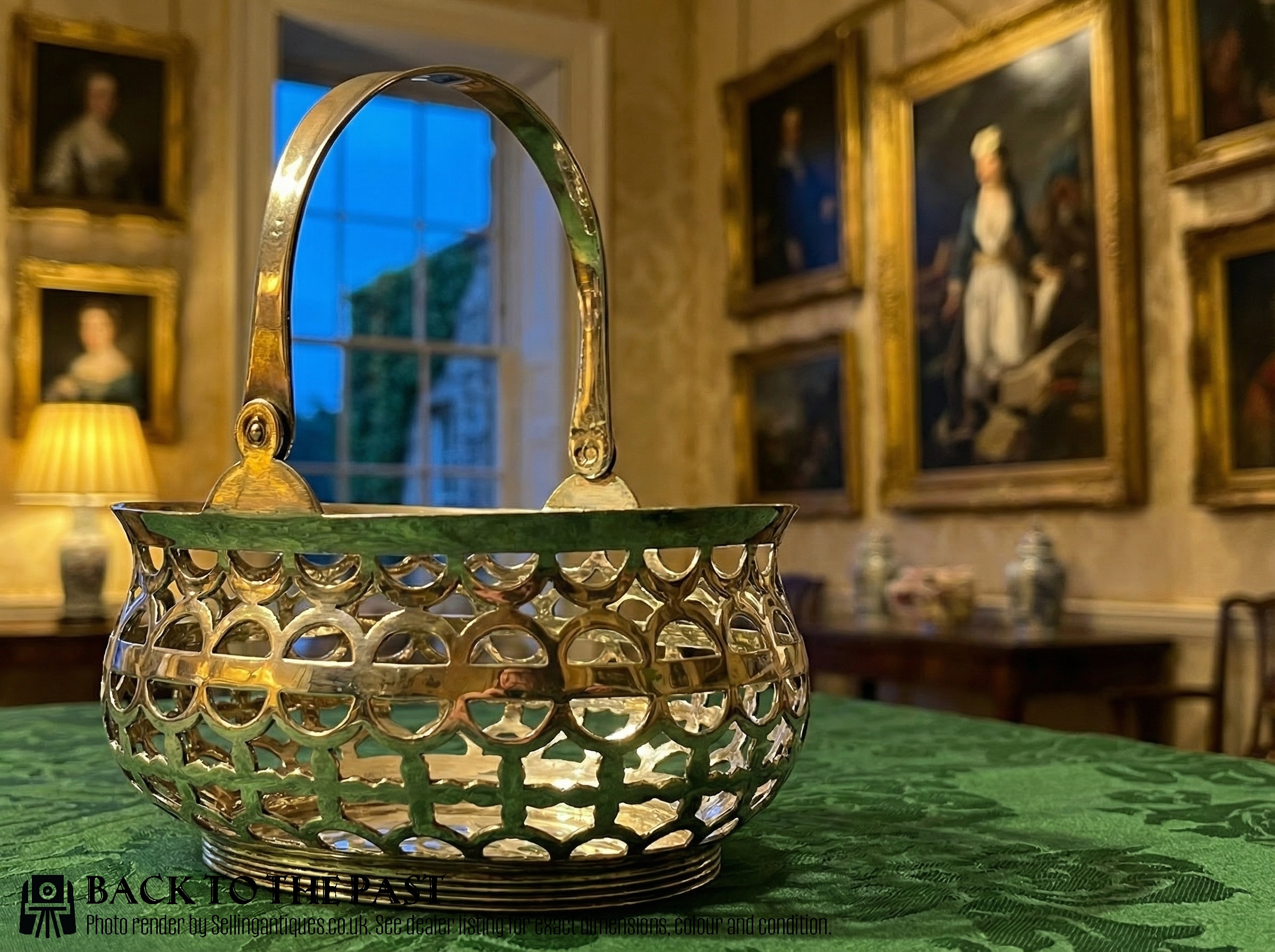
Silver Table Basket
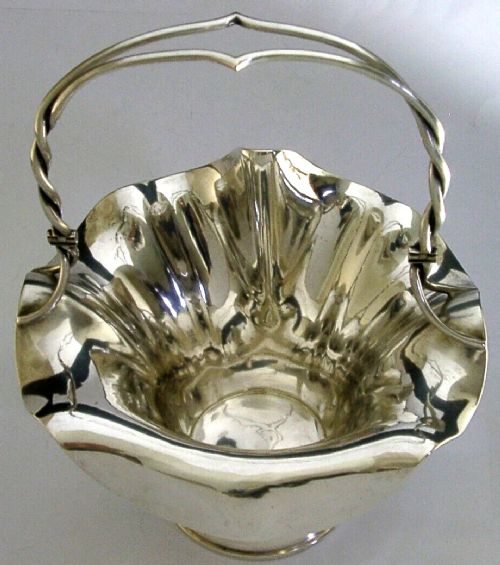
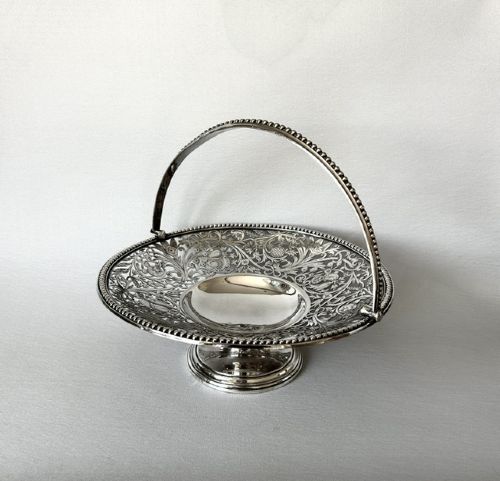
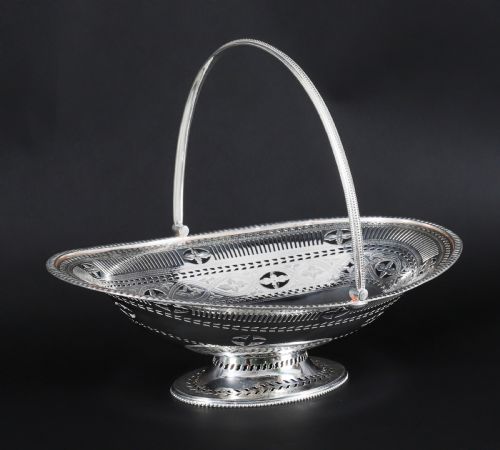
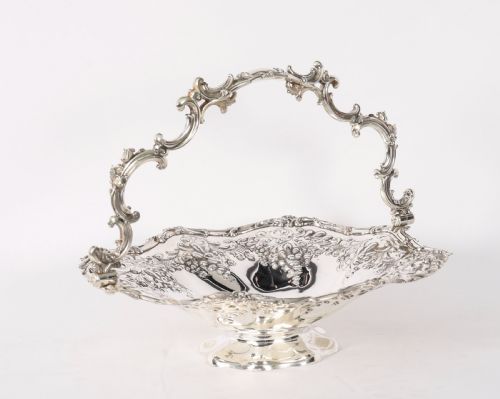
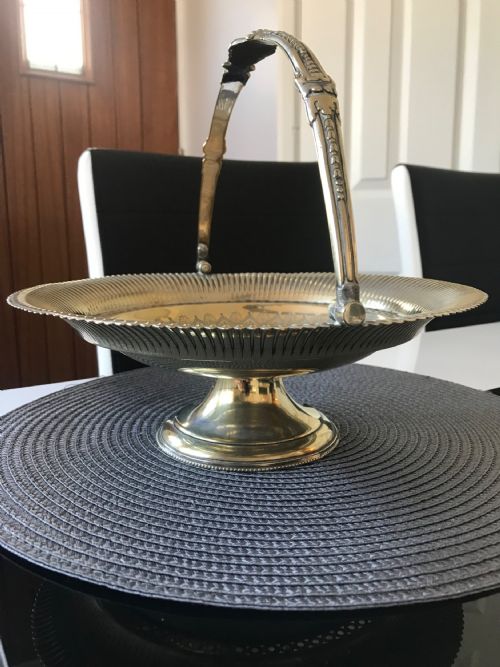
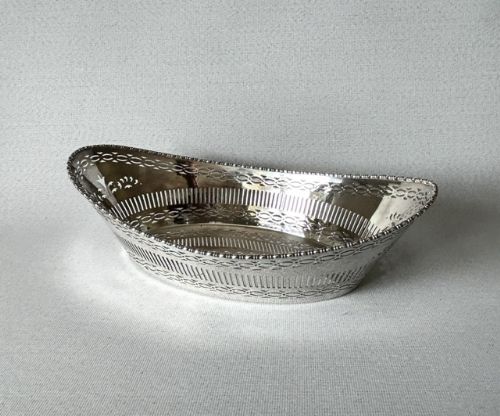
A silver table basket functions as a centrepiece or serving dish, holding items such as bread, fruit, sugar, or bonbons on the dining table. The pieces found here span from the 17th century through the Victorian, Edwardian, and Art Deco periods, encompassing both solid sterling silver and silver plated items.
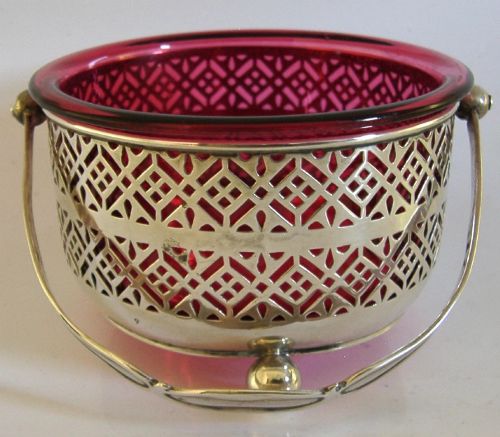
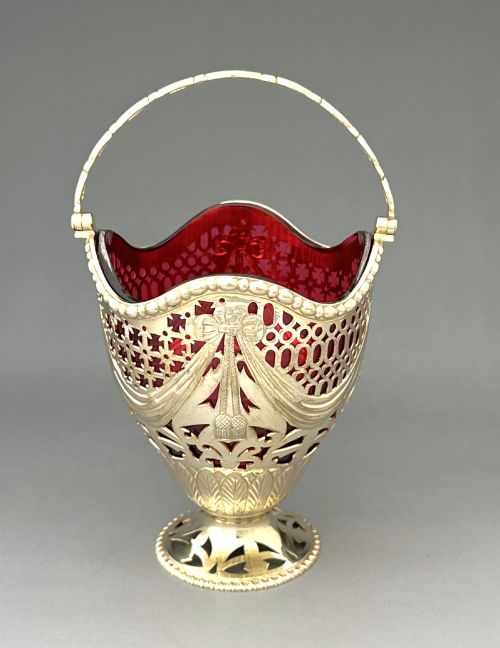
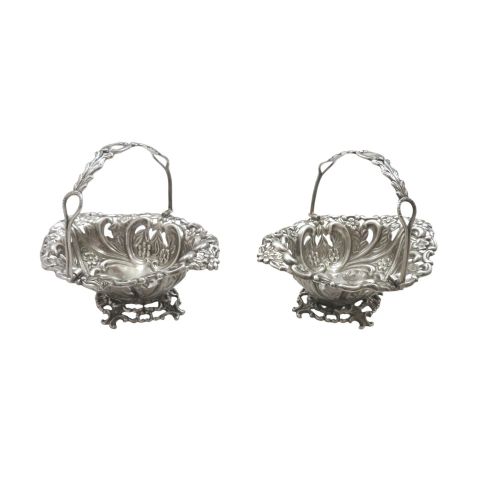
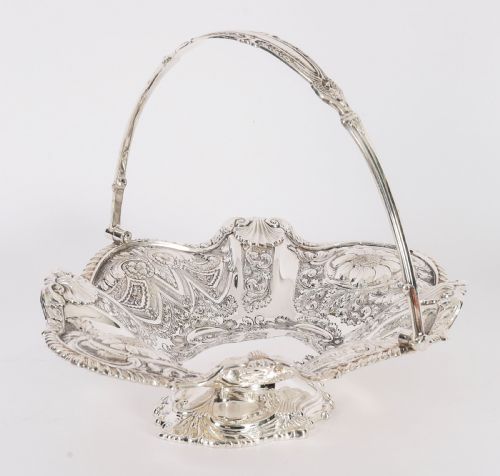
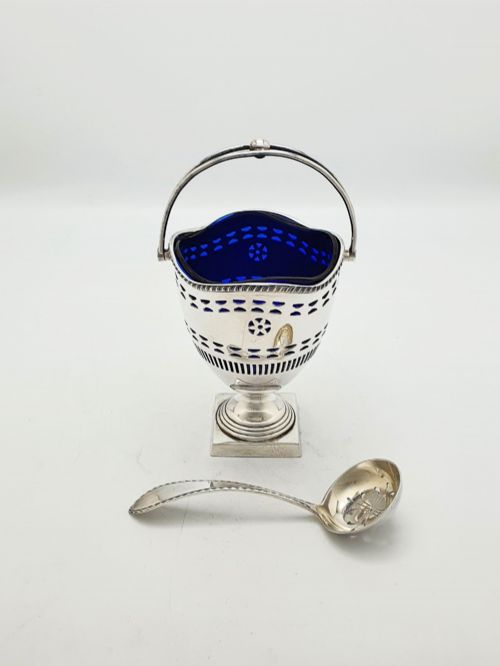
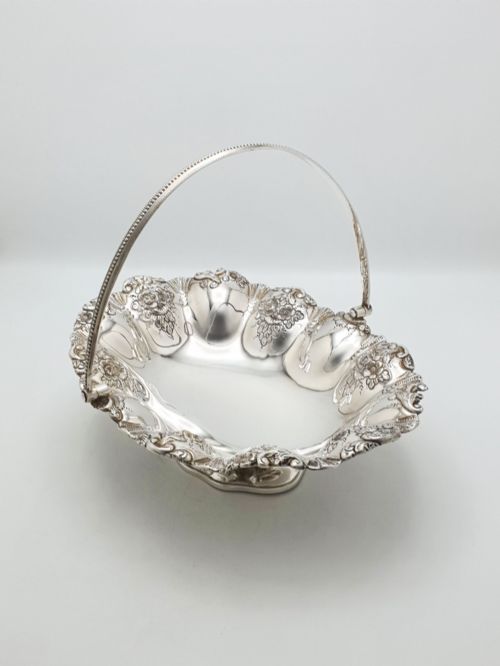
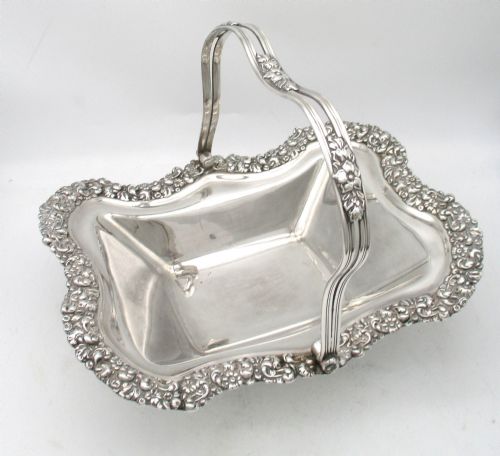
The most common forms you will encounter are swing-handled fruit baskets, sugar baskets fitted with coloured glass liners, and pierced bread dishes. Styles range from plain Old Sheffield Plate wirework to ornate Art Nouveau centrepieces and Victorian neoclassical designs.
Makers represented in the archive include prominent silversmiths and manufacturers such as Mappin & Webb, Elkington, and William Comyns. These tableware pieces served both practical dining functions and decorative display roles in period homes.
How they were made
The construction methods combine silversmithing techniques like piercing, chasing, and repoussé work with metal plating traditions. Old Sheffield Plate involves fusing a thin layer of silver to a copper base, whereas electroplated nickel silver and standard silver plate use electrical current or dipping methods.
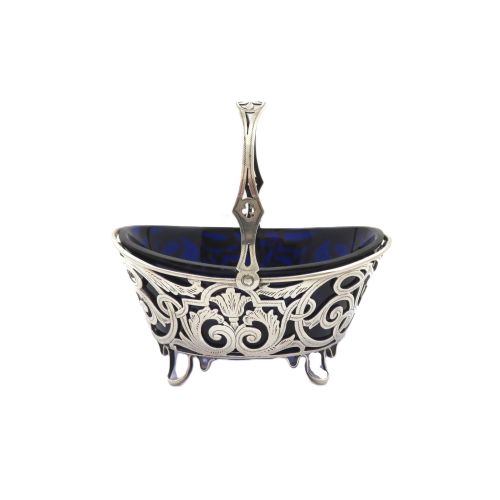
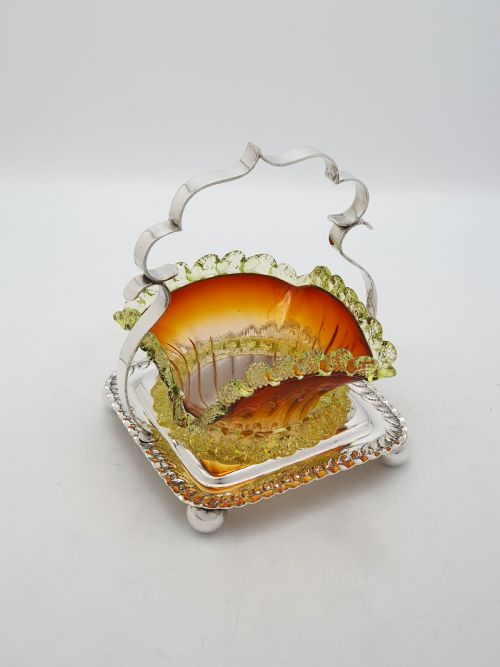
Many examples incorporate delicate coloured glass liners in cranberry, amber, ruby, or vaseline glass, held within pierced metal frames. Handles are frequently hinged with swing mechanisms or cast in floral and reeded patterns.
Silver Table Basket Retail Price Guide 2026
Typical asking prices for silver table basket among the pieces listed under this phrase on Sellingantiques today, from the lower quarter to the upper quarter. They describe what is for sale here now, not the wider market.
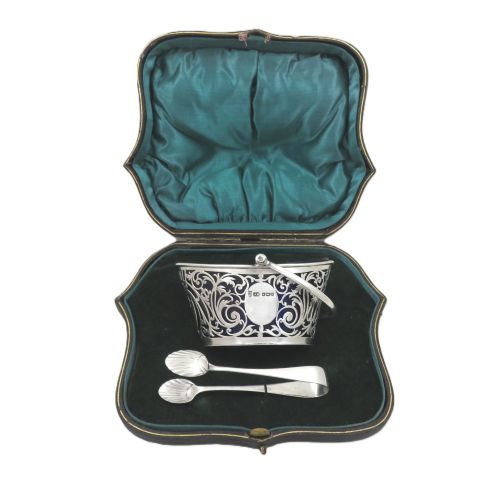
Some vessels feature cobalt glass liners paired with sifter spoons designed specifically for powdered sugar.
What varies in quality
Quality rests on the weight of the metal, the crispness of the piercing or repoussé decoration, and the integrity of any applied plating. Heavier gauge sterling silver and substantial Old Sheffield Plate retain their form and structural detailing better over centuries of handling.
The presence of intact, original coloured glass liners - such as cranberry or vaseline glass - substantially elevates an individual piece. Finer examples also exhibit carefully cast handles and clear maker marks that indicate reputable firms.
George W. Scott & Sons Ltd·Mappin & Webb·Thomas Bradbury·Fenton Brothers·Joseph Rodgers·William Comyns·Alexander Clark & Co.
The Silver Table Basket Glossary
- Old Sheffield Plate
- An early composite material made by fusing silver to a copper core. This technique predates modern electroplating and produces a warm tonal quality.
- Pierced
- A decorative technique where metal is cut through to create openwork patterns such as lattices, scrolls, or geometric shapes.
- Repoussé
- A metalworking method where the design is hammered into relief from the reverse side. It creates rich, tactile surface ornamentation like floral rims.
- Swing-handled
- A movable handle attached to pivots on opposite sides of the basket rim. This feature allows the handle to drop flat when the piece sits on a table.
- Silver Gilt
- Silver that has been coated with a thin layer of gold on its surface. This treatment provides a rich two-tone appearance, often seen inside bowls and liners.
Silver Table Basket: Frequently Asked Questions
What were silver table baskets used for?
These baskets served multiple dining purposes, holding bread, fresh fruit, sugar lumps, or small sweetmeats during formal meals. Smaller variants with glass liners acted as sugar or bonbon dishes.
They also functioned as decorative centrepieces on dining tables and sideboards, displaying the host's taste and silver collection.
How do I care for silver plated baskets?
Regular, gentle cleaning with a specialist silver cloth removes tarnish without wearing down the underlying plate. Avoid abrasive pastes that can strip thin silver layers, particularly on older plated items.
Glass liners should be washed separately in warm soapy water and dried thoroughly before being placed back into the metal frame.
How can I tell the period of a basket?
Stylistic indicators offer the clearest guide, as heavy floral repoussé and neoclassical motifs point to the Victorian era, while flowing organic lines suggest Art Nouveau. Maker marks and hallmarks stamped into the metal provide definitive dates for sterling silver pieces.
Construction methods also help, as early pieces utilise Old Sheffield Plate techniques while later items employ electroplating.
Are glass liners original to the baskets?
Original glass liners fit snugly into the pierced metal frame and match the period of manufacture in colour and style. Cranberry, vaseline, and cobalt glass were popular choices in the Victorian and Edwardian eras.
Replacement liners are common due to the fragile nature of glass, though matched period examples remain desirable for collectors.