
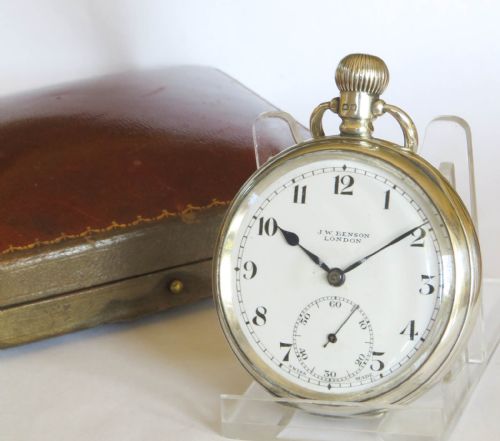
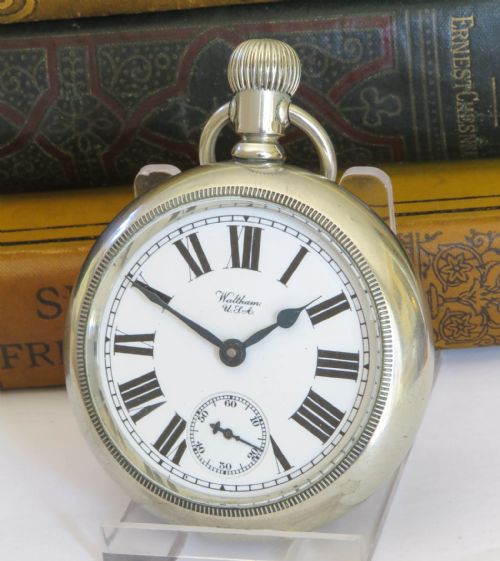
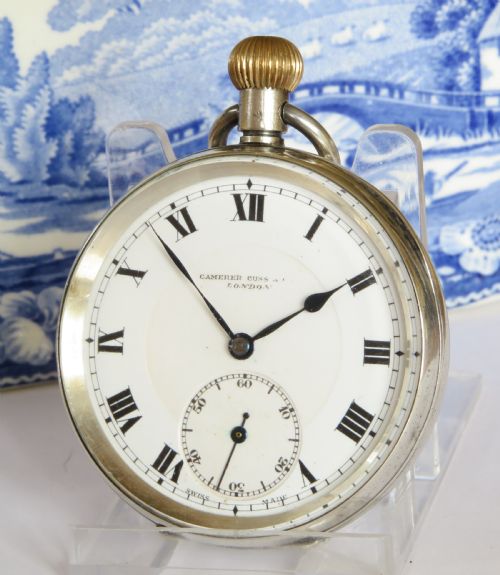
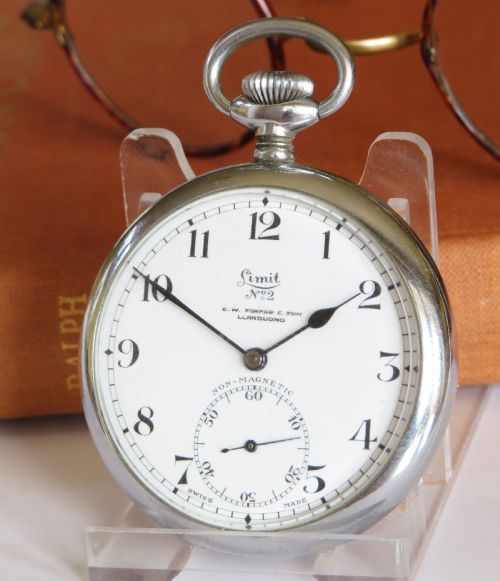
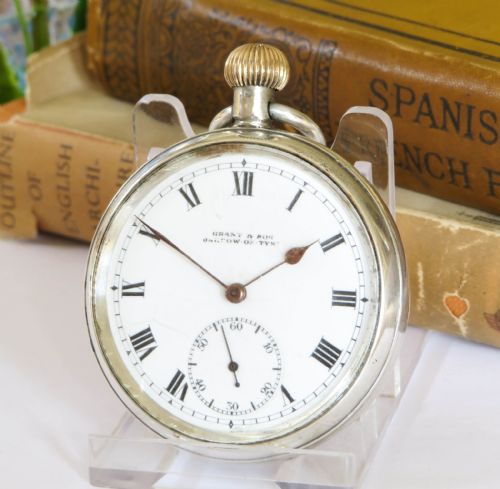
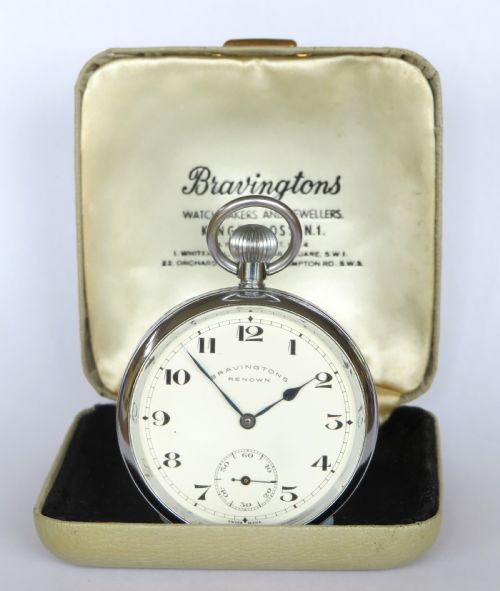
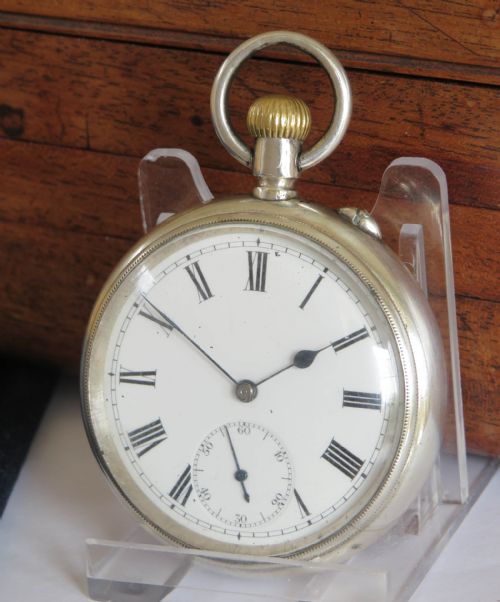
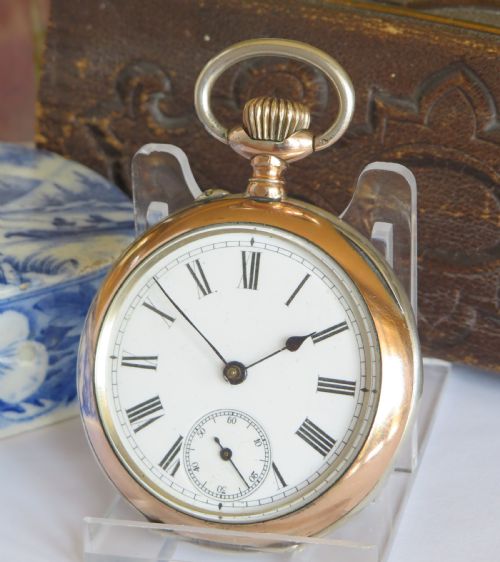

Silver Stem Wind Watch
A silver stem wind watch is a mechanical pocket timepiece driven by a crown mechanism, prized by collectors for its period utility and classic metal case.
Silver Stem Wind Watch
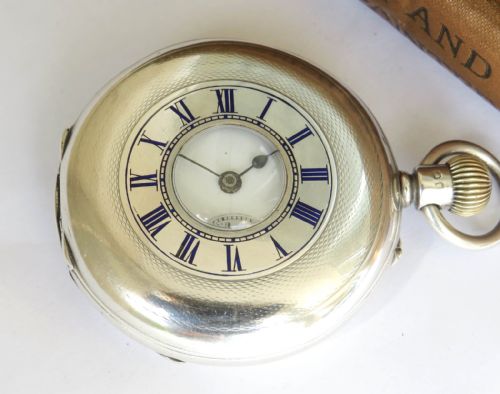
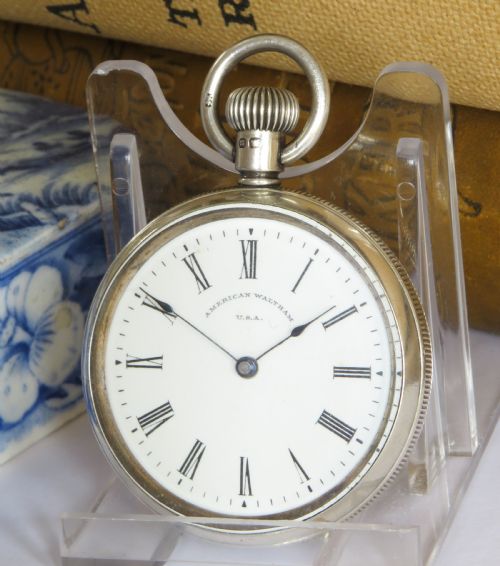
When you search for a silver stem wind watch, you encounter mechanical pocket timepieces spanning the late Victorian era through the mid-twentieth century. These items include standard pocket watches, half hunters with protective case covers, and railway timepieces designed for accurate timekeeping.
The versions most frequently found on this page date from the Edwardian period and the 1920s, often housed in sterling silver or .800 silver cases. They represent a transition from key-wound mechanisms to the convenience of winding the mainspring via the crown at the top.
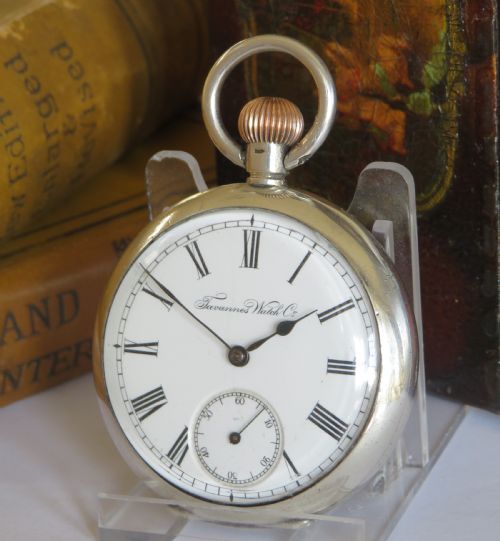
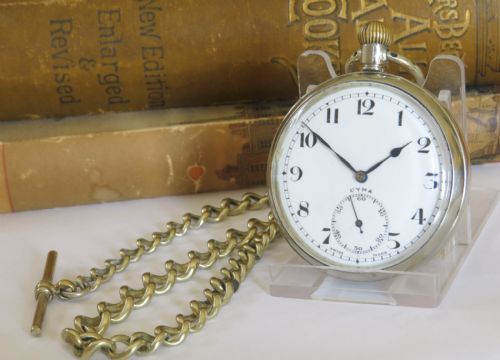
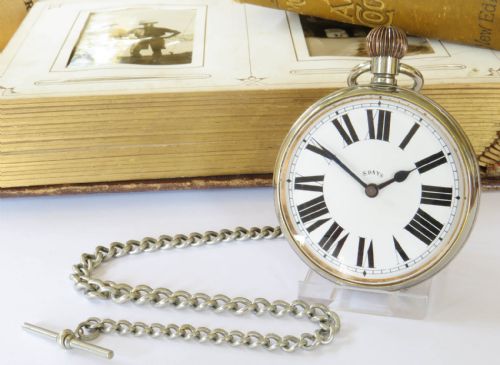
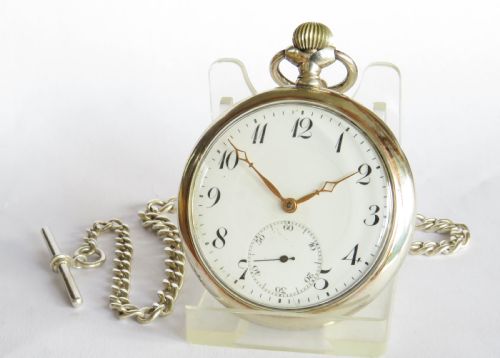
Makers ranging from Swiss firms to English retailers produced these pieces, incorporating enamel dials and glass crystals. Many survive alongside their original chains, preserving a complete pocket watch ensemble from daily historical use.
How they were made
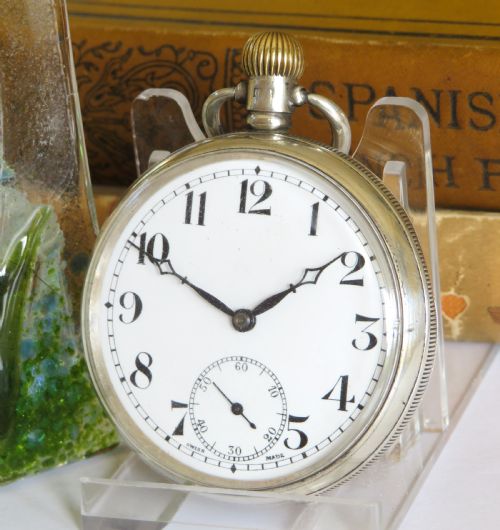
Cases of a silver stem wind watch were typically pressed from sterling silver, nickel, or .800 grade silver, often featuring hinged backs and bezels. Metal alloys and chrome also appear in later mid-century examples to provide robust daily wear.
Dials were predominantly formed from white enamel with painted or fired black numerals, protected by glass crystals. Movements inside utilised brass plates, steel wheels, and jewel bearings to reduce friction in the gear train.
Listings feature silver, nickel, and chrome materials across Victorian, Edwardian, Art Deco, and mid-century periods.
What varies in quality
The distinction between average and superior examples rests upon the refinement of the movement and the integrity of the case. Higher quality pieces feature finely adjusted movements with more jewel bearings, whereas standard models rely on simpler gear setups.
Condition of the enamel dial and crispness of the case hallmarks significantly influence the character of each piece. Crisp silver hallmarks and clean, hairline-free enamel dials indicate careful preservation and superior original manufacture.
J W Benson·Guinand·Camerer Cuss·Limit·Tavannes·Cyma·Bravingtons·Stauffer·Waltham·Octo·Omega·Meyer and Studeli·Doxa·Hamilton·Elgin·Buren Imperial·Pinnacle·Record Dreadnought Watch Co·Freemans·Visible·Erlim·Curono Victrix·Vertex
The Silver Stem Wind Watch Glossary
- Stem wind
- A winding mechanism operated by turning the crown at the top of the watch, replacing the older key-wound method.
- Half hunter
- A pocket watch case featuring a solid cover with a glass-centred aperture, allowing the time to be read without opening the case.
- Full hunter
- A pocket watch equipped with a full metal spring-loaded cover that completely shields the glass dial from damage.
- Enamel dial
- A watch face created by fusing powdered glass onto a metal substrate at high heat, producing a glossy white surface.
- Goliath
- An oversized pocket watch, substantially larger than standard examples, often displayed on a desk or carried in a deep pocket.
Silver Stem Wind Watch: Frequently Asked Questions
How do I wind a silver stem wind watch?
Turn the crown at the top of the watch clockwise between your thumb and forefinger until you feel gentle resistance. Do not force the crown once it stops, as over-winding can snap the internal mainspring.
Most vintage pocket watches run for approximately twenty-four to thirty hours on a full wind. Establishing a consistent daily winding routine helps maintain steady timekeeping.
How can I tell the date of my watch?
Examine the inside of the case back for silver hallmarks, which often include date letters specific to assay offices in London, Birmingham, or Chester. Movement serial numbers can also be cross-referenced with manufacturer records.
Swiss silver cases frequently display standard hallmarks such as the grouse or bear mark indicating .800 or .925 silver standard alongside import stamps.
Can I wear a pocket watch daily?
Many people carry these timepieces daily by securing them to a waistcoat or belt loop with an appropriate chain. Keeping the watch in a dedicated pocket prevents impact damage from keys or loose coins.
Routine servicing by a qualified horologist ensures the internal mechanical parts remain lubricated and accurate for regular use.