

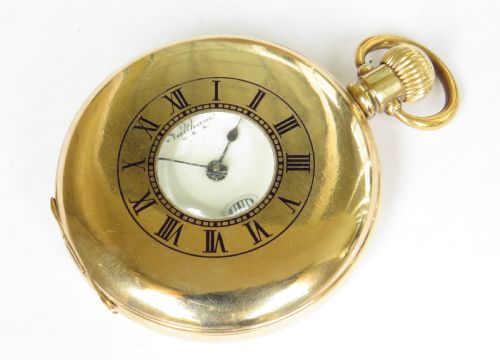


Demi Hunter Pocket Watch
Demi hunter pocket watches combine the convenience of a closed case with the luxury of reading the time without opening the cover.
What a demi hunter pocket watch is
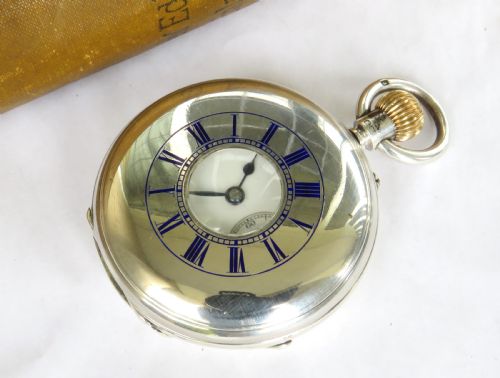
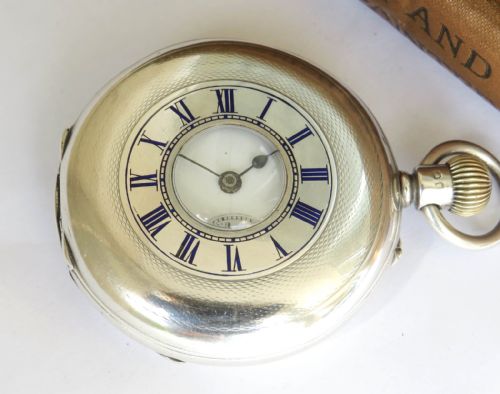
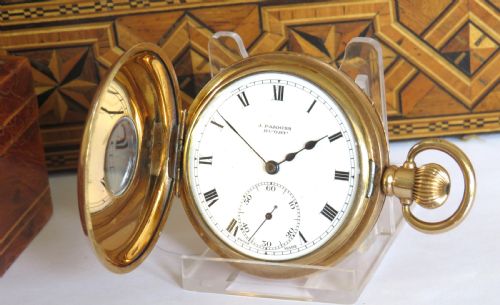
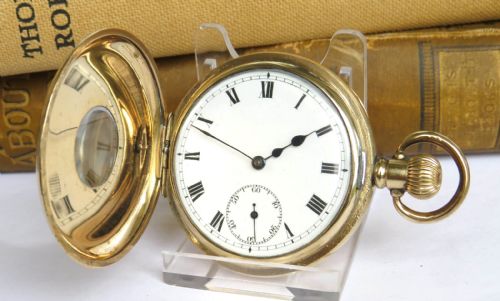
A demi hunter pocket watch, often catalogued as a half hunter, protects its dial behind a metal cover featuring a glass or open-centred glazed aperture. This design lets the wearer check the time through the outer casing while keeping the delicate dial safe from daily knocks.
The pieces listed on this page span the Victorian, Edwardian, Art Deco and interwar periods, stretching from eighteen-ninety to nineteen-thirty. English silver examples from the late nineteenth and early twentieth centuries sit alongside signed American and Swiss movements.
Forms include sterling silver cases bearing hallmarks alongside gold filled, gold plate and brass pieces. Collectors meet both traditional English pocket watches and branded Swiss movements from makers such as Waltham, Cyma and JW Benson.
How they were made
Cases combine sterling silver, gold plate, gold filled metals and brass, often stamped with hallmarks that record the year of assay and the silversmith's mark. Skilled metalworkers shaped these protective outer jackets to snap shut securely over the inner movement.
Enamel dials feature beneath glass or open-centred crystal lenses, requiring steady hands to fire the white or coloured numerals onto the metal face. Mechanical gear trains and escapements inside the brass chassis drive the hands with precise engineering.
Retail Price Guide 2026
Typical UK retail prices for demi hunter pocket watch, calculated from the Sellingantiques database of over a million retail prices indexed since 2003. This retail price guide relies exclusively on Sellingantiques data; no external sources or auction records are used, so the figures do not describe the wider market.
Fishermen in Kent once trusted robust pocket watches to endure salty sea air while keeping track of the tide.
What varies in quality
The distinction between a standard piece and a superior watch lies in the crispness of the exterior chasing and the precision of the inner mechanical movement. Fully signed dials from established watchmakers command greater regard than anonymous mass-produced equivalents.
Case materials also dictate worth, with solid sterling silver and heavy gold filled outer casings showing superior durability compared to thinner brass or plated alternatives. The tight closure of the front hunter cover and the clarity of the enameled chapter ring mark out the finer specimens.
JW Benson·Cyma·Waltham·Folkestone Fishermen
The Demi Hunter Pocket Watch Glossary
- Half hunter
- A pocket watch case with a protective metal front cover featuring a central glass window. This allows the wearer to view the hands without opening the case.
- Hallmark
- An official stamp applied to precious metals such as sterling silver that indicates the assay office, standard of purity and year of manufacture. English silver pieces carry these date letters.
- Enamel
- A glassy substance fused to a metal dial through firing at high temperatures. It provides a durable white surface for painted numerals.
- Waltham
- A prominent watch manufacturing firm known for producing reliable mechanical movements housed in robust pocket watch cases. Their pieces appear alongside English silver examples.
Frequently Asked Questions
What periods do these watches come from?
The pieces span from the late Victorian and Edwardian eras into the Art Deco and interwar periods. Dates range from eighteen-ninety through to the nineteen-thirties.
Styles shift from ornate Victorian silver work to cleaner geometric lines associated with nineteen-twenties and thirties design.
Are these cases made of solid silver?
Many of the English examples feature sterling silver cases complete with traditional assay office hallmarks. These stamps confirm the precise year the silver was tested and certified.
Other pieces utilise gold filled metals, gold plate or brass constructions rather than solid precious metal.
How do I wind a pocket watch?
Most twentieth-century mechanical movements require you to rotate the crown clockwise between your thumb and forefinger until you feel resistance. Avoid overwinding, as this can strain the internal mainspring.
Once wound, pull the crown gently to set the correct time before pushing it back into place.