


Cyma Pocket Watch
A cyma pocket watch brings dependable Swiss horology to the pocket, offering the mechanical charm of the early twentieth century.
Understanding a cyma pocket watch
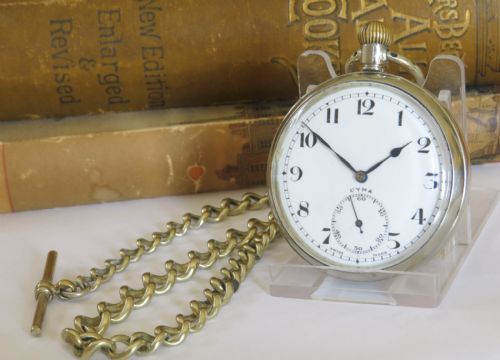
A cyma pocket watch represents the reliable output of the Swiss watchmaker, appearing across the 1920s, 1930s, and 1940s in various forms. These horological pieces include open face models, full hunter designs with protective metal covers, and half hunter variants featuring a small glass aperture on the outer case.
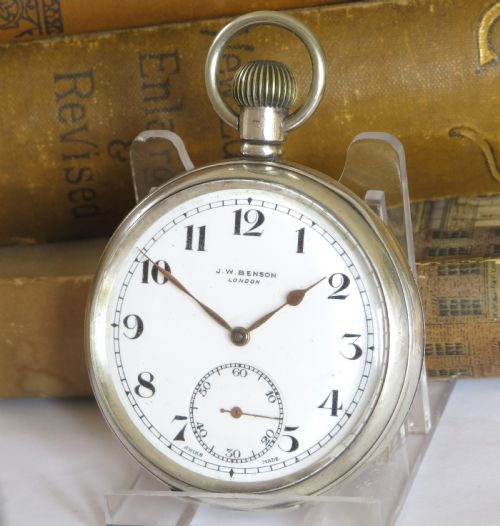
Many examples emerge paired with fitted watch chains, vestas, or sovereign holders, while specific specimens bear direct connections to military service through the GSTP designation. Retailers such as J W Benson frequently retailed these movements, placing their own retail names alongside the Swiss mechanisms.
The aesthetic of a cyma pocket watch aligns primarily with the clean lines of Art Deco design, alongside robust military specifications for wartime service. Collectors encounter these watches in both nickel and solid silver housings, reflecting the practical utility and status of the period.
Materials and construction
The construction of a cyma pocket watch relies on durable base metals including nickel, brass, and steel, alongside higher specification cases formed from solid silver. Dial faces utilise white enamel with legible numerals, often paired with contrasting steel hands.
Internal movements employ brass gear trains and steel components, driven by traditional stem winding mechanisms housed within sturdy metal cases. Hunter and half hunter variants incorporate intricate metal hinges and spring-loaded front covers to protect the delicate enamel dial.
Recorded examples frequently appear alongside matching chains, vestas, and sovereign holders, illustrating complete period pocket accessories.
Markers of quality
Quality in a cyma pocket watch rests upon the presence of solid silver casework versus nickel-plated brass, alongside the inclusion of original matching chains and accessories. Retail provenance adds another dimension, with pieces bearing signatures from respected distributors like J W Benson commanding distinct interest.
The condition of the enamel dial and the crispness of case engravings distinguish finer examples from heavily worn everyday utility pieces. Military connections, such as authenticated WW2 GSTP service markings, introduce specific historical depth that elevates certain specimens above standard civilian models.
Cyma·J W Benson·Cyma Tavannes
The Cyma Pocket Watch Glossary
- Full hunter
- A pocket watch featuring a spring-loaded metal cover that completely encloses and protects the enamel dial from damage. This design requires the user to press a crown button to open the case before reading the time.
- Half hunter
- A pocket watch style fitted with a metal outer case that incorporates a small glass-centred window. This allows the wearer to check the primary hands without fully opening the protective front cover.
- Stem winding
- A mechanical winding system where the mainspring is tensioned by turning the crown at the top of the watch. It replaced older key-wound mechanisms during the late nineteenth and early twentieth centuries.
- GSTP
- An acronym standing for General Service Time Piece, marked on military watches issued to British armed forces during the Second World War. These robust pieces prioritised legibility and durability over decorative flourishes.
- Vesta
- A small pocket-sized metal box designed to hold matches, frequently found accompanying pocket watch chains in this era. They often share the same silver or nickel finish as the attached watch case.
Frequently Asked Questions
What is a cyma pocket watch?
A cyma pocket watch is a mechanical timepiece produced by the Swiss watch brand, known for durability and precision during the early twentieth century.
These watches were manufactured in styles ranging from simple open face models to robust military issues and retailer-signed pieces.
How do I wind a cyma pocket watch?
Most surviving examples utilise a stem winding mechanism, meaning you simply rotate the crown at the top clockwise until gentle resistance is felt.
Care should be taken not to overwind vintage mainsprings, as this can place unnecessary strain on historical internal components.
Were these watches used in the military?
Certain models, particularly those marked with GSTP designations, were officially issued to British military personnel during the Second World War.
These wartime variations feature simplified, high-contrast dials and sturdy nickel or steel cases built to withstand demanding field conditions.
How should I store my pocket watch?
Pocket watches should be kept in a clean, dry environment away from direct sunlight and magnetic fields that might affect the delicate movement.
Hanging the watch vertically on a dedicated stand or storing it in a padded box helps protect the casework and attached chain.