


Silver Tone Pocket Watch
A silver tone pocket watch carries mechanical time inside a polished metal case, offering classic utility and enduring design.
What a silver tone pocket watch is
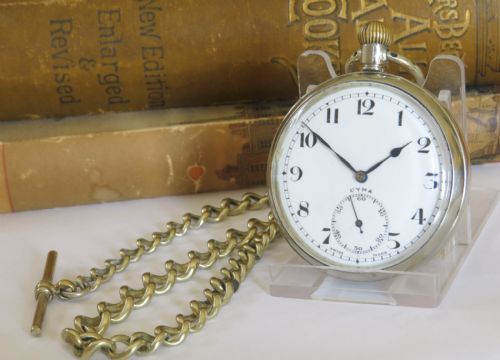
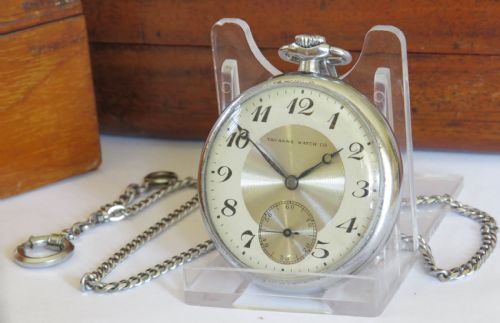
When you search for a silver tone pocket watch, you encounter timepieces shaped by industrial and decorative developments across the twentieth century. These objects comprise mechanical movements housed in metal protective shells, often paired with matching chains for secure pocket attachment.
The selections span distinct twentieth-century eras, with pieces emerging from the nineteen-tens, nineteen-twenties, nineteen-thirties, and nineteen-fifties. Forms range from heavy pocket pieces to slim profiles, reflecting shifts in daily attire and pocket watch design.
Makers represented in the archive include the Lancashire Watch Company, Cyma, Tavannes, Lanco, and Zenith, alongside retailers such as Harris Stone of Leeds and C Stone of Bristol. Buyers most frequently meet pieces fashioned from base metals, chrome, nickel, steel, brass, and solid silver.
How a silver tone pocket watch was made
Constructed from durable alloys, these watches utilise metals such as steel, chrome, nickel, and brass to form sturdy outer cases that protect delicate internal movements. Glass covers the dial faces, while enamel frequently highlights the numerals and chapter rings.
Movements rely on intricate brass gear trains and steel springs assembled by hand within workshops in Britain and across continental Europe. Cases receive polished finishes to achieve the characteristic silver tone appearance across various base materials.
Retail Price Guide 2026
Typical UK retail prices for silver tone pocket watch, calculated from the Sellingantiques database of over a million retail prices indexed since 2003. This retail price guide relies exclusively on Sellingantiques data; no external sources or auction records are used, so the figures do not describe the wider market.
Materials documented across the archive include steel, chrome, nickel, brass, enamel, and glass alongside solid silver.
What varies in quality
The refinement of the internal movement and the crispness of dial printing distinguish simpler utility pieces from finer examples. Cases finished in durable chrome or nickel maintain their brightness more successfully than softer brass alternatives.
Associated chains and retailer signatures, such as those from established provincial jewellers, add provenance and completeness to particular watches.
Lancashire Watch Company·Cyma·Tavannes·Lanco·Zenith·Harris Stone
The Silver Tone Pocket Watch Glossary
- Silver tone
- A descriptive term for metals finished to resemble silver, including chrome, nickel, and steel. This finish provides a bright metallic sheen without requiring solid precious metal.
- Pocket watch
- A portable timepiece designed to fit inside a waistcoat or jacket pocket. These watches typically attach via a chain secured to a buttonhole.
- Dial
- The visible face of the watch displaying numbers and markers. Dials often feature enamel finishes and delicate hands.
- Movement
- The internal mechanical mechanism that drives the watch hands and measures time. Movements consist of gears, springs, and an escapement.
Frequently Asked Questions
How do I wind a pocket watch?
Most mechanical pocket watches require turning the crown at the top of the case until gentle resistance is felt. This tensions the mainspring to power the movement.
Care should be taken not to overwind the mechanism, as this can strain the internal spring.
What is a pocket watch chain used for?
The chain secures the watch to a garment, preventing it from dropping to the ground if mishandled. It threads through a buttonhole or fastens to a pocket edge.
Many period pieces include matching chains as part of the complete ensemble.
How do I tell the age of a watch?
Age is often indicated by stylistic details on the dial and case, such as Art Deco numerals or Mid-Century slim profiles. Maker marks and movement serial numbers also help establish the decade of production.
Records from retailers and makers provide further context for dating specific pieces.
How should I store a pocket watch?
Store the watch in a dry environment away from direct sunlight and magnetic fields. A padded box or dedicated watch stand protects the outer case from scratches.
Allowing the movement to run down periodically keeps lubricants evenly distributed.