


Silver Spice Pot
These silver spice pot examples are small, characterful containers made to hold seasonings, most often appearing here alongside pepper pots and mustard pots from the Georgian period to the 1930s.
Silver Spice Pot
A silver spice pot is a small tabletop or desk vessel designed to hold powdered condiments, functioning closely alongside pepper pots, condiment sets, and mustard pots in the evidence. Buyers searching for a silver spice pot will frequently encounter related forms such as casters, shakers, and cruet sets spanning the Georgian, Victorian, Edwardian, and Art Deco eras.
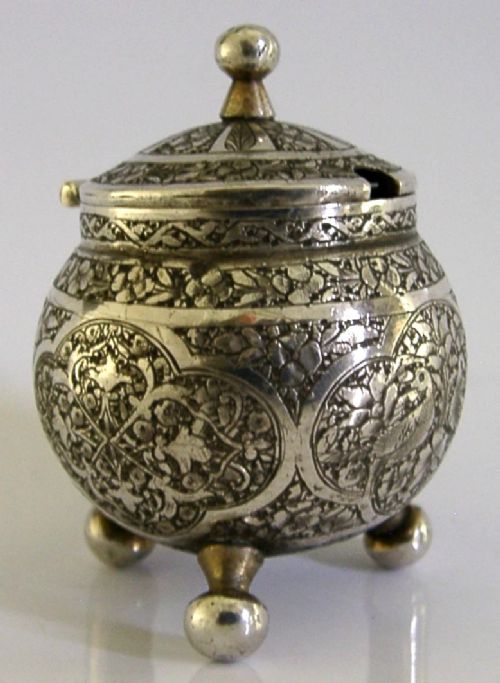
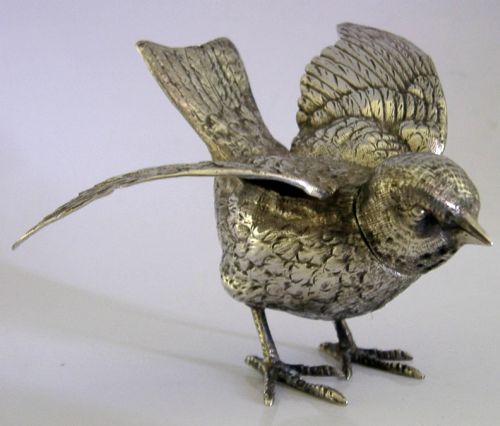
The pieces appearing in this category range from plain George III sterling silver condiment casters to elaborate Victorian novelty animals, including owls, dragons, and life-size bird chicks. Overseas examples also feature, with Ottoman, Chinese export, and Indian solid silver pieces recorded alongside British domestic silver and silver plate.
While dedicated spice pots occasionally surface, such as egg-shaped or cayenne spice containers, collectors frequently find that the broader category encompasses various small condiment containers sharing similar domestic functions. These items demonstrate how dining customs evolved from the Georgian period through to the 1930s, shifting from utilitarian casters to decorative novelty forms.
How they were made
The materials recorded in these listings are predominantly sterling silver and silver plate, frequently combined with cut glass or glass inserts where liquids or fine powders required containment. Silk and leatherette also appear as lining or presentation materials in fitted cruet sets and boxes.
Silversmiths utilised traditional techniques such as casting, piercing, and repoussé work to shape the metal bodies, particularly visible in ornate Ottoman, French Rococo, and novelty animal pieces. Glass components were typically blown and cut to fit snugly within pierced silver frames or mustard pots.
Someone spent their morning fashioning a solid silver watering can just to shake pepper over dinner.
What varies in quality
Quality in these pieces is defined by the crispness of the detail in cast or chased ornamentation, especially on novelty animal forms like owls and bird chicks. Finer examples retain sharp feather texturing and secure, well-fitted lids without excessive wear to the underlying silver or silver plate.
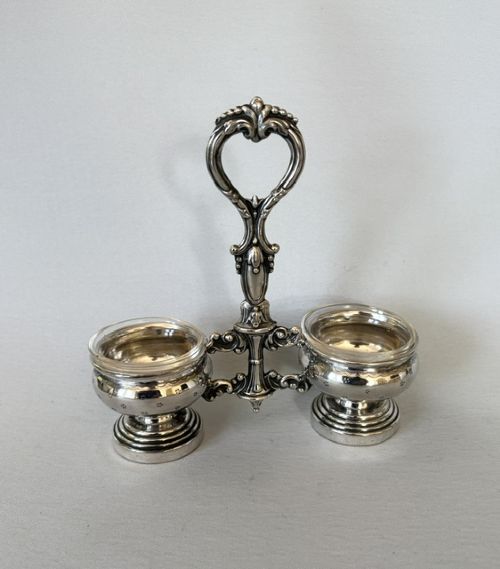
The integrity of the construction also distinguishes finer specimens, such as robust gauge sterling silver compared to lighter plated alternatives, along with the preservation of original glass inserts in cruet sets and condiment stands.
The Silver Spice Pot Glossary
- Caster
- A small vessel with a pierced top used for sprinkling sugar or spices onto food. George III examples often feature pear-shaped bodies on footed bases.
- Cruet set
- A matched collection of bottles or pots for holding condiments and sauces at the dining table. These sets frequently combine silver frames with cut glass bottles.
- Condiment set
- A matched group of small open pots and shakers for salt, pepper, and mustard. They represent standard table service from the Edwardian and Art Deco periods.
- Novelty pepper
- A condiment container shaped to resemble an animal, figure, or object rather than a traditional vessel. Victorian and Edwardian makers produced striking examples in the form of birds and owls.
- Sterling silver
- An alloy consisting of pure silver and other metals, traditionally copper, to increase durability. Most British pieces from the Georgian era onwards conform to this standard.
Silver Spice Pot: Frequently Asked Questions
What is a silver spice pot?
A silver spice pot is a small container specifically manufactured to hold pungent seasonings like cayenne or culinary spices at the dining table. They share similar forms with pepper pots and small casters.
While dedicated spice pots are uncommon, they appear in various regional styles, including Chinese export and Indian solid silver examples.
How were these pots used?
These containers were placed on the dining table or sideboard so diners could season food individually. Pierced lids allowed fine powders to be sprinkled evenly over dishes.
In larger dining settings, they formed part of integrated cruet sets alongside mustard pots and oil bottles.
How do I date a silver piece?
Dating relies on stylistic clues, manufacturing techniques, and hallmarks stamped into the metal where applicable. Georgian pieces often display simpler neoclassical lines, while Victorian and Edwardian items embrace revival styles and novelty designs.
Art Deco examples from the 1930s introduce geometric shapes and streamlined profiles.
Are glass liners original?
Glass liners and inserts were standard components for mustard pots and cruet bottles to prevent the acidic contents from reacting with the silver. Surviving original glass adds considerable historical integrity to a piece.
Replacements are common due to the fragile nature of glass over centuries of use.
What is novelty silver?
Novelty silver refers to domestic items fashioned into humorous or realistic shapes, such as owls, chicks, and dragons. These pieces gained immense popularity during the Victorian and Edwardian periods.
They served as both functional tableware and engaging conversation pieces for dinner guests.