
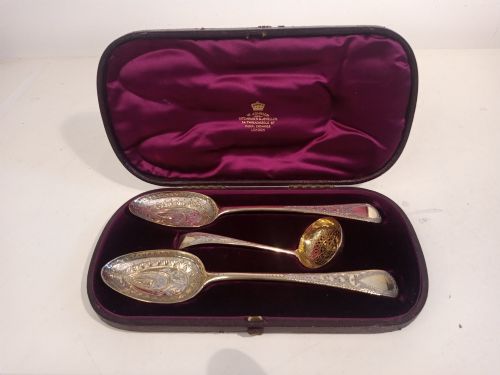


Silver Sifter Ladle
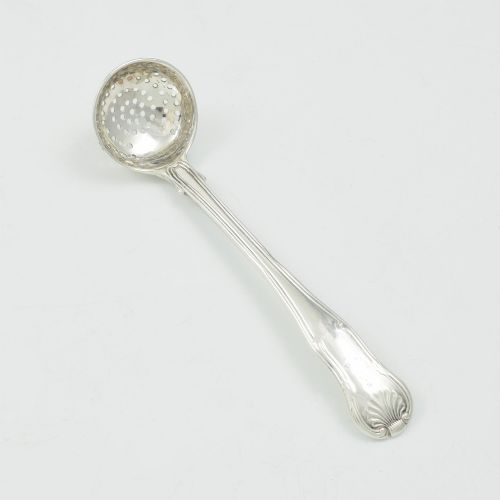
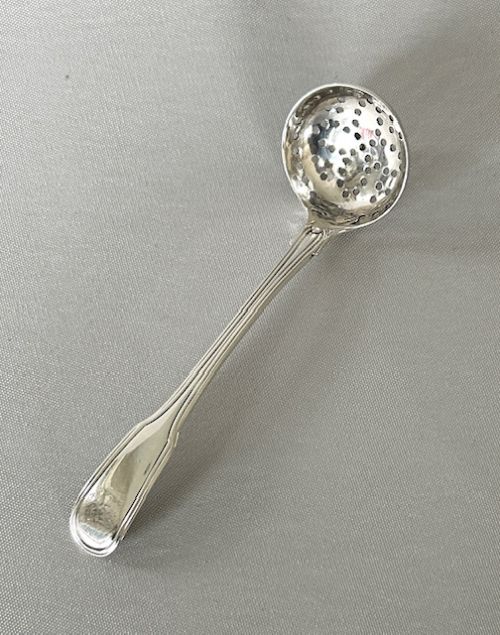
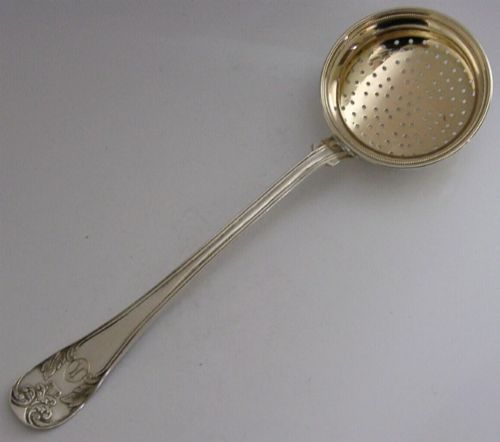
These silver sifter ladle pieces bring a perforated bowl and crisp cast handle to the table, offering a traditional way to dust sugar or spices over food.
Silver Sifter Ladle
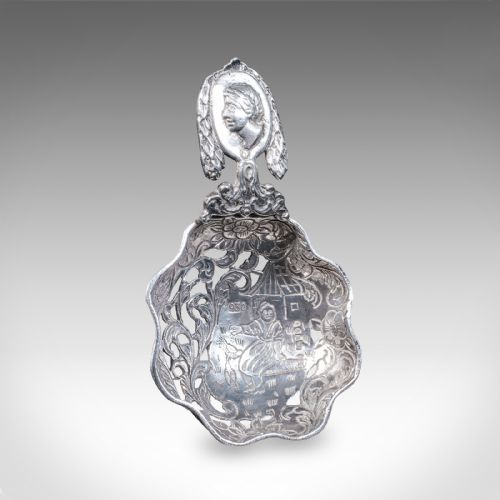
A silver sifter ladle combines the deep bowl of a serving spoon with a pierced design for scattering loose sugar or spices. Search results for this phrase reveal forms ranging from small spice sifters to larger casting spoons and sugar bowls with matching ladles.
The pieces appearing on this page span several eras, with Georgian and Victorian examples forming the bulk of the selection alongside pieces from 1800 and the 1900s. Regional variations include Swedish Art Nouveau, French Restoration, and Arts & Crafts designs.
Most entries function as individual flatware items or form part of serving sets housed in velvet or silk lined boxes. The materials recorded across these items include sterling silver, silver gilt, and solid silver.
Assessing Quality and Craftsmanship
Quality rests in the crispness of the handle decoration and the precision of the pierced bowl. Hand-cut piercing requires exact spacing and clean edges that remain sharp through use.
Weight and balance distinguish standard production from heavier, more substantial examples. Hallmarks stamped firmly into the metal provide clear evidence of origin and maker identity.
Some nineteenth-century French pieces carry import marks showing they crossed borders just to sweeten foreign tea.
William Sumner I·J & A Savory
The Silver Sifter Ladle Glossary
- Sifter Spoon
- A perforated spoon designed to sprinkle powdered sugar or dry spices over food. The bowl contains holes or slots to hold back larger lumps.
- Silver Gilt
- Silver that has been coated with a thin layer of gold on its surface. This technique protects the underlying silver and adds a warm interior tone.
- Hallmark
- A series of official marks stamped on precious metals to show standard of purity and origin. These marks often indicate the city of assay and the year of manufacture.
- Onslow Pattern
- A style of flatware handle terminating in a distinct scrolled volute. It gained popularity during the eighteenth century.
- Parcel Gilt
- An object made of silver where only specific portions receive a gold wash. This selective gilding highlights engraved details or bowl interiors.
Silver Sifter Ladle: Frequently Asked Questions
What is a silver sifter ladle used for?
These pieces serve to dust fine sugar or aromatic spices over desserts and beverages. The pierced bowl holds larger granules back while letting the powder pass through evenly.
Historically, they sat on the tea table or sideboard alongside sugar bowls and cream jugs. Today, they remain practical tools for finishing baked goods.
How do I identify a Georgian sifter spoon?
Georgian pieces display the characteristic hand-hammered feel and classic handle motifs of the late eighteenth and early nineteenth centuries. Look for crisp hallmarks that indicate London or provincial assay offices.
Styles from this era often include feather edges and Onslow patterns without modern machine finishing. The silver gauge tends to feel substantial in the hand.
What is the difference between solid silver and silver plate?
Solid silver and sterling silver consist of precious metal all the way through the piece. Silver plate involves a thin layer of silver bonded to a base metal core.
Hallmarks usually confirm solid silver construction by showing the lion passant or similar purity standards. Plated items often lack these official assay stamps.
How should I clean my silver sifter ladle?
Wash the piece gently in warm water using a mild, non-abrasive soap. Dry it immediately with a soft cloth to prevent water spots.
Avoid harsh chemical dips that can strip away original patination or damage parcel gilt surfaces. Store the piece away from damp environments to slow natural tarnishing.