




Cased Dessert Spoons
These cased dessert spoons offer fitted boxes and matching sets in sterling silver or silver plate, made for formal dining.
Cased Dessert Spoons
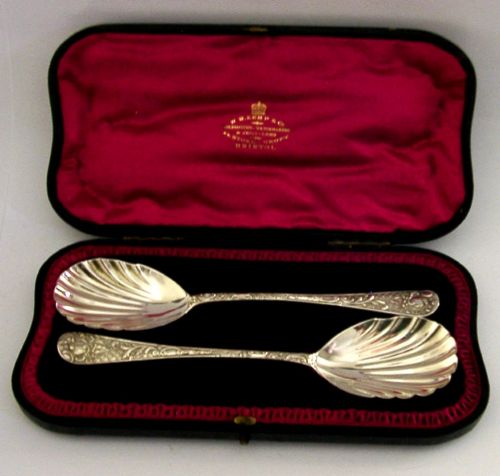
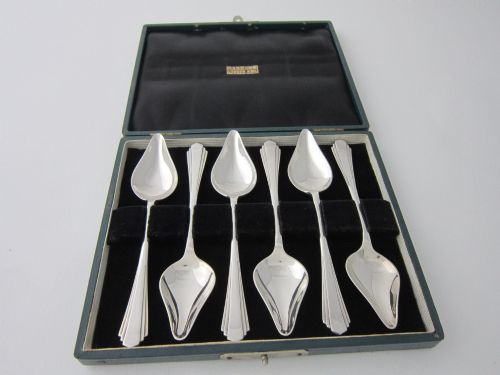
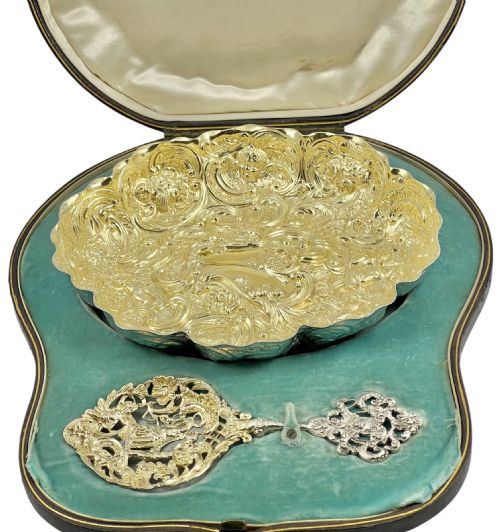
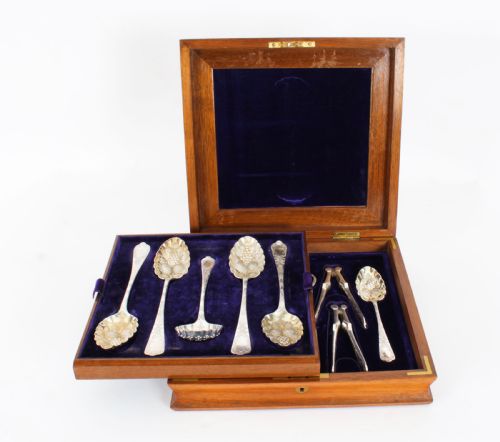
When you search for cased dessert spoons, you encounter matched sets and pairs housed in fitted presentation boxes lined with silk or velvet. These items span Georgian, Victorian, and Art Deco periods, encompassing fruit spoons, berry spoons, and dessert utensils.
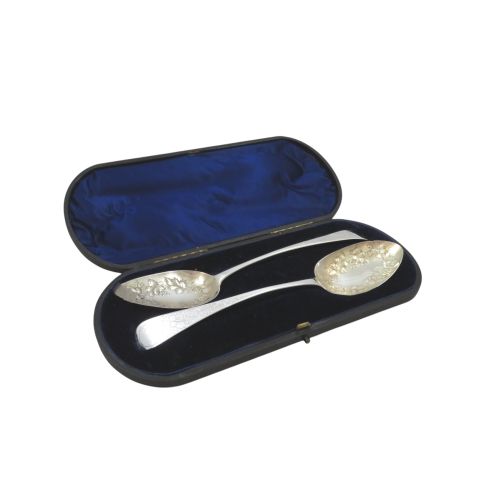
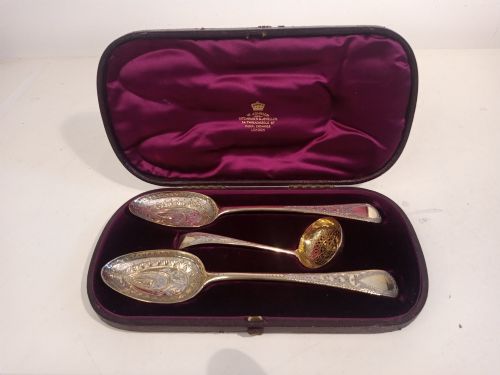
The most common examples on this page are Victorian sets featuring engraved handles or silver gilt finishes, often accompanied by matching sugar sifters or nutcrackers. Alongside these, you find Georgian berry spoons and twentieth-century Art Deco teaspoons in fitted leatherette cases.
How they were made
Makers formed these utensils primarily from sterling silver or silver plate, frequently applying a gold wash known as silver gilt to the bowl interiors. Handles often received elaborate repoussé work, chasing, or bright-cut engraving.
Presentation cases utilised wooden frames covered in leatherette or textured leather, fitted internally with moulded bases lined in silk, satin, or velvet to secure each spoon snugly.
Listings for cased dessert spoons feature materials such as velvet, silk, satin, and leatherette alongside sterling silver and silver plate.
What varies in quality
The distinction between ordinary and superior pieces rests on the crispness of the handle engraving and the weight of the metal used in the spoons. Deeper chasing and heavier gauge silver elevate the stature of a set.
Case construction also indicates grade, with durable leatherette exteriors and intact silk or velvet linings preserving the contents better than deteriorated housings with frayed fabrics.
Hukin & Heath
The Cased Dessert Spoons Glossary
- Silver gilt
- Sterling silver that has been coated with a thin layer of gold, providing a rich two-tone appearance inside the bowl. This technique was frequently applied to Victorian berry and dessert spoons.
- Berry spoon
- A large serving spoon, often Georgian or Victorian in origin, featuring fruit motifs chased into the bowl long after initial manufacture. They were designed for serving soft fruits.
- Repoussé
- A metalworking technique where the artisan hammers the design from the reverse side to form raised relief patterns on the handle. This method creates tactile decoration on antique cutlery.
- Leatherette
- A simulated leather material utilised to cover wooden presentation cases during the nineteenth and twentieth centuries. It offered durable protection for fitted cutlery sets.
- Sifter
- A perforated spoon used for dusting sugar over desserts, frequently included in cased sets alongside berry or fruit spoons.
Cased Dessert Spoons: Frequently Asked Questions
What are cased dessert spoons used for?
These matched sets were traditionally utilised for serving fruit, pudding, or berries during formal nineteenth and twentieth-century dining occasions. The fitted boxes kept the utensils protected and organised between uses.
Today, they function both as usable tableware for hosting dinner parties and as decorative display objects that showcase period craftsmanship.
How do I identify Victorian cased spoons?
Victorian examples often feature heavily chased fruit motifs, silver gilt bowls, and ornate engraved handles housed in velvet-lined boxes. Date letters and hallmarks stamped on the metal confirm the exact assay office and year of production.
Examining the style of the presentation case and the typography on the silk lining also helps narrow down the manufacturing decade.
Are these spoons made of solid silver?
The listings include pieces made from solid sterling silver as well as silver plate over a base metal core. Hallmarks on the back of the stems indicate sterling standard, while unmarked items typically signify silver plate.
Both materials were commonly housed in fitted presentation boxes lined with silk or satin during the Georgian, Victorian, and Art Deco eras.
How should I store cased dessert spoons?
Keep the spoons inside their original fitted presentation boxes to prevent the silver from scratching against other utensils. Storing them in a dry environment prevents the velvet or silk linings from degrading.
Occasional gentle cleaning with a suitable silver cloth maintains the shine without wearing away the fine engraved details or silver gilt finishes.