



Gilt Silver Sifter
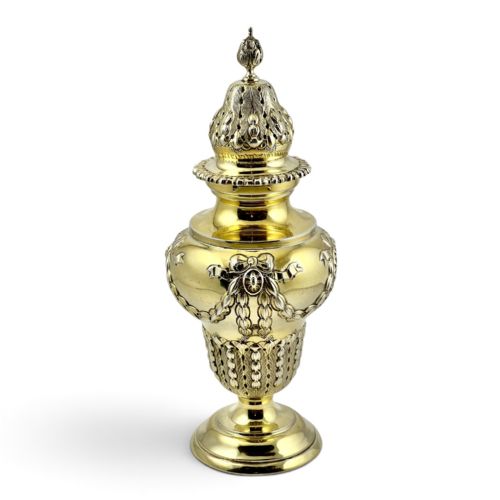
These gilt silver sifter pieces are elegant dining implements designed for dusting sugar, appearing here in Victorian and Edwardian iterations.
Gilt Silver Sifter
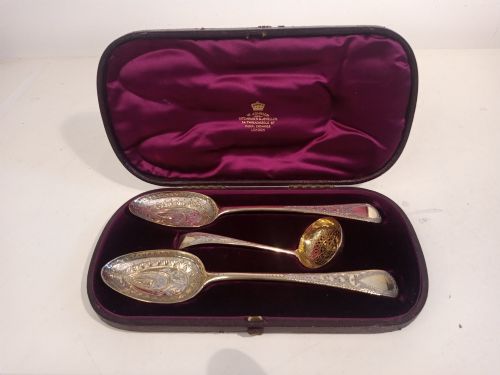
When you search for gilt silver sifter, you encounter spoon and caster forms created for table service during the Georgian, Victorian, and Edwardian eras. These implements range from standalone ladles to complete cased sets including matching sugar bowls.
The most common versions met on this page are silver gilt sifter spoons, often featuring pierced bowls and ornate handles. Pieces span several decades from the nineteenth century into the early twentieth century, showing diverse stylistic influences from Rococo Revival to Arts and Crafts.
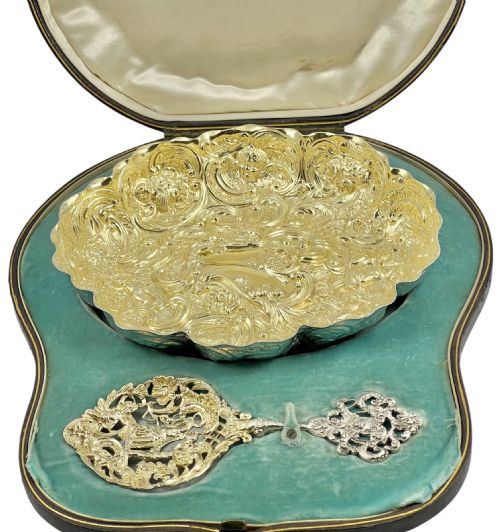
Cased presentations appear frequently alongside loose spoons, pairing the silver gilt utensil with velvet, silk, or leather linings. Sugar casters and dredgers also represent this category, providing functional service for powdered sugar during formal dining.
Materials and construction
Makers utilised sterling silver and silver plate as the foundational metals, applying a gold gilt finish to create the rich surface colour characteristic of these items. This parcel gilt or full silver gilt treatment protected the underlying metal while offering a decorative contrast.
Interiors and presentation cases incorporated textiles such as velvet, silk, and leather to house the spoons and bowls securely. Piercing techniques formed the intricate patterns on the sifter bowls, allowing sugar to pass evenly through the metal.
Diana the Huntress occasionally appears frozen mid-pose on a Victorian handle, guarding the sugar bowl with immortal vigilance.
Assessing quality
The depth and preservation of the gold gilt surface distinguish finer examples from heavily worn pieces. Original gilding retains a warm tone across the bowl and handle, whereas inferior preservation reveals the silver underneath.
Design complexity and maker execution separate standard production from superior artistry. Pieces bearing detailed figurative elements, such as specific handle motifs or robust rococo revival scrolling, demonstrate greater craftsmanship than plain alternatives.
Berthold Muller Hanau·William Sumner I·Francis Higgins
The Gilt Silver Sifter Glossary
- Silver Gilt
- Silver that has been coated with a thin layer of gold. This technique enhances the visual appeal and prevents tarnishing of the underlying metal.
- Sifter Spoon
- A perforated spoon used for sprinkling powdered sugar or berries. The pierced bowl retains larger fruit pieces while letting sugar pass through.
- Caster
- A container with a perforated top used for shaking sugar onto food. These vessels match the function of sifter spoons in dining service.
- Parcel Gilt
- An object gilded on specific areas rather than its entire surface. This selective application highlights particular decorative motifs against the silver.
- Sterling Silver
- An alloy containing a high proportion of silver combined with other metals for durability. It serves as the primary material for many manufactured items here.
Gilt Silver Sifter: Frequently Asked Questions
What is a gilt silver sifter used for?
These implements served to dispense powdered sugar onto desserts, cakes, or fruit during formal meals. The pierced bowl allowed fine sugar to fall through while holding back larger particles.
They formed part of broader tea and dining services, often paired with matching sugar bowls in presentation cases. Their use reflected the refined dining customs of the nineteenth and early twentieth centuries.
How do I date a gilt silver sifter?
Dating relies heavily on hallmarks stamped into the silver, which indicate the assay office, year of production, and maker. Stylistic clues such as Rococo Revival curves or Arts and Crafts simplicity also point to specific decades.
Comparing the form and case materials helps narrow down whether a piece originates from the Georgian, Victorian, or Edwardian period.
How should I care for silver gilt items?
Silver gilt requires gentle handling because aggressive polishing can wear away the thin gold layer over time. Cleaning should involve soft cloths and mild solutions formulated specifically for gilt surfaces.
Storing pieces in lined cases protects them from dust and physical friction when not on display.