



Silver Side Table Tray
A silver side table tray combines the low-rimmed surface of a serving piece with the sturdy stance of a Georgian or Victorian support.
Silver Side Table Tray
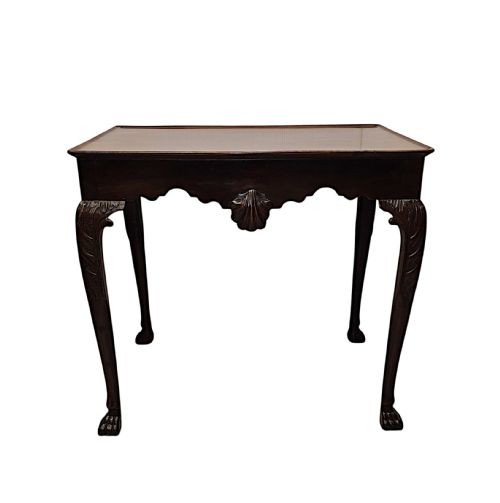
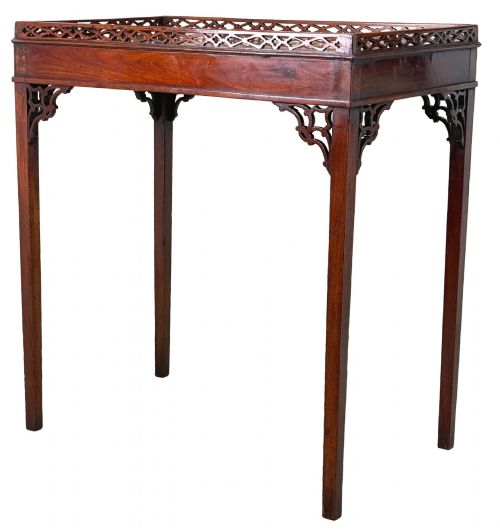
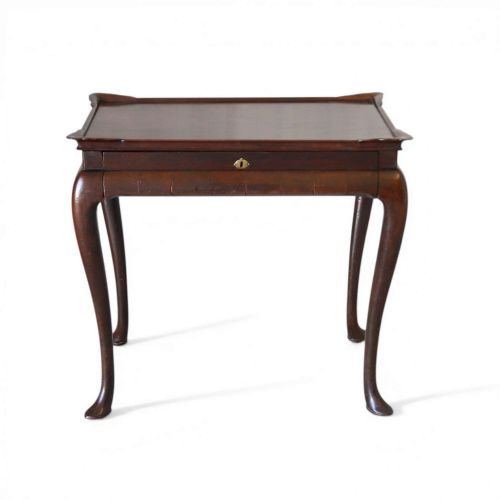
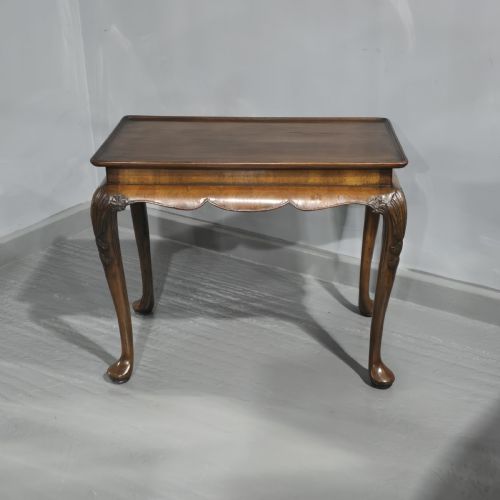
A silver side table tray sits at the intersection of display furniture and serving ware, designed to hold tea services or presentation items securely on a raised lip. You will most frequently encounter mahogany examples from the eighteenth century, alongside later walnut and silver-plated interpretations from the Victorian and Edwardian eras.
The form spans distinct periods from the seventeenth to the early twentieth century, incorporating George II, George III, Chippendale, and Queen Anne styles. Makers produced these pieces in forms ranging from traditional side and occasional tables to coffee tables and display consoles.
How they were made
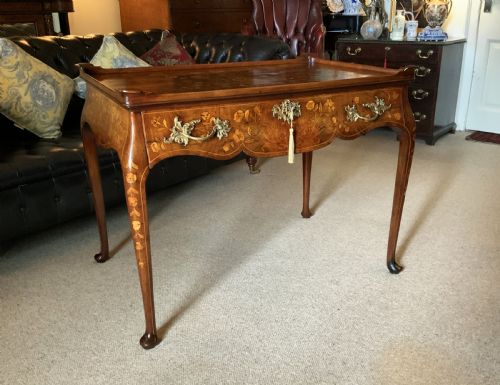
Cabinetmakers constructed the primary carcases using dense timbers such as mahogany, Cuban mahogany, walnut, satinwood, and fruitwood, often applying intricate marquetry or figured veneers. Brass hardware and silver plating added metallic contrast to the wooden trays and frames.
Joinery techniques relied on traditional cabinet construction, supporting raised tray borders designed to prevent teacups or silver service from sliding off the polished surface during use.
Some eighteenth-century Dutch tables depict cheerful wooden birds and flowers frozen in permanent marquetry flight across the tabletop.
What varies in quality
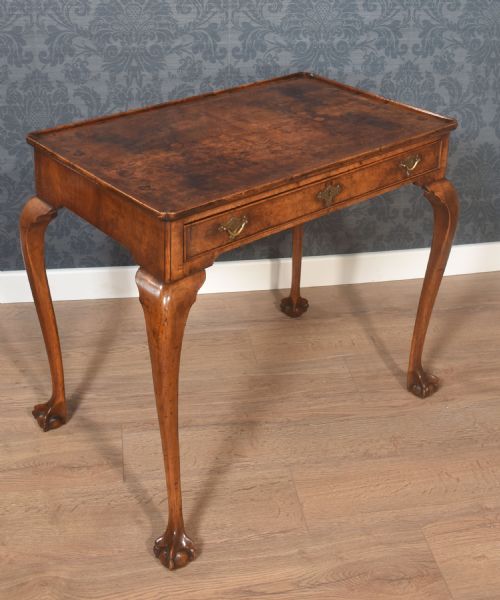
The distinction between ordinary and exceptional pieces lies in the crispness of the timber carving, particularly on cabriole legs and edge mouldings. Rich grain figures in the walnut or Cuban mahogany elevate the visual weight of the surface.
Proportion and structural integrity dictate value, where untouched patination on the timber separates pristine survivals from heavily restored examples.
The Silver Side Table Tray Glossary
- Tray top
- A tabletop finished with a raised moulded edge or gallery designed to keep items from rolling off. This feature defines the primary utility of silver tables.
- Cuban mahogany
- A dense, dark timber prized for its deep colour and fine grain during the eighteenth century. Cabinetmakers favoured it for high-status tables.
- Marquetry
- The art of applying pieces of veneer to a structure to form decorative patterns. Dutch examples often display floral and bird motifs in this technique.
- Cabriole leg
- A furniture leg that curves outward and then tapers inward to a pad or claw foot. It is typical of George II and Queen Anne designs.
- EPNS
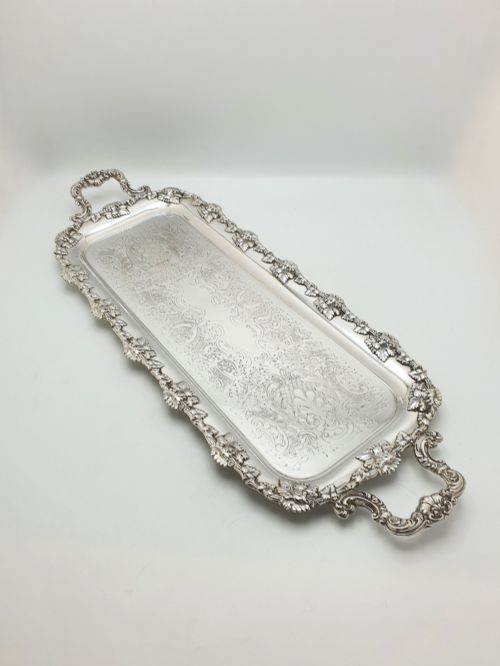
- Electro-Plated Nickel Silver, a common base metal method used for nineteenth and twentieth-century serving pieces. It offered a bright metallic finish at a lower cost than solid silver.
Silver Side Table Tray: Frequently Asked Questions
What is a silver table used for?
These tables served primarily for holding tea services, afternoon refreshments, or displaying silver presentation items in formal reception rooms. The raised tray top ensured that liquid containers and vessels remained secure while being moved or served.
Over time, collectors adapted them into general display furniture or functional side tables within drawing rooms and hallways.
How do I date a mahogany silver table?
Dating relies on examining the timber density, leg construction, and overall stylistic markers such as Chippendale carving or Georgian proportions. Eighteenth-century pieces typically exhibit heavier Cuban mahogany and hand-cut joinery.
Later Victorian and Edwardian revivals often utilise lighter secondary woods and machine-finished secondary elements beneath the veneer.
Are tray top tables stable enough for daily use?
Solid mahogany and walnut frames provide robust structural integrity suitable for everyday placement as side or lamp tables. The raised edge also helps retain smaller items placed on the surface.
Care should be taken to protect antique polished finishes from excessive moisture or direct heat sources.
What is the difference between a side table and a silver table?
A traditional silver table specifically incorporates a raised gallery or tray top designed to hold tea service items securely. Standard side tables usually feature flat wooden or marble tops without the distinct moulded rim.
This specific rim differentiates the tea-serving heritage from general occasional furniture.