
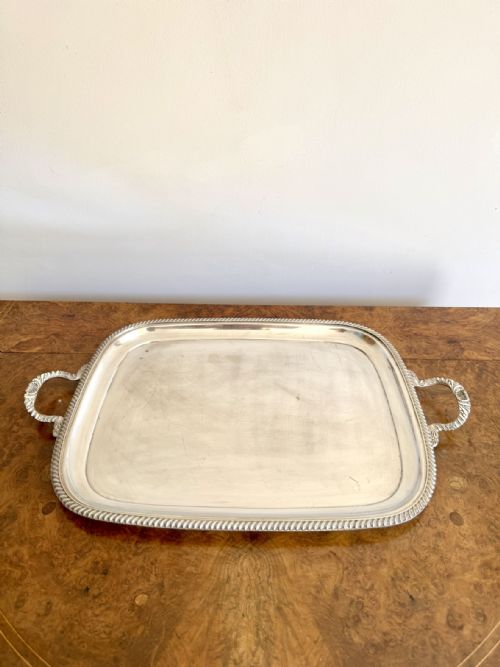


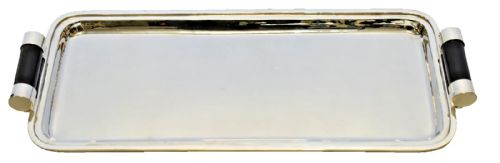


Rectangular Serving Tray
A rectangular serving tray brings formal hospitality to the table, offering durable silver plate or warm teak for drinks and afternoon tea.
Rectangular Serving Tray
A rectangular serving tray provides a functional surface for drinks, dishes, and afternoon tea, shaped long and straight for easy carrying. When you search for a rectangular serving tray, you encounter examples spanning from the Victorian period through Edwardian times and the Art Deco era into Mid-Century Modern designs.
The materials vary across these periods, ranging from heavy silver plate and EPNS to natural teak, earthenware, and bone. You will find items produced in various global traditions, including Anglo-Indian, Chinese Export, and Japanese export workshops.
Most pieces function primarily for serving cocktails, tea, or entrées, whilst others incorporate gallery edges, handles, or decorative borders. The form adapts across decades to suit changing domestic rituals of entertaining and hospitality.
Materials and construction
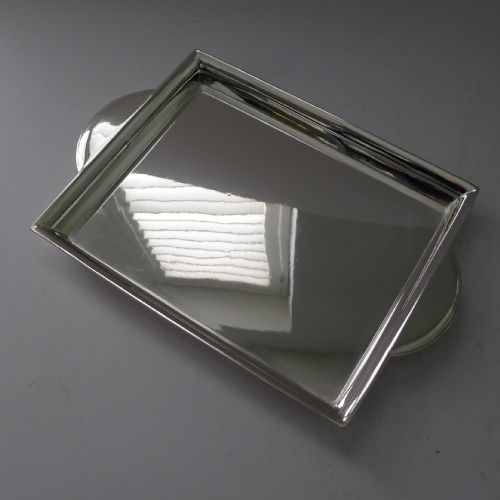
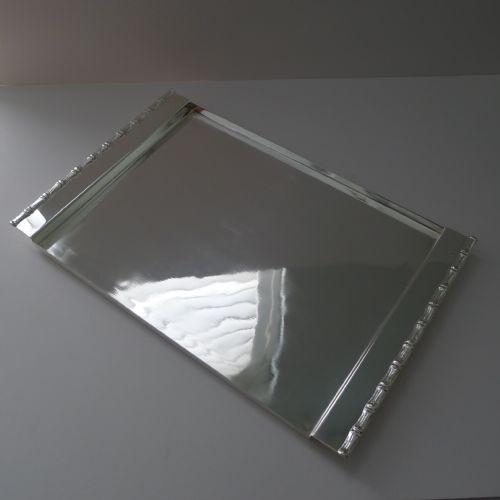
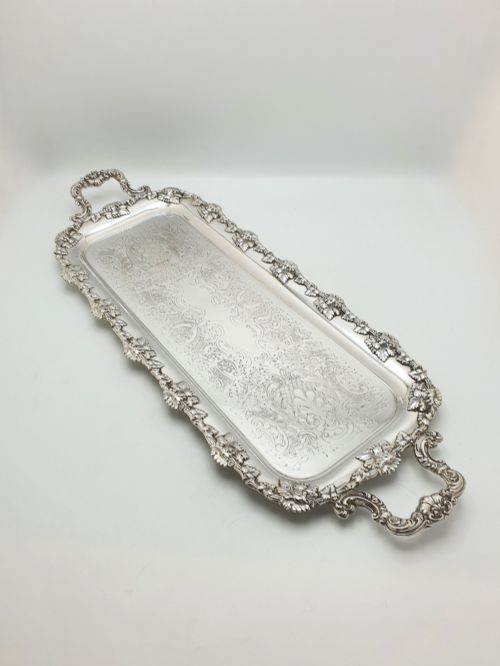
Silver plate, electroplated nickel silver, and standard nickel silver form the basis of the metallic pieces, created by bonding a thin layer of silver over a base metal. Makers applied elaborate borders, including grapevine motifs and bamboo handles, through casting and stamping techniques.
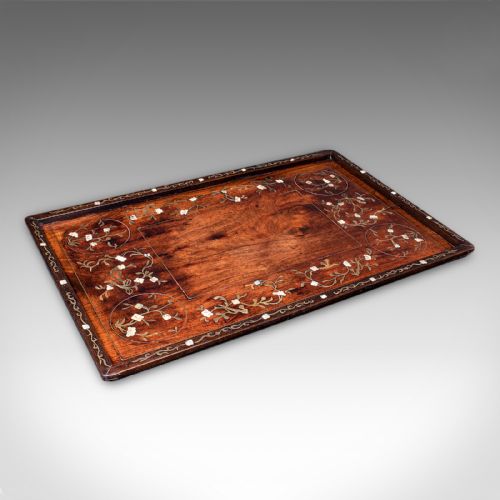
Wooden examples utilise dense timbers like teak, shaped and polished to highlight natural grain. Ceramic and earthenware pieces employ traditional glazing, hand-painting in blue and white, and gilt decoration fired in kilns.
Papier-mâché lacquer trays require multiple layers of paper pulp and varnish, finished with hand-painted decorative scenes.
Cartographers occasionally repurposed map designs into serving trays, ensuring guests could study European geography whilst reaching for a cocktail.
Assessing quality and craftsmanship
The thickness of the silver plating and the resilience of the underlying base metal determine the longevity of metallic trays. Superior pieces display crisp, deep stamping on borders and handles rather than shallow, softened relief.
In wooden and ceramic variants, the integrity of the joinery and the preservation of hand-painted or gilt details distinguish finer examples from standard production. Maker marks from established firms indicate higher workshop standards.
Hukin & Heath·John Collyer & Co·Frank Cobb & Co·Atkin Brothers·Christofle
The Rectangular Serving Tray Glossary
- Silver Plate
- A base metal coated with a layer of pure silver. This technique provided the appearance of solid silver at a lower cost.
- EPNS
- Electroplated Nickel Silver. A common base metal composition for Victorian and Edwardian serving wares.
- Gallery Tray
- A tray featuring an upright pierced or solid metal gallery border around the perimeter to prevent items from sliding off.
- Anglo-Indian
- Items produced in India during the British colonial period, often combining local timber craftsmanship with European forms.
- Gilt
- A thin layer of gold applied to the surface of ceramic, metal, or wood for decorative enhancement.
Rectangular Serving Tray: Frequently Asked Questions
How were these trays used historically?
These trays served primarily for carrying tea services, cocktails, and entrées between rooms in formal households.
They also functioned as display pieces on sideboards when not actively deployed for entertaining guests.
Can I use a silver plated tray for daily drinks?
Silver plated trays tolerate regular use for serving drinks provided you clean them gently after use.
Avoid abrasive cleaners that wear away the thin silver layer over the base metal.
How do I distinguish Edwardian from Victorian pieces?
Victorian pieces often lean towards heavy ornamentation, elaborate grapevine borders, and dark woods.
Edwardian examples frequently show lighter proportions, cleaner lines, and simplified gallery edges.
What maintenance do wooden serving trays require?
Teak and wooden trays benefit from occasional conditioning to prevent the material from drying out.
Keep them away from excessive moisture and direct heat sources to preserve the finish.