





Vintage Waiter Tray
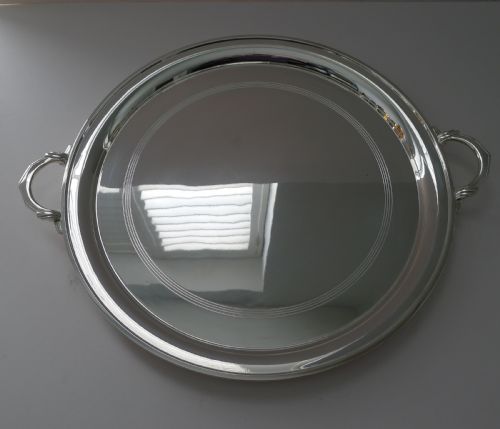
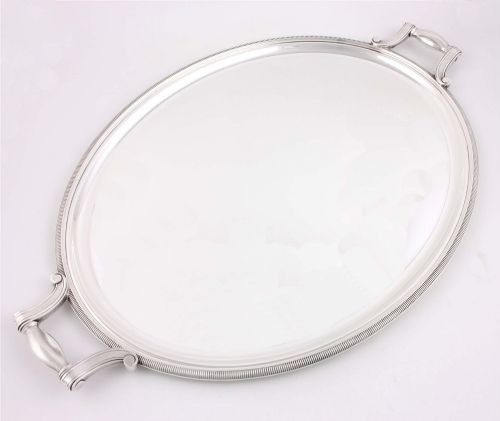
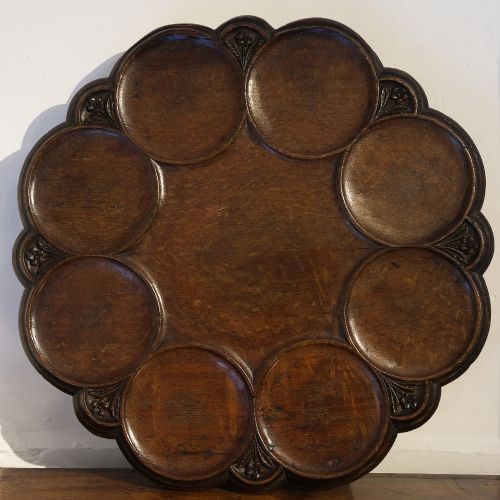
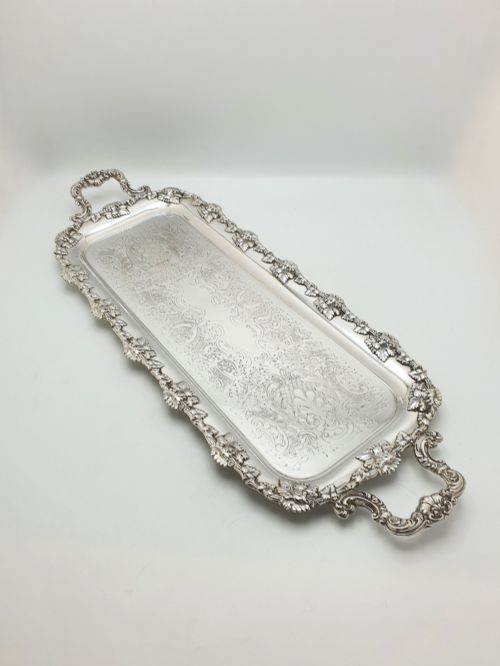
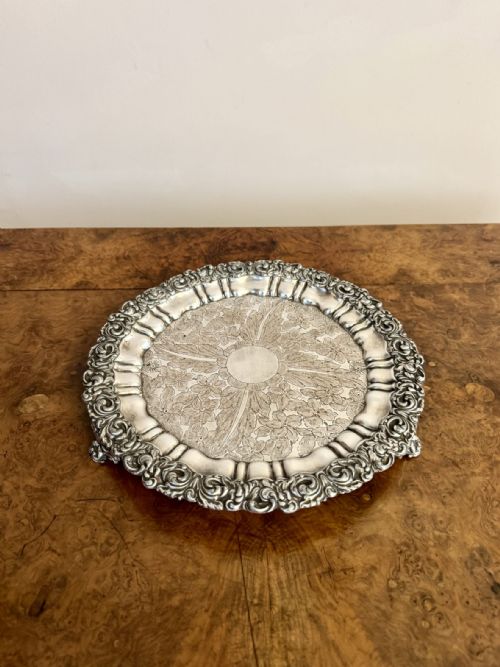
A vintage waiter tray spans heavy silver plate, polished mahogany, and rotating tiers designed to keep drinks and dishes moving with ease.
Vintage Waiter Tray
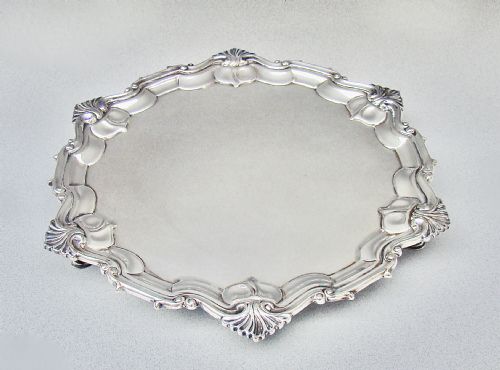
A vintage waiter tray encompasses flat serving pieces and multi-tiered pieces known as dumb waiters, spanning centuries of formal dining and hospitality. Buyers encounter everything from compact silver-plated salvers to large Edwardian gallery trays and rotating wooden lazy susans.
The selection ranges from Georgian mahogany card trays to Art Deco cocktail servers by makers like Mappin & Webb and Walker & Hall. Pieces originate primarily from British workshops, though continental makers such as Christofle also appear.
Most examples date from the Victorian and Edwardian periods, bringing raised borders, engraved surfaces, and sturdy handles to modern interiors.
Materials and Construction
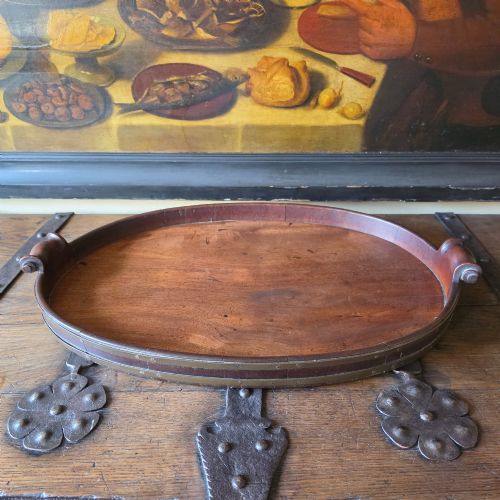
Makers utilised silver plate, electroplated nickel silver, and sterling silver over base metal or copper, alongside solid mahogany and oak for wooden tiers. Old Sheffield plate also emerges on earlier items, showing fused layers of silver and copper.
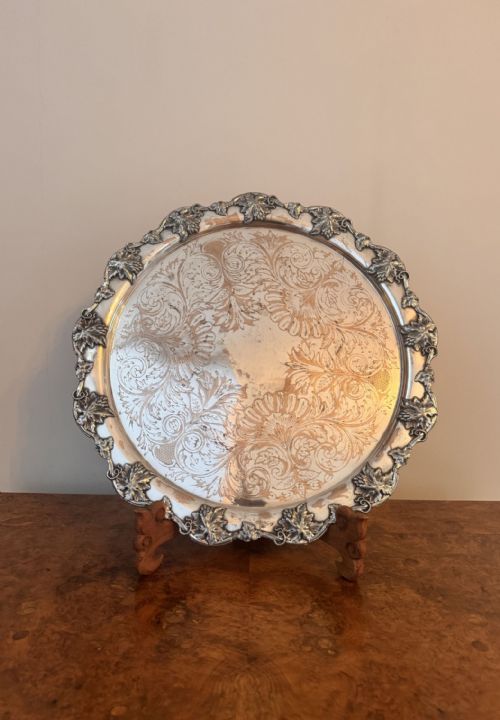
Decoration relied on hand engraving, applied grapevine borders, pierced gallery rails, and intricate woodwork for rotating mechanisms. Handles were securely soldered or fitted to sustain the weight of heavy decanters and glassware.
Some Edwardian pieces served double duty as canapé party turntables, proving that cocktail hour holds no truly modern inventions.
Judging Quality and Execution
Weight and balance dictate the feel of a metal tray, where thick silver plating resists wear and maintains a deep polish across the engraved surface. Finer pieces display crisp casting in the detailed rims and secure joints on handles and feet.
In wooden designs, the smoothness of the revolving action and the depth of the timber grain separate standard utility items from superior cabinet work.
Keith Murray·Mappin & Webb·William Hutton & Sons·Christofle·Padley Parkin·J B Chatterley & Sons·Walker & Hall·James Dixon & Sons
The Vintage Waiter Tray Glossary
- Salver
- A flat metal tray, usually circular, often raised on small feet and used for serving drinks or presenting cards.
- Gallery tray
- A serving tray featuring an upright pierced gallery rail around the perimeter to keep glassware secure.
- Lazy susan
- A revolving tray or tabletop accessory placed to rotate dishes and condiments between diners.
- Old Sheffield plate
- An early form of plating created by fusing a sheet of silver to a copper core before shaping.
- EPNS
- Electroplated nickel silver, a durable base metal coated with a thin layer of silver through electrolysis.
Vintage Waiter Tray: Frequently Asked Questions
How do I clean a silver plated waiter tray?
Use a gentle silver cream and a soft cloth to remove tarnish without wearing through the plated surface to the base metal beneath. Avoid abrasive pads that scratch the engraved details.
Store the tray in a dry environment and use it regularly to slow down natural oxidation processes.
Can I use a wooden lazy susan on a dining table?
Mahogany and oak rotating trays were historically built to assist guests with passing dishes and bottles during meals. Their sturdy wooden construction handles daily use with ease.
Wipe the surface clean with a damp cloth and treat the timber with appropriate wax to maintain the finish.
How do I date an antique silver tray?
Look for maker marks, hallmarks, and registration numbers stamped into the metal underside or rim. Stylistic cues such as Art Deco geometric lines or Victorian chased grapevines also point to specific eras.
Comparing the manufacturing technique, such as Old Sheffield plating versus later electroplating, narrows down the timeline.