



Silver Shell Dishes
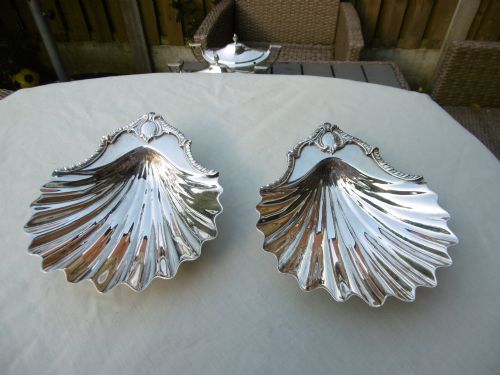
These silver shell dishes bring maritime form to the table, offering a decorative vessel for butter, salt, or small servings.
Silver Shell Dishes
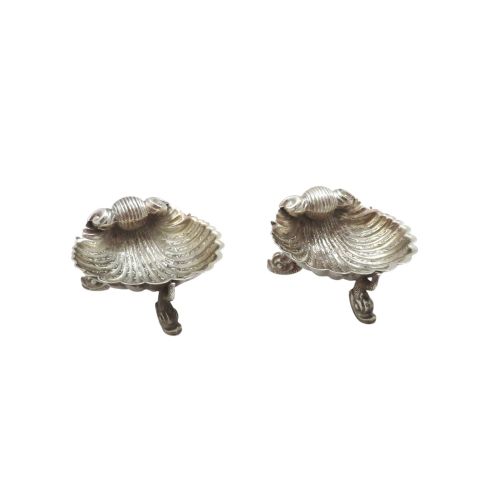
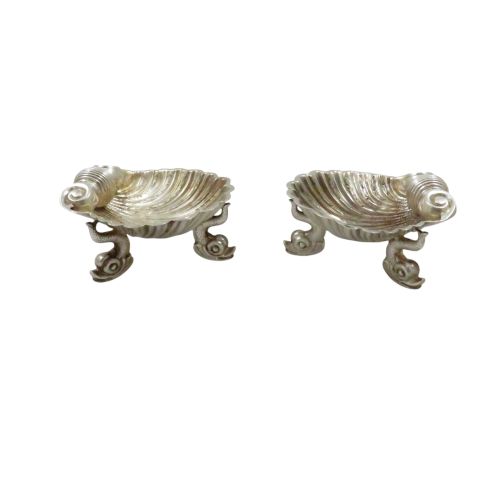
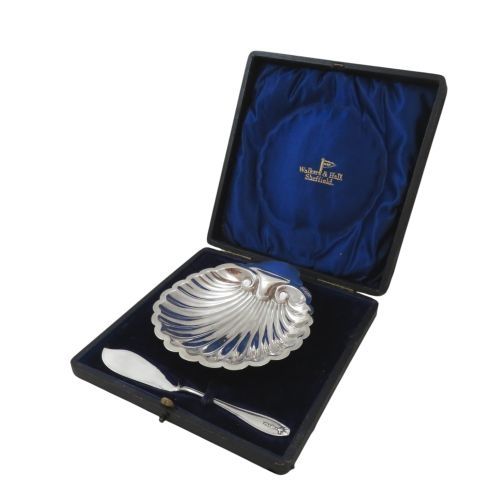
When you search for silver shell dishes, you encounter a specialised form shaped to mimic natural scallop shells. These pieces appear most frequently as matched pairs intended for butter or salt, alongside individual serving vessels and cased presentation sets.
The selection spans several periods, moving from eighteenth-century George II and George III examples through Victorian and Edwardian iterations up to the early twentieth century. Georgian makers often produced heavy cast silver versions, while later decades favoured sterling and silver-plated items, sometimes equipped with dedicated knives or velvet-lined cases.
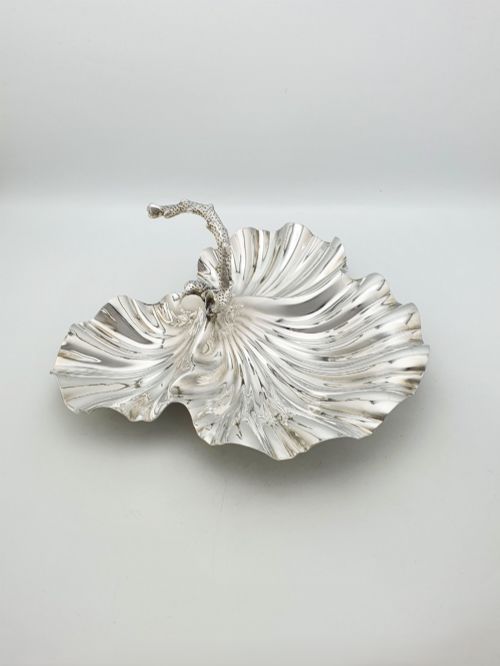
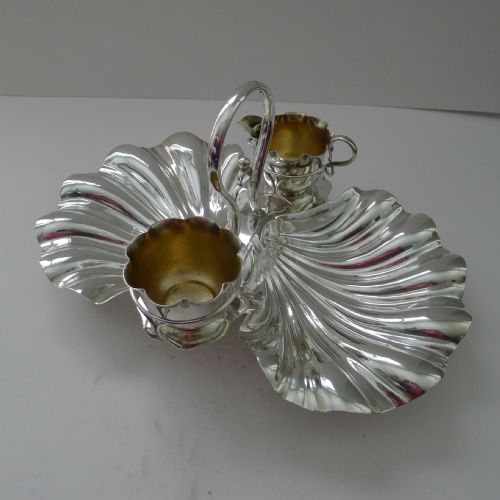
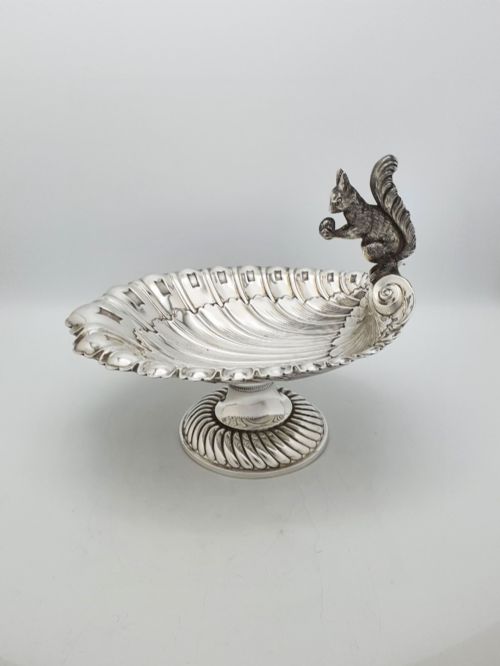
Formations range from simple ridged bowls resting on small feet to elaborate designs featuring dolphin supports, coral handles, or rococo detailing. Buyers meet both functional tableware intended for condiments and decorative dishes designed for sideboards or dressing tables.
Materials and Technique
Silversmiths utilised sterling silver and silver plate over base metals, occasionally incorporating gold wash interiors known as silver gilt. Construction methods combined hand-chasing, hammering from sheet metal, and casting for figural elements such as dolphin feet or coral handles.
Earlier eighteenth-century pieces often display heavy gauge cast construction with intricate hand-engraved ribbing. Later Victorian and Edwardian examples balanced traditional silversmithing with electroplating techniques, producing durable tableware housed in fitted leather and velvet boxes.
Listings feature periods spanning from the eighteenth century through the Georgian, Victorian, and Edwardian eras up to the mid-twentieth century.
Evaluating Quality
Quality rests upon the crispness of the shell fluting and the structural integrity of the base or feet. Master silversmiths achieved convincing naturalism in the hinge and rib details, whereas lower-tier production yielded softer lines and thinner gauge metal.
Completeness dictates value within this category. Pairs, matched sets of four, and original cased sets complete with knives retain higher integrity than stray single items or pieces stripped of their original presentation boxes.
William Plummer·Goldsmiths & Silversmiths·Daniel Arter·Edward Farrell·Mappin & Webb·Roberts and Belk·Samuel Herbert·Mary Sibley & Richard Sibley·J T Younge, Walker & Crowder·Josiah Williams & Co·Atkin Brothers·Henry Williamson Ltd
The Silver Shell Dishes Glossary
- Salt Cellar
- A small vessel used to hold salt at the dining table, frequently shaped as a shell supported by tiny feet. These often appear in pairs or larger matched sets.
- Butter Shell
- A small dish designed specifically for serving individual portions of butter. They frequently date from the Georgian and Victorian periods and occasionally include matching knives.
- Silver Gilt
- Silver that has been coated with a thin layer of gold on the interior surface. This technique protected the silver from corrosive food acids.
- Electroplated Nickel Silver
- A base metal alloy coated with a layer of silver through an electrical process. This method provided an accessible alternative to solid sterling silver during the nineteenth and twentieth centuries.
- Rococo Revival
- A decorative style popular during the nineteenth century that revived the asymmetrical scrolls, shell motifs, and ornamental curves of the eighteenth century.
Silver Shell Dishes: Frequently Asked Questions
How were silver shell dishes used originally?
These dishes served practical functions at formal dining tables, holding portions of butter, condiments, or salt for individual guests. Wealthy households utilised matched pairs or sets for multi-course meals.
Over time, smaller versions transitioned to dressing tables as trinket trays, while cased sets remained preserved as presentation gifts or wedding presents.
Are these dishes made of solid silver?
The inventory includes both solid sterling silver and silver-plated items over nickel silver or base metals. Hallmarks stamped onto the metal indicate the standard of silver and the assay office of origin.
Plated pieces offer the same decorative shell form without the solid precious metal content, often marked with manufacturer initials rather than standard sterling hallmarks.
How should I care for silver shell dishes?
Maintenance requires gentle cleaning with dedicated silver polish to remove tarnish without wearing down the fine details of the shell ribs. Avoiding harsh chemical dips preserves the original surface finish and any applied gold wash.
Storing pieces in dry, anti-tarnish cloth or original velvet-lined cases protects the soft metal from scratching when not displayed on tables.
How do I identify the period of a silver shell dish?
Official hallmarks, date letters, and maker stamps stamped into the silver provide precise manufacturing years for solid pieces. Stylistic clues also help distinguish eras, such as heavy cast rococo forms from the eighteenth century versus lighter Edwardian reticulated designs.
Comparing the weight, hinge execution, and accompanying accessories like fitted knives helps separate early hand-wrought examples from later machine-assisted production.