

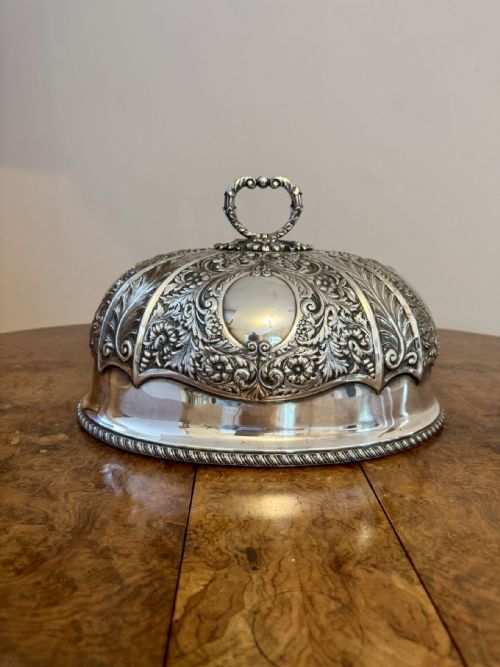


Silver Serving Platter Cover
A silver serving platter cover keeps a grand roast hot at the table and carries the heavy weight of centuries of dining ritual.
Silver Serving Platter Cover
A silver serving platter cover protects and presents the joint or dish at the dining table, taking shapes from rectangular entree dishes to large domed meat covers. When buyers search for a silver serving platter cover, they encounter substantial domestic serveware designed to trap steam and retain heat before carving.
The pieces appearing on this page span several distinct periods, notably the Edwardian era and the nineteenth century, with Victorian and Georgian examples also present. Forms include oval and rectangular meat domes, game covers, warming dishes, and complete entree dishes with matching covers.
Makers such as Henry Wilkinson, Hamilton & Inches, and Cresswick represent the craftsmanship found within these periods. The materials range from solid silver and Old Sheffield Plate to later silver plate and electroplated nickel silver.
Materials and construction
The construction of these covers relies heavily on traditional plating techniques alongside solid silver work. Old Sheffield Plate appears in nineteenth-century examples, bonding a thin layer of silver to a copper base, which often reveals subtle traces of the warmer metal beneath high-wear edges.
Later pieces utilise silver plate, EPNS, and electroplated nickel silver over base metals, reflecting industrial shifts towards more consistent electrochemical plating methods by the Edwardian period.
Silver Serving Platter Cover Retail Price Guide 2026
Typical asking prices for silver serving platter cover among the pieces listed under this phrase on Sellingantiques today, from the lower quarter to the upper quarter. They describe what is for sale here now, not the wider market.
Some game covers feature realistic chased handles shaped like leaping hares or pheasants, reminding diners exactly what lay steaming underneath.
Assessing quality in service covers
Quality in a silver serving platter cover rests on the weight of the metal and the crispness of applied cast borders, handles, and crests. Thicker plating or solid construction ensures the dome resists dents and retains heat effectively during service.
The harmony between the cover and its original base, dish, or liner dictates the integrity of the piece. Well-balanced proportions and clear maker marks indicate superior workshop standards.
Henry Wilkinson·Hamilton and Inches·Cresswick
The Silver Serving Platter Cover Glossary
- Old Sheffield Plate
- An early composite material made by fusing a sheet of silver to a copper ingot before rolling them together. This method creates a distinct dual-metal structure seen in Georgian and early nineteenth-century pieces.
- Meat Dome
- A large, domed cover designed to fit over a platter of jointed meat. These pieces preserve warmth and prevent cooling in transit from the kitchens.
- Entree Dish
- A shallow vessel with a fitted cover used for serving side dishes or courses at formal meals. They frequently take rectangular or oval forms with removable handles.
- EPNS
- An abbreviation for electroplated nickel silver, denoting a base metal of copper, nickel, and zinc coated with a layer of pure silver through an electrical bath.
- Warming Dish
- A specialised serveware item featuring a compartment for hot water beneath the main dish. This design maintains food temperature throughout long dining sessions.
Silver Serving Platter Cover: Frequently Asked Questions
What is a silver serving platter cover used for?
These covers were designed to sit over joints of meat, fowl, or vegetables on a dining table. They trapped heat and steam, keeping food warm as it travelled from the kitchens to the diners.
In grand households, lifting the heavy cover signalled the start of a course. Today, they serve both as decorative display items and functional table serveware.
How do I date a silver serving platter cover?
Dating relies on style, manufacturing technique, and any maker marks stamped into the metal. Georgian and early nineteenth-century pieces often use Old Sheffield Plate, while Edwardian items frequently employ newer electroplating methods.
Examining the weight, shape of the handle, and any engraved crests helps place the piece within the Victorian, Edwardian, or Georgian eras.
What is the difference between Old Sheffield Plate and silver plate?
Old Sheffield Plate is a fused laminate where a sheet of silver is mechanically bonded to copper, visible as a thin line of copper on cut edges. It is characteristic of pieces from the Georgian and Regency periods.
Later silver plate, including EPNS, uses electricity to deposit a layer of silver over a nickel-silver base metal, a technique that became standard by the late nineteenth and twentieth centuries.
How should I clean a antique silver cover?
Cleaning requires a gentle silver polish and a soft cloth to avoid removing the thin layer of precious metal, particularly on Old Sheffield Plate where the copper base might show through. Regular, careful dusting prevents the buildup of tarnish.
Harsh chemical dips and abrasive scouring pads must be avoided because they damage the surface finish and remove historic patination.