


Silver Salt Dip Set
A silver salt dip set brings Georgian and Victorian dining table elegance home, offering small vessels designed to hold seasoning with style.
Silver Salt Dip Set
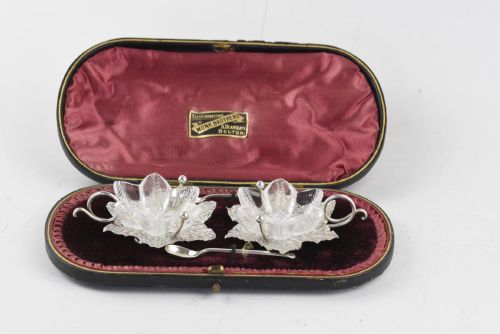
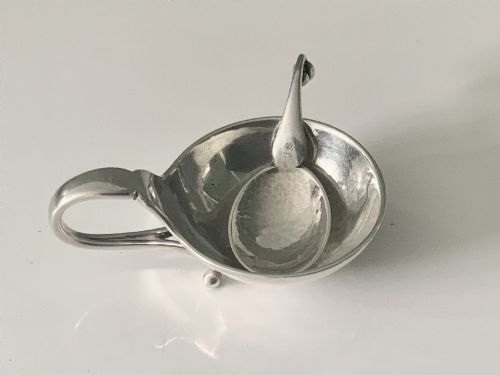
A silver salt dip set comprises small open salt cellars, often paired with matching spoons and sometimes housed in fitted leather or velvet cases. You will encounter various forms here, including traditional cauldron shapes, six-lobed bowls, and bird-themed designs from the Victorian, Edwardian, and Art Deco periods.
The materials span sterling silver, silver plate, and various liners such as cobalt glass. Sets range from pairs to matching groups of four or five, reflecting the changing scale of formal dining across the nineteenth and early twentieth centuries.
How they were made
Silversmiths formed these pieces using traditional techniques of casting, hammering, and embossing, frequently incorporating pierced work or decorative rims in styles from Rococo Revival to Aesthetic Movement. Makers added fitted glass inserts, particularly rich cobalt blue glass, to protect the silver metal from the corrosive nature of salt.
Cased sets often feature interiors lined in silk and velvet, housed within leather-covered wooden boxes. The accompanying spoons were often cast or stamped to match the specific motifs of the salt cellars.
Listings feature sterling silver, silver plate, cobalt glass, and velvet across Georgian, Victorian, Edwardian, and Art Deco styles.
What varies in quality
Quality rests upon the crispness of the chasing, the weight of the solid sterling silver or the durability of the silver plate, and the presence of original matching components. Sets that retain their original fitted velvet or silk-lined cases, matching spoons, and undamaged glass liners command greater attention.
The reputation of the maker and the precision of the period decorative style, whether restrained Georgian forms or intricate Art Nouveau curves, define the distinction between standard tableware and exceptional examples.
Georg Jensen·Bateman·Paul Storr·Thomas Smily·Vale Brothers and Sermon
The Silver Salt Dip Set Glossary
- Salt cellar
- A small open bowl or dish used to hold salt on the dining table before the invention of the spring-loaded shaker. They are typically lifted using a small matching spoon.
- Cobalt glass
- A deep blue glass used to line open silver salt cellars. This prevents the salt from chemically reacting with and tarnishing the silver metal.
- Sterling silver
- An alloy of silver containing ninety-two point five percent silver by mass and seven point five percent other metals, usually copper. It forms the primary metal for the finer antique salt sets.
- Cauldron salt
- A small salt cellar modelled after a traditional cooking pot, usually resting on three short feet or legs. This shape is particularly common in Georgian and Victorian silver.
- Silver plate
- A base metal coated with a thin layer of pure silver. This technique provided an accessible alternative to solid sterling silver during the twentieth century.
Silver Salt Dip Set: Frequently Asked Questions
How were salt dips used historically?
Before free-flowing table salt and shakers became common, salt was kept in central cellars or individual dips placed by each guest's seat. Diners used the small matching spoons or the tip of a knife to take a pinch of salt from the open bowl onto their plate.
These sets were essential items on formal dining tables throughout the Georgian, Victorian, and Edwardian eras. They often formed part of larger matched table services used during elaborate multi-course meals.
How do I care for antique silver salts?
Silver salt cellars require gentle cleaning with a specialised silver cloth or mild polish to remove natural tarnishing without damaging the chased details or hallmarks. Glass liners should be removed and washed separately in warm soapy water.
Keep the pieces away from direct moisture and harsh chemicals, particularly salt itself if stored long-term, to prevent pitting on the silver surface. Storing cased sets in stable humidity protects the original velvet and silk interiors.
Are liners original to the salt cellars?
Original glass liners fit snugly into the silver framework without excessive movement and match the specific period manufacturing techniques of the outer bowl. Cobalt blue glass was a favoured choice throughout the Victorian period for its striking visual contrast against polished silver.
Replacements are common due to the fragility of glass over centuries of use, so checking whether the liner sits correctly in the collar helps determine its authenticity.
How do I identify the period of a salt set?
The stylistic clues, ranging from Rococo Revival scrolls to clean Art Deco geometric lines, provide the first indication of a set's date. Hallmarks stamped directly onto the silver offer definitive evidence, indicating the assay office, city, and exact year of manufacture.
Cases, fitted boxes, and the presence of original matched spoons also correspond to specific manufacturing eras like the Victorian or Edwardian periods.