

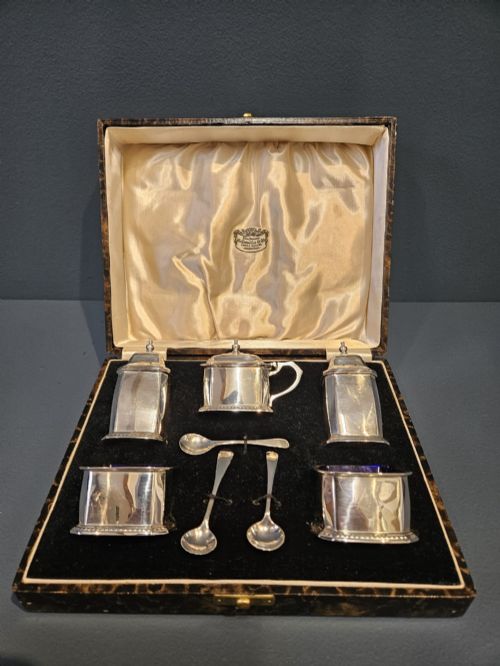
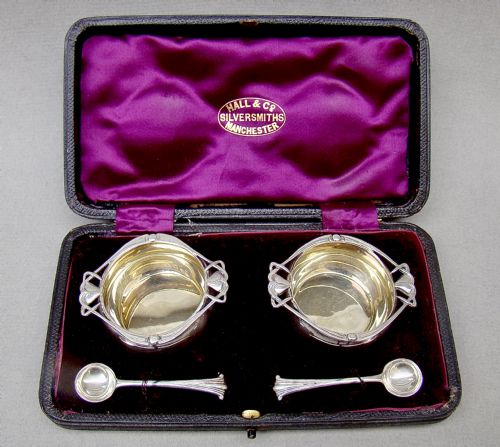
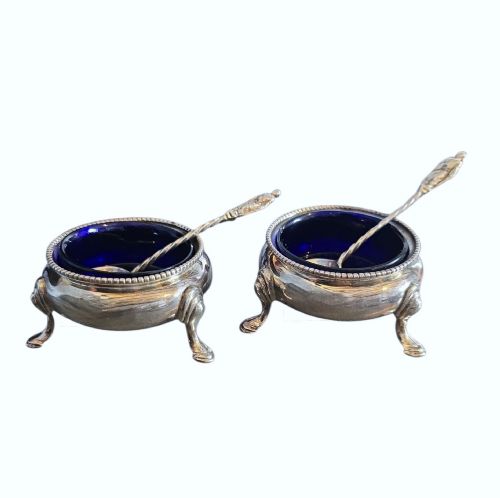
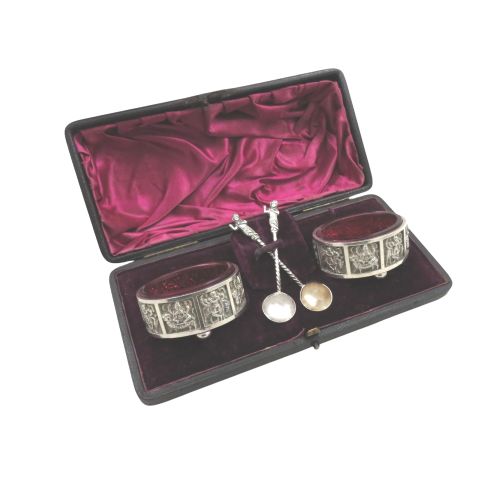

Silver Salt Cellars with Spoons
Silver salt cellars with spoons are quintessential dining table accessories that bring tactile elegance and historical craftsmanship to the table.
Silver Salt Cellars with Spoons
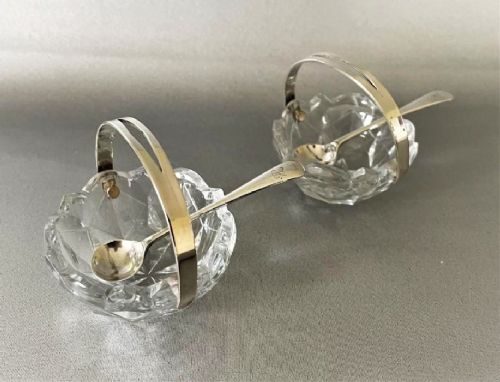
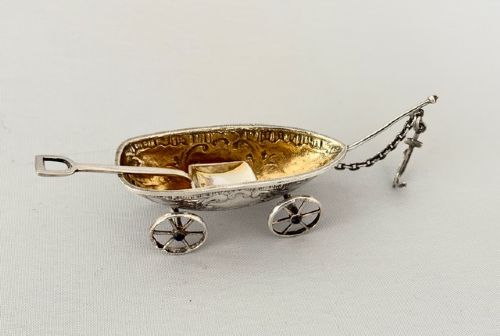
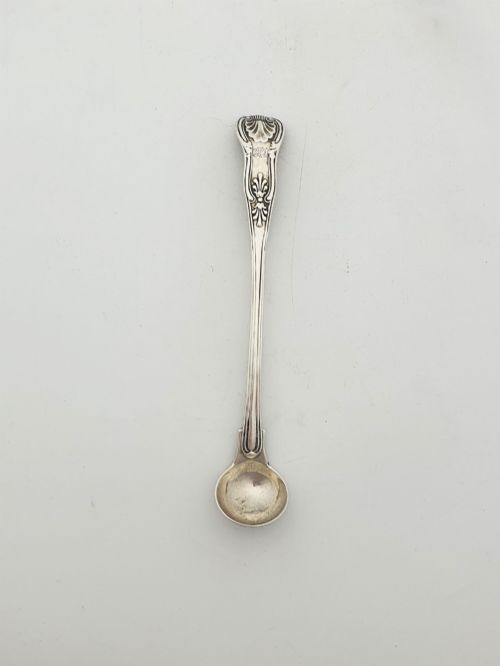
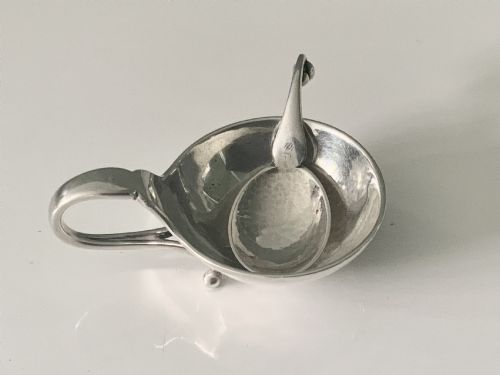
When you search for silver salt cellars with spoons, you are looking at small open vessels designed to hold seasoning at the table alongside their matching implements. The pieces on this page span the nineteenth century, the Victorian and Edwardian eras, up to the mid-twentieth century.
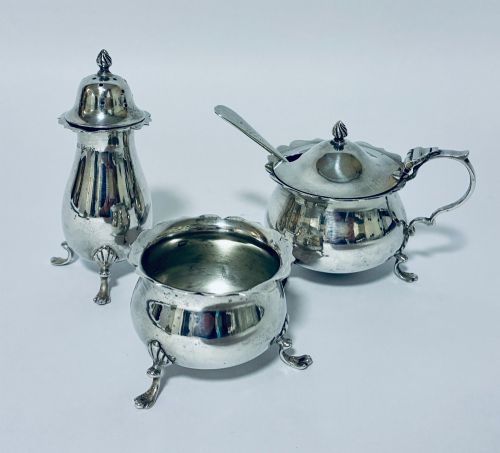
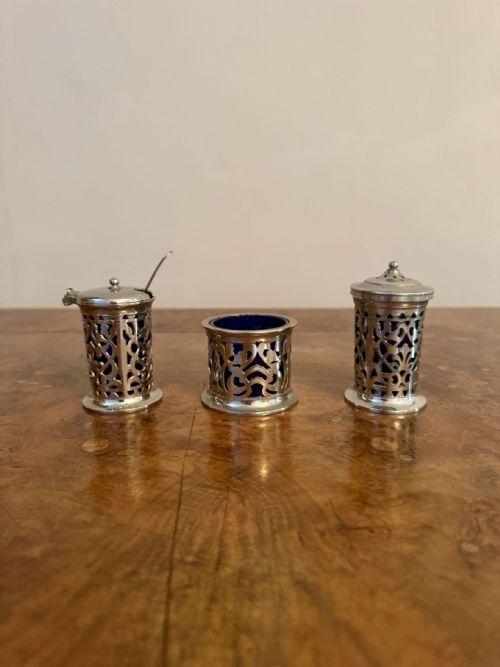
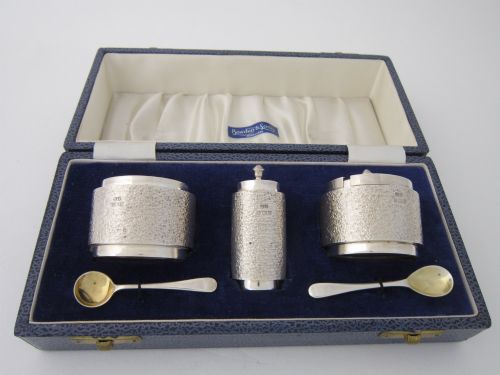
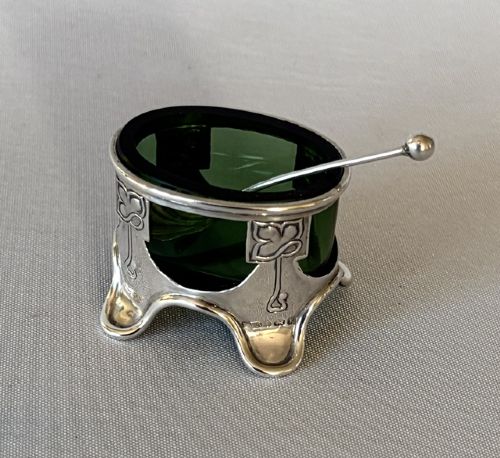
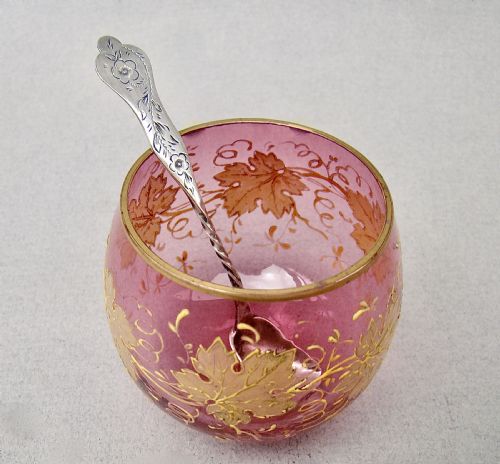
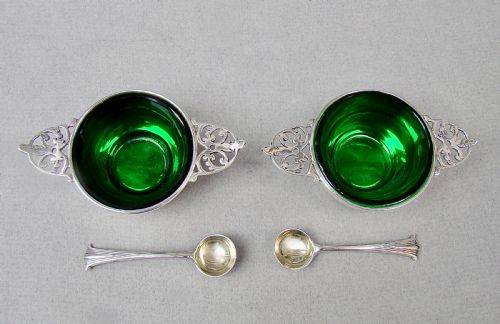
You are most likely to meet pairs or sets of solid silver cellars, frequently featuring contrasting coloured glass liners in cobalt or cranberry hues. These tablewares often form part of larger condiment or cruet sets alongside mustard pots.
Materials and construction
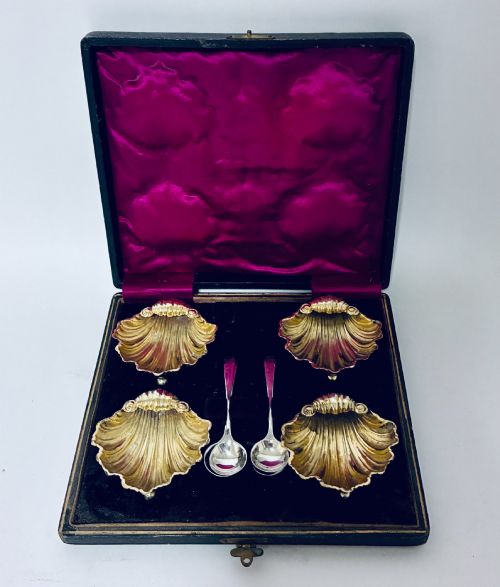
These items are constructed predominantly from sterling silver or solid silver, sometimes enhanced with silver-gilt interiors or gold leaf accents. Manufacturers utilised traditional silversmithing techniques to shape boat-shaped vessels and lobed bodies.
Silver Salt Cellars with Spoons Retail Price Guide 2026
Typical asking prices for silver salt cellars with spoons among the pieces listed under this phrase on Sellingantiques today, from the lower quarter to the upper quarter. They describe what is for sale here now, not the wider market.
Victorian diners required tiny spoons because dipping fingers into communal salt was strictly frowned upon.
Distinguishing quality
The distinction between standard examples and superior pieces rests upon the crispness of the silversmith's chasing and the presence of original components. Complete sets retaining their matching spoons and undamaged glass liners command greater appreciation.
Weight and gauge of the silver further differentiate the selection, alongside the finesse of maker marks and hallmarks. Distinctive regional styles, such as Aesthetic Movement designs or Russian craftsmanship, elevate the visual interest of individual pieces.
Bricks and Sons·Wilmot Manufacturing Co·Vale Brothers and Sermon
The Silver Salt Cellars with Spoons Glossary
- Sterling silver
- An alloy consisting of ninety-two point five percent silver and seven point five percent other metals, usually copper. This standard guarantees the purity and durability of antique tableware.
- Cobalt glass
- A deep blue glass coloured by the addition of cobalt oxide. It provides a striking visual contrast when used for the liners of open salt cellars.
- Silver-gilt
- Silver that has been coated with a thin layer of gold on its surface. This technique prevents tarnishing and protects the interior of salt cellars from corrosive salt.
- Cruet set
- A collection of small bottles or open vessels designed to hold condiments like salt, mustard, and pepper. These sets often share a unified design aesthetic.
- Cranberry glass
- A rich pinkish-red transparent glass produced by adding gold chloride to the molten batch. It appears frequently in nineteenth-century decorative tableware.
Silver Salt Cellars with Spoons: Frequently Asked Questions
How were salt cellars used historically?
Historically, salt cellars were placed on the dining table for guests to spoon salt onto their plates before individual shakers became common.
Open vessels allowed diners to access loose salt easily during formal meals.
Can I use antique salt cellars today?
These pieces function well for modern dining when fitted with glass liners that protect the silver from corrosion.
Careful cleaning prevents damage to the delicate metal and coloured glass.
How do I identify Victorian salt cellars?
Victorian examples often feature hallmarks indicating the assay office and date of manufacture alongside ornate stylistic motifs.
Heavier chased decoration and cobalt glass liners frequently characterise this period.
What is a condiment set?
A condiment set gathers matching tableware items such as salt cellars, mustard pots, and pepperettes onto a single tray or into a coordinated grouping.
These collections ensured a unified appearance on formal dining tables.