


Silver Plated Wine Urn
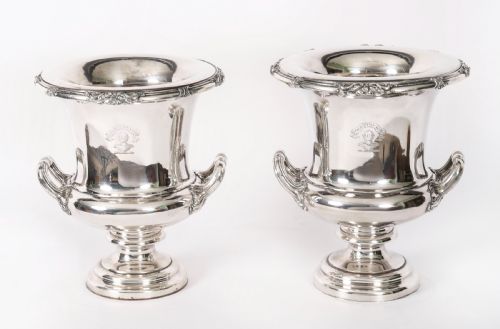
A silver plated wine urn brings neoclassical grandeur directly to the dining table, serving to chill wine with considerable style.

Silver Plated Wine Urn
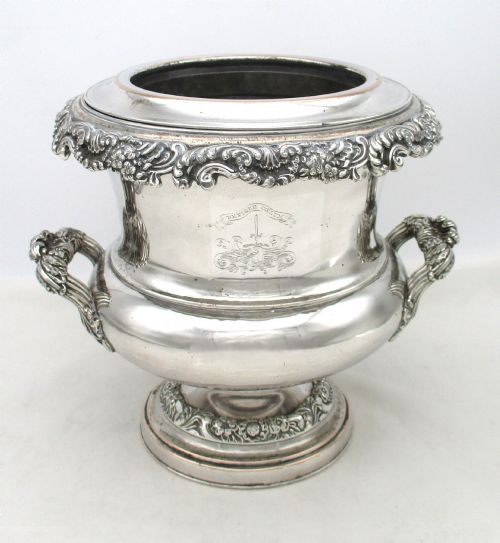
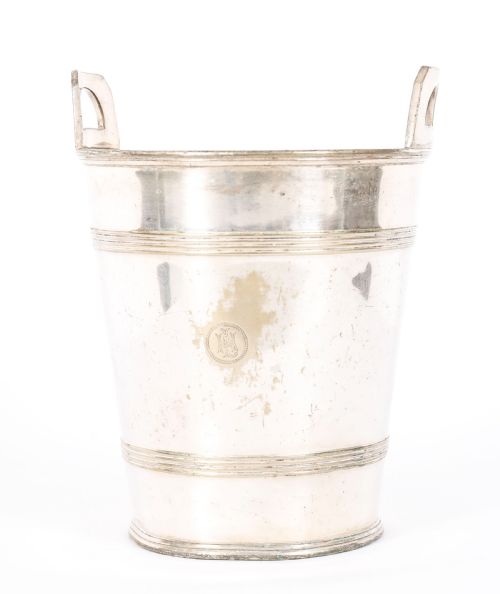
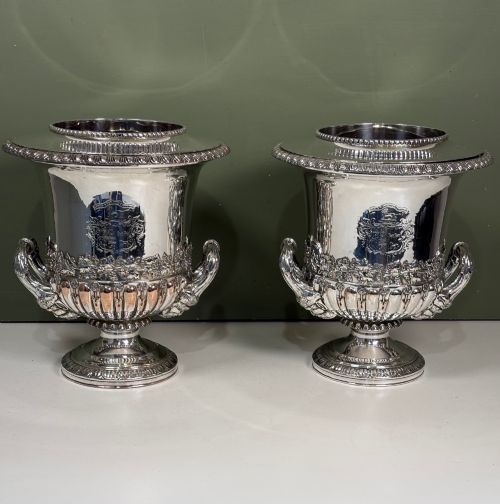
A silver plated wine urn typically takes the form of a campana shape or lidded pail, designed specifically to cool wine or champagne. When searching for a silver plated wine urn, collectors most frequently encounter nineteenth-century examples, alongside Georgian, Regency, and later twentieth-century pieces.
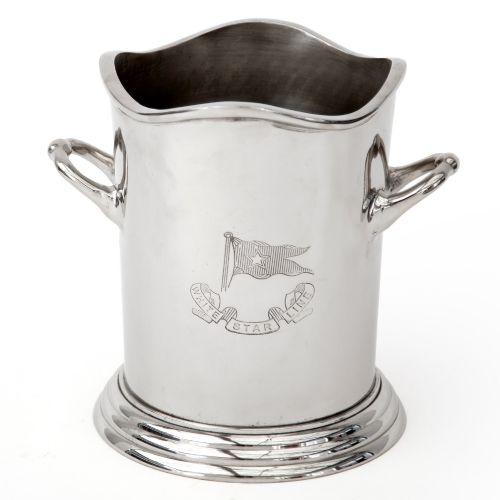
The selection ranges from solo vessels bearing crests or military inscriptions to matched pairs used for grand dinners. Formats extend from classical pedestal coolers to twin-handled ice buckets suited for champagne.
Materials and construction methods
Early pieces rely on Old Sheffield Plate, a technique fusing a thin sheet of silver to a thicker copper base, often revealing the red copper core beneath worn highlights. Later production shifts to electroplated nickel silver and standard silver plate over base metal.
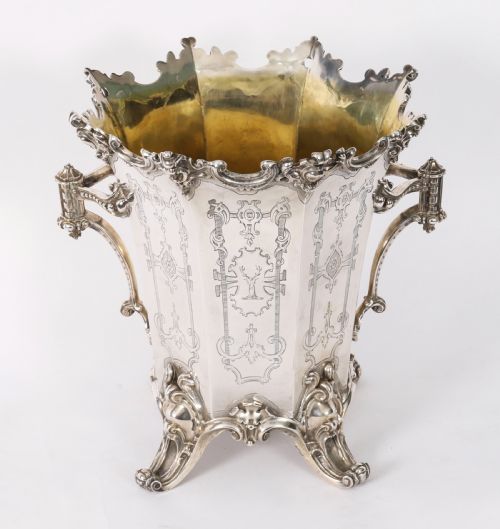
Makers shaped these metals into neoclassical urns and campana profiles, sometimes adding cast details such as handles shaped like dolphins or cherubs. Gilding is occasionally applied to the interior bowls to protect the metal from moisture.
Several pieces feature lively cast details, including mischievous dolphins and cherubs keeping watch over the ice.
Distinguishing quality in production
Quality rests primarily in the crispness of the chased or cast ornament, such as scrolling foliage, heraldic crests, and classical handles. Finer examples retain their original heavy gauge metal, whereas lesser production feels thin or utilitarian.
The integrity of the plating surface matters greatly, with superior items showing careful application that withstands centuries of polishing. Maker attribution to notable firms like Elkington or Matthew Boulton also elevates a piece.
Hutton Sheffield·Elkington Mason And Co·Elkington·Matthew Boulton And Co·James Dixon And Sons
The Silver Plated Wine Urn Glossary
- Campana
- A bell-shaped vessel with a flared rim and footed base, typical of classical wine urns. This silhouette defines many Regency period designs.
- Old Sheffield Plate
- A composite material made by fusing silver and copper together through heat and pressure. This method predates nineteenth-century electroplating.
- Electroplated Nickel Silver
- A base metal alloy of copper, nickel, and zinc coated with a layer of pure silver using electricity. This process became widespread during the Victorian era.
- Wine Cooler
- A vessel designed to hold ice and water for chilling wine bottles at the table. They frequently double as champagne buckets or large ice pails.
Silver Plated Wine Urn: Frequently Asked Questions
How were silver plated wine urns used?
These vessels were filled with ice and water to chill wine bottles during formal dining. Servants placed them on sideboards or directly on the table for guests.
Over time, their decorative urn shapes also made them suitable for display when not actively chilling wine.
How do I clean my wine urn?
Maintenance requires gentle washing with warm soapy water and a soft cloth to protect the historic plating. Avoid harsh abrasive dips that strip the remaining silver layer.
Specialist silver polish should be used sparingly, particularly on older pieces with thin plating or exposed copper.
Are these urns waterproof?
Most pieces remain watertight and suitable for holding ice and water during use. However, prolonged contact with stagnant water can harm fragile interiors.
It is sensible to dry the interior thoroughly after each use to prevent corrosion of the base metal.
How can I tell Old Sheffield Plate apart?
Old Sheffield Plate often shows a faint reddish hue where the underlying copper peeks through high points or rims. The edges of the metal sheet may also reveal the sandwich construction.
Electroplated pieces lack this distinct copper telegraphing and display a more uniform silver layer.