


Georgian Silver Wine Bucket
These georgian silver wine bucket pieces are substantial vessels designed to keep bottles chilled, offering heavy metal construction and classical proportions for the dining table.

Georgian Silver Wine Bucket
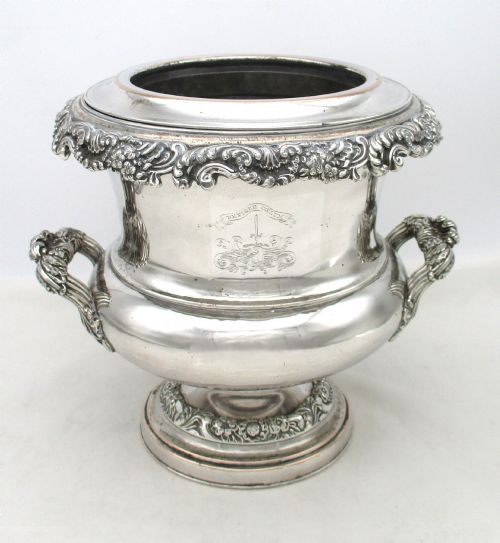
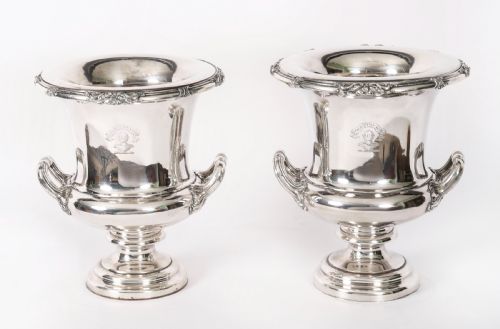
A georgian silver wine bucket typically takes the form of a wine cooler or ice bucket, spanning periods from the 18th century through the Regency and William IV eras. The pieces appearing on this page most frequently present as Old Sheffield Plate or silver plate vessels, often shaped in classical campana silhouettes.
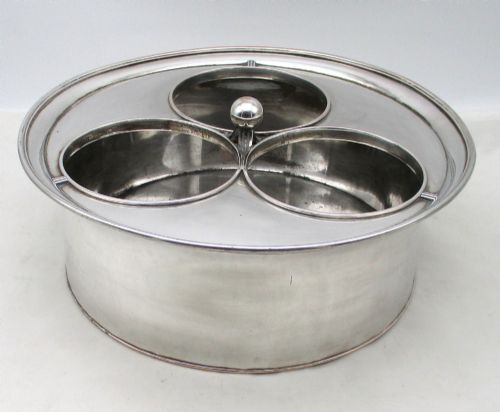
Makers and craftsmen during these periods produced single vessels, pairs, and occasionally multi-bottle holders such as three-bottle coolers. These items served dining rooms by holding ice and water around wine or champagne bottles during formal meals.
Materials and construction
The material record relies heavily on Old Sheffield Plate, a specialised fusion of silver and copper developed to achieve the appearance of solid silver at a different scale of production. Copper appears beneath the plating where wear occurs over centuries of polishing.
Silversmiths and manufacturers formed these wine coolers using techniques of raising, shaping, and applying decorative crests or coats of arms. Campana designs required careful joining of bodies, bases, and handles to create heavy, balanced vessels.
Listings span the 18th century, 19th century, Georgian, and Regency periods, utilising materials such as Old Sheffield Plate, copper, and sterling silver.
Judging quality in these coolers
Quality rests in the crispness of applied crests, coats of arms, and cast handles, which indicate the skill of the original workshop. Finer examples retain their original plating thickness without excessive copper showing through the silver surface.
Proportion and form separate standard production from superior pieces, particularly in campana models where the curve of the body and the weight of the metal dictate the presence of the piece on the table.
Matthew Boulton Co
The Georgian Silver Wine Bucket Glossary
- Old Sheffield Plate
- A composite material made by fusing a thin sheet of silver to a thicker copper base. This technique preceded modern electroplating and produces characteristic edges where copper shows.
- Campana
- A bell-shaped vessel form popular in classical design and frequently utilised for wine coolers. These pieces flare outward toward the rim.
- Regency
- A stylistic period spanning the early 19th century known for classical restraint and heavy reliance on ancient Greek and Roman motifs. Pieces from this era often feature bold handles and clean architectural lines.
- Coat of arms
- An heraldic design engraved or applied to metalwork to indicate family lineage. These personalisations add historical provenance to individual coolers.
Georgian Silver Wine Bucket: Frequently Asked Questions
How were these wine buckets used?
These vessels sat on the dining table or sideboard filled with ice and water to chill wine and champagne bottles during long meals. The heavy metal construction kept the liquid cold throughout the course of dining.
Servants would draw bottles from the bucket as needed, utilising the twin handles or substantial weight of the piece to manage the setup.
What is Old Sheffield Plate?
Old Sheffield Plate is an early method of fusing silver to a copper core by heat and pressure rather than electricity. This creates a durable dual-metal sheet that silversmiths formed into coolers and tableware.
Over long periods of use and cleaning, the thin silver layer wears thin at high points, revealing the reddish copper underneath.
How do I tell Regency from Georgian pieces?
Georgian pieces often display Rococo or early neoclassical details, whilst Regency items lean towards stricter classical antiquity, such as the campana urn silhouette. The recorded styles on this page overlap across the late 18th and early 19th centuries.
Examining the handles, rims, and overall weight helps distinguish the specific design vocabulary of each decade.
Can I still use these for wine?
These coolers function well for holding ice and bottles on a modern dining table, provided they are handled with care. The plated surfaces require gentle cleaning without harsh abrasives to preserve the remaining silver.
Many collectors prefer to use them for display or functional entertaining much as their original owners did centuries ago.