

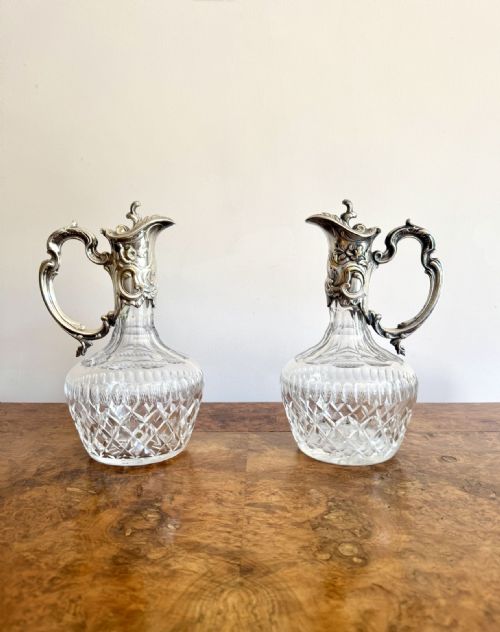


Silver Plated Wine Jug
A silver plated wine jug combines heavy crystal or coloured glass with plated mounts, serving as a striking centrepiece for formal dining.
Silver Plated Wine Jug
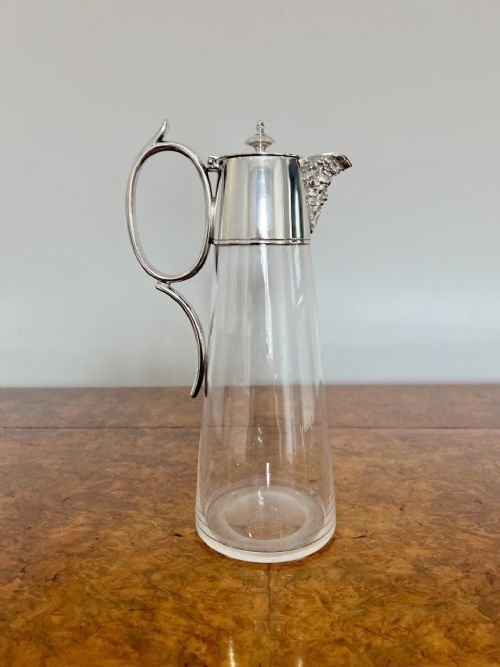
A silver plated wine jug is primarily encountered in forms such as claret jugs, decanters, and pitchers dating from the Victorian and Edwardian eras, alongside the nineteenth century. These vessels combine functional pouring with decorative display, frequently taking shapes associated with claret service or formal dining tables.
The dominant style on this page is Victorian and Edwardian, spanning periods from the eighteen-sixties through to nineteen hundred. Pieces range from straightforward cut glass bodies with plated mounts to sculptural designs rooted in Art Nouveau and Arts and Crafts aesthetics.
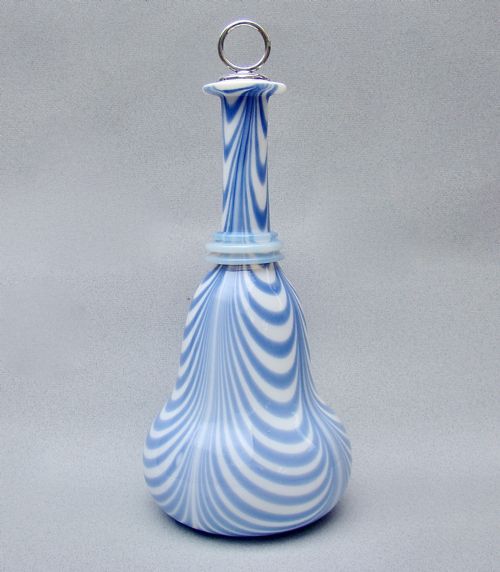
Makers utilised various glass bodies including plain crystal, etched glass, cranberry glass, and Nailsea glass, paired with silver plate, Old Sheffield plate, or electrotype mounts. Collectors also encounter specialised forms like wine ewers, flagons, and decanters carrying armorial engravings or prizes.
Materials and manufacturing methods
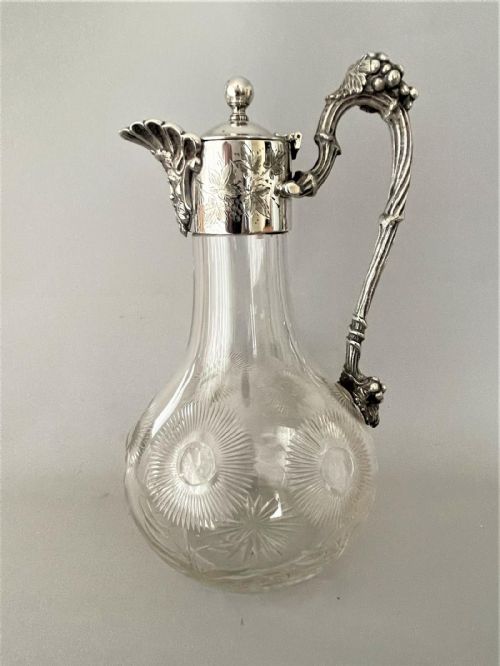
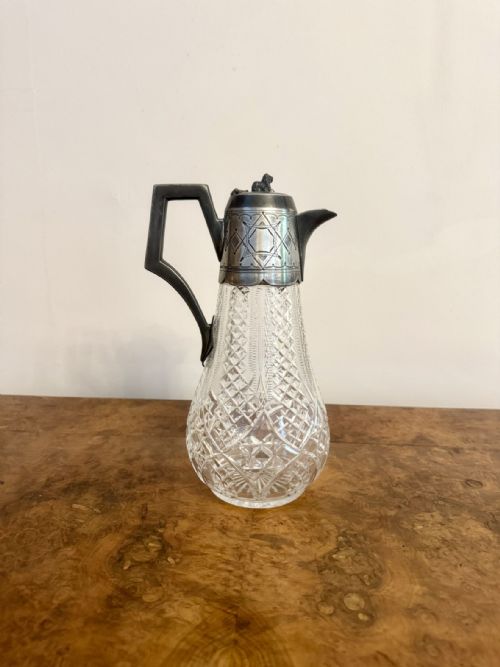
Makers combined blown or moulded glass bodies with metal components, employing lead crystal, cut glass, and coloured glass such as cranberry and Bristol blue. Glass bodies were frequently wheel-cut or etched with floral and geometric patterns before being fitted with metal hardware.
Mounts, handles, and hinged covers were produced using silver plate, Old Sheffield plate, or electrotype techniques. Metalwork was cast, chased, or electroplated onto a base metal, creating sculptural elements like figural spouts, animal heads, and hinged lids designed for secure pouring.
An unusual silver plated wine jug takes the sculptural form of a wild boar's head.
Assessing quality and execution
Quality rests in the crispness of the glass cutting, the weight of the metal mounts, and the integration between the glass body and the plated handle. Superior examples demonstrate precise wheel-cutting on the crystal alongside substantial metal casting for the hinged lid and collar.
Design ambition separates standard tableware from notable pieces, with specific works attributed to known makers showing inventive styling in handles, spouts, and overall silhouette. The retention of original plating thickness and unblemished glass surfaces further distinguishes finer survivals.
Henry Bourne·Elkington·Hukin & Heath·Dr Christopher Dresser·Valenti·WMF
The Silver Plated Wine Jug Glossary
- Claret jug
- A specialised vessel designed for serving red wine, typically featuring a glass body with a silver plated mount, handle, and hinged lid.
- Old Sheffield Plate
- An early composite material made by fusing a thin sheet of silver to a copper base before rolling, predating modern electroplating.
- Electrotype
- A metal-copying process utilising electrolysis to deposit a thick layer of silver onto a mould, allowing for highly detailed sculptural vessels.
- Nailsea glass
- Nineteenth-century glass characterised by distinctive looped or patterned coloured glass trails embedded within the clear outer body.
- Ewer
- A large jug with a wide spout and arched handle, historically used for pouring water or wine.
Silver Plated Wine Jug: Frequently Asked Questions
What is the difference between a claret jug and a decanter?
A claret jug incorporates a hinged lid and an integrated handle specifically for pouring at the table, whereas a standard decanter often relies on a removable glass stopper.
Claret jugs were engineered for red wine service during Victorian formal dinners, prioritizing ease of pouring over long-term storage.
How do I date a silver plated wine jug?
Dating relies on stylistic markers such as Victorian cut glass patterns, Edwardian proportions, or Art Nouveau whiplash lines found in the metal mounts.
Makers' marks, registry numbers, and manufacturing techniques like Old Sheffield plating also provide reliable chronological anchors.
Can I use these antique jugs for serving wine today?
Most pieces function adequately for decanting and serving wine, provided the interior glass is thoroughly cleaned and the metal mounts are handled with care.
Silver plated surfaces require gentle hand washing rather than immersion in automated dishwashers to preserve the plating.
What glass types are common on these jugs?
Common examples utilise heavy cut crystal, etched glass, and coloured wares including cranberry glass and Bristol blue.
The glass was frequently blown into moulds or hand-blown before receiving decorative wheel-cutting or surface etching.