

Silver Plated Serving Platter
A silver plated serving platter brings heavyweight presence to the table, offering the gleam of solid silver without the constant polishing panic.
Silver Plated Serving Platter
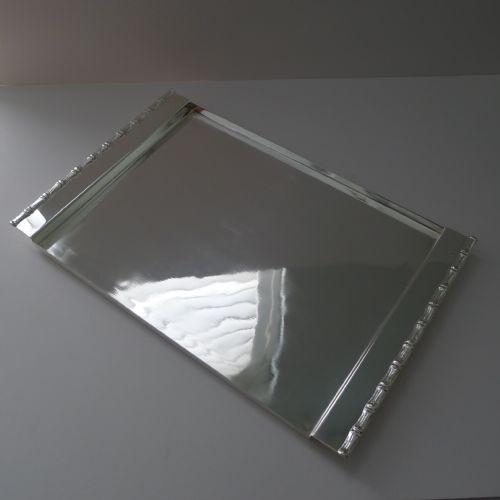
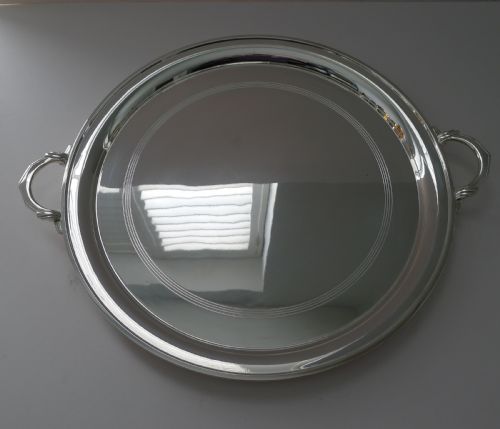
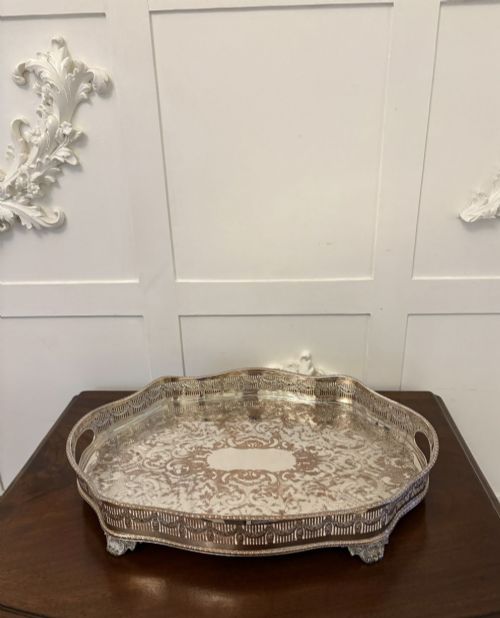
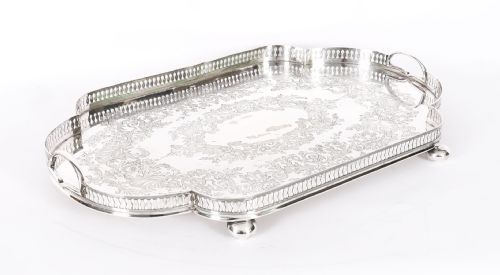
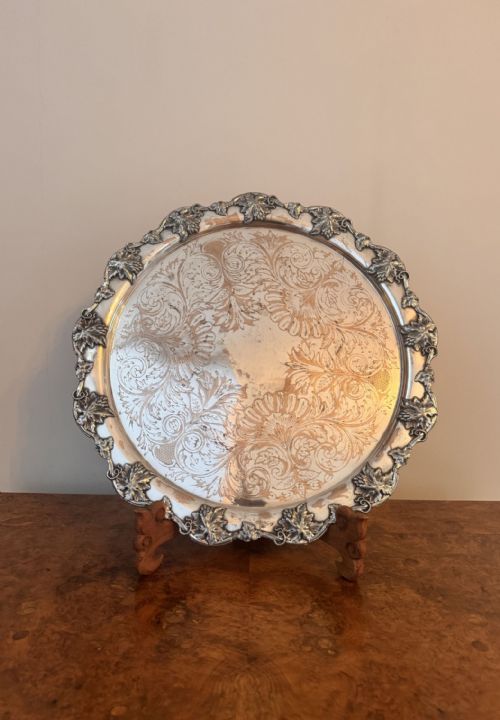
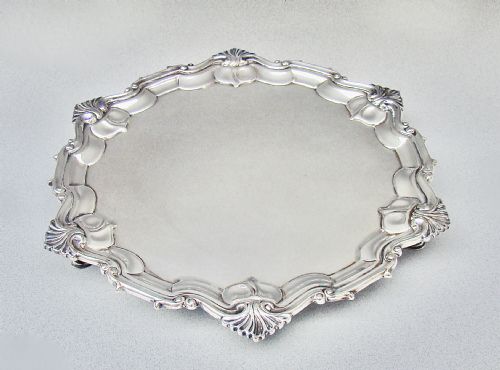
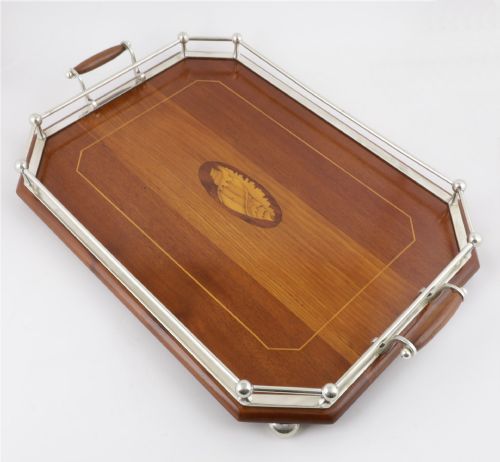
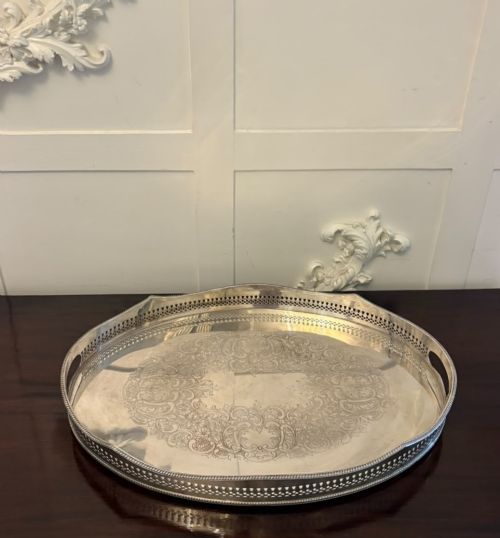
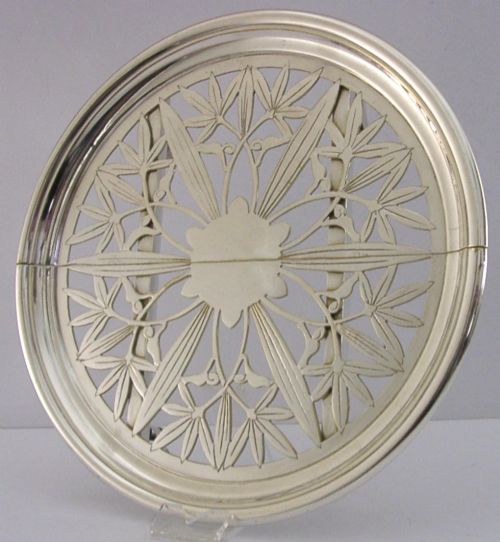
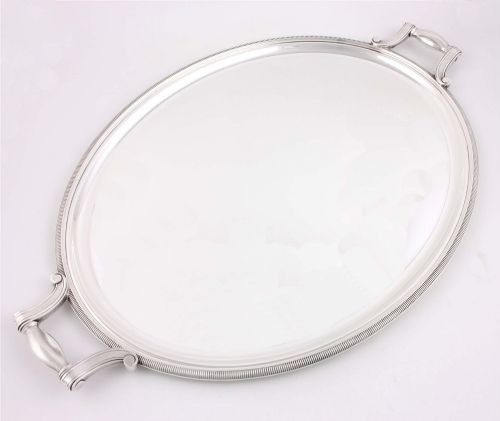
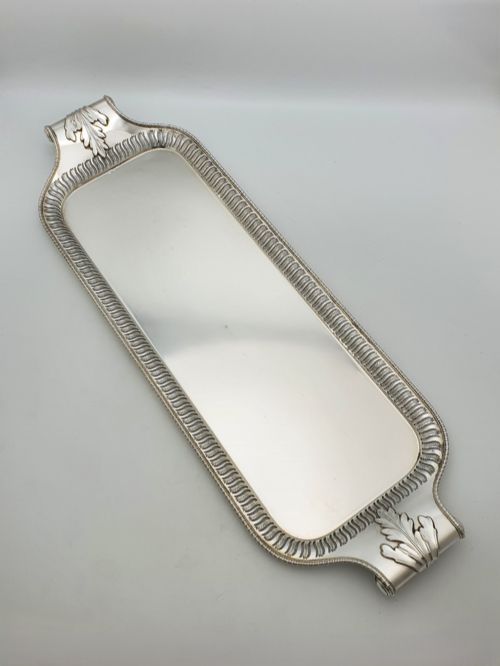
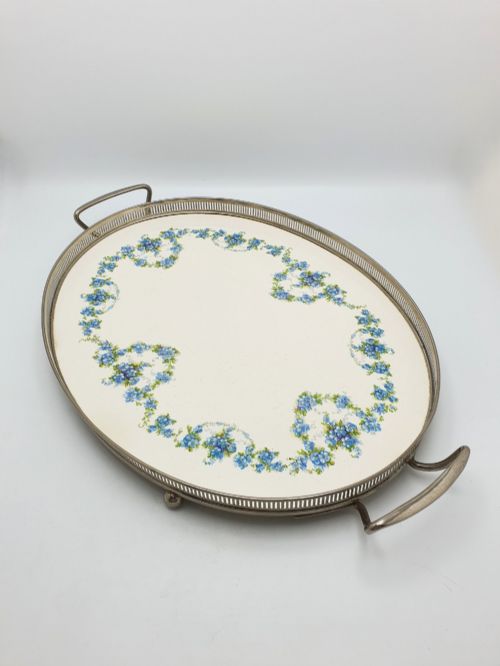
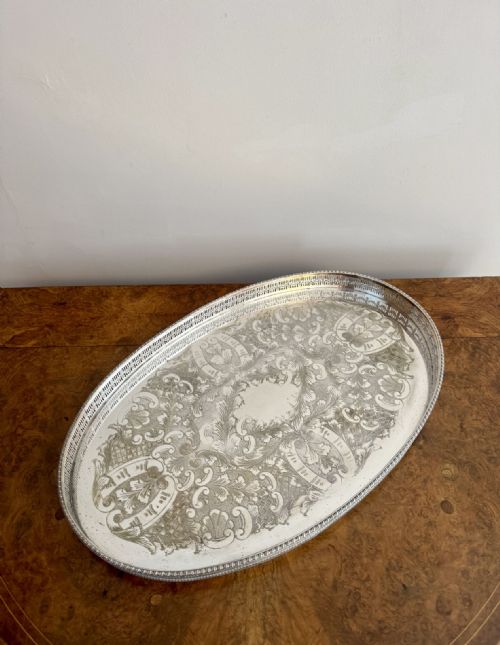
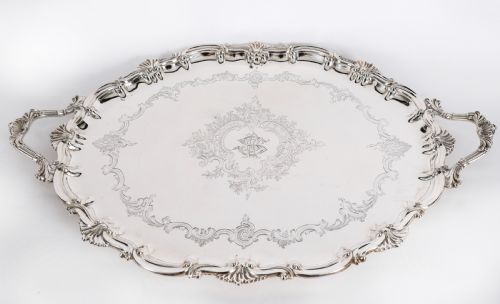
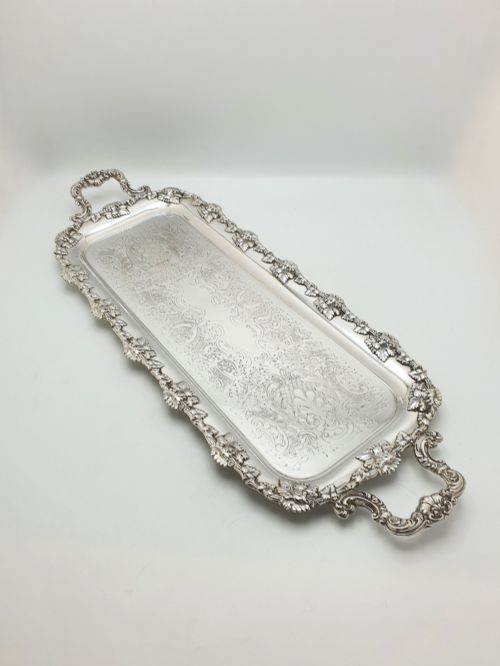
When you search for a silver plated serving platter, you encounter a wide assortment of antique and vintage vessels designed for hospitality, from expansive tea trays to deep entree dishes. The examples meeting you on this page span the nineteenth and twentieth centuries, produced in diverse forms such as circular salvers, octagonal gallery trays, and oval platters.
Makers utilised various silhouettes to suit formal dining and cocktail hours, including pieces fitted with bamboo handles, pierced borders, or wood bases with shell inlay. Victorian and Edwardian examples dominate the selection, alongside Art Deco cocktail trays and Mid-Century Modern designs.
Serveware ranges from flat chargers and meat covers to extending dish stands and footed trays. These items originated in British workshops, continental Europe, and beyond, reflecting shifts in dining customs over successive generations.
How they were made
Many early pieces rely on Old Sheffield Plate, a method fusing a thin sheet of silver onto a thicker copper base under heat and pressure. Later production shifted toward electroplating, depositing a layer of silver onto a base metal such as nickel silver or EPNS using an electrical current.
Workshops applied decorative elements by hand or machine, including engraved floral motifs, repoussé borders, and pierced galleries soldered to the tray base. Handles, feet, and rims were often cast separately and attached securely to the main body.
Listings span multiple eras, encompassing Georgian Old Sheffield Plate, Victorian engraved salvers, Edwardian gallery trays, and Art Deco cocktail servers.
What varies in quality
The distinction between standard utility items and superior pieces rests on the weight of the base metal and the thickness of the silver deposit. Heavier gauge metals prevent warping and maintain rigidity when loaded with heavy silver or ceramic dishes.
The crispness of the chased or engraved detail and the integrity of applied borders indicate the maker's investment of time and skill. Superior examples exhibit clean solder joints, balanced weight distribution, and durable plating that resists premature base metal telegraphing.
Keith Murray For Mappin & Webb·James Deakin·William Hutton & Sons·Mappin & Webb·Christofle·Thomas Bradbury & Sons·John Harrison·Henry Wilkinson·Matthew Boulton·Walker & Hall·Padley Parkin·Elkington
The Silver Plated Serving Platter Glossary
- EPNS
- Electroplated Nickel Silver. This acronym denotes a base metal alloy of copper, nickel, and zinc coated with a layer of pure silver through an electrolytic process.
- Old Sheffield Plate
- An early composite material. It consists of a copper ingot fused with a sheet of silver before being rolled into sheets for smithing.
- Gallery Tray
- A tray featuring a raised pierced or solid metal gallery border around the perimeter. This architectural rim kept decanters and glasses secure during transit.
- Salver
- A flat serving tray, usually circular and supported on small feet. Historically used for presenting drinks, letters, or visiting cards.
- Entree Dish
- A covered serving vessel used for bringing hot courses to the table. These often feature removable handles to allow the base to function independently.
Silver Plated Serving Platter: Frequently Asked Questions
What is Old Sheffield Plate?
Old Sheffield Plate is an early composite material created by fusing a thin sheet of silver to a copper core. Craftsmen then rolled the combined metals into sheets to form trays and platters.
This technique predates modern electroplating. A subtle line of copper often remains visible along the cut edges of the piece.
How do I clean a silver plated serving platter?
Cleaning requires a soft cloth and a specialised silver polish formulated for plated items. Harsh abrasives strip away the thin layer of silver to reveal the base metal underneath.
Wash the platter in warm soapy water after use and dry it immediately with a soft cloth to prevent water spots.
Can I use antique silver plate for food?
These platters and trays were designed specifically for serving food and drinks. Most remain completely suitable for presenting canapes, roasts, and tea services.
Avoid leaving acidic foods like citrus or vinegar on the surface for extended periods, as this can tarnish or react with the metal.
How do I date a silver plated tray?
Dating relies on stylistic clues, manufacturing techniques, and maker's marks stamped into the metal. Victorian and Edwardian pieces often display registration numbers or specific workshop ciphers.
Heavier copper bleed-through and OldSheffield Plate construction generally point to an origin in the late eighteenth or early nineteenth century.