
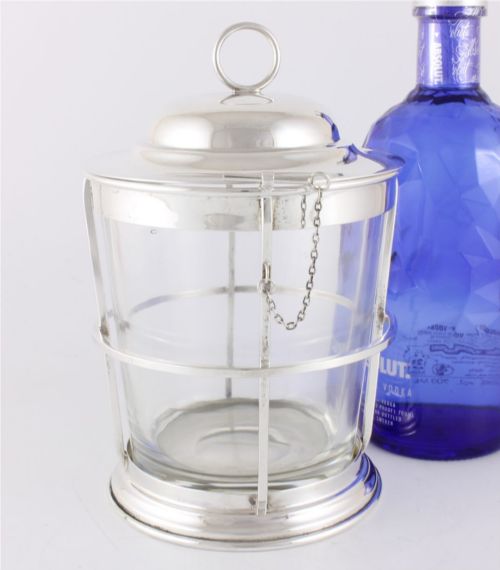
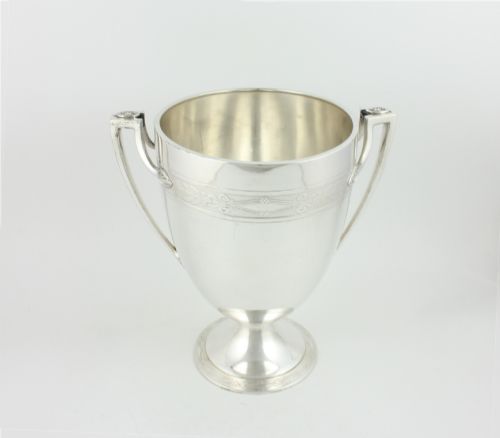
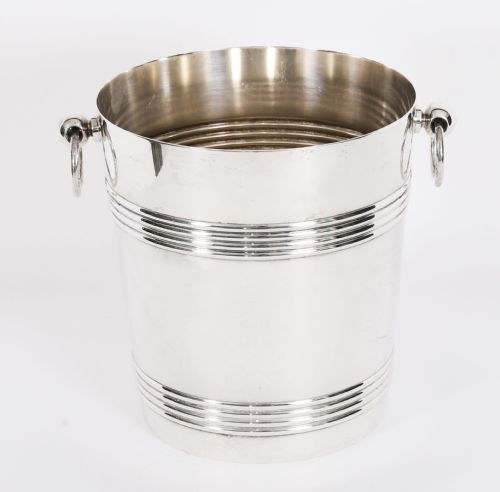
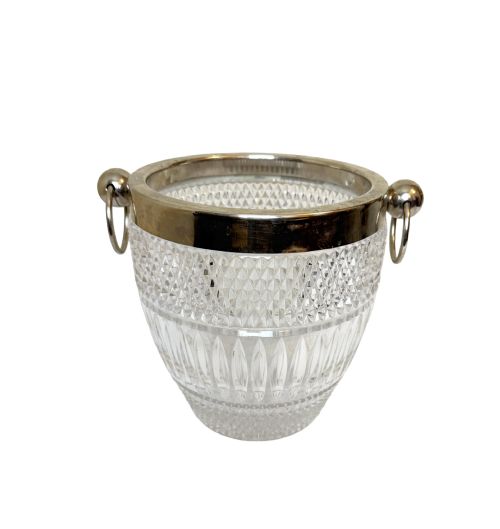

Silver Plated Ice Cooler
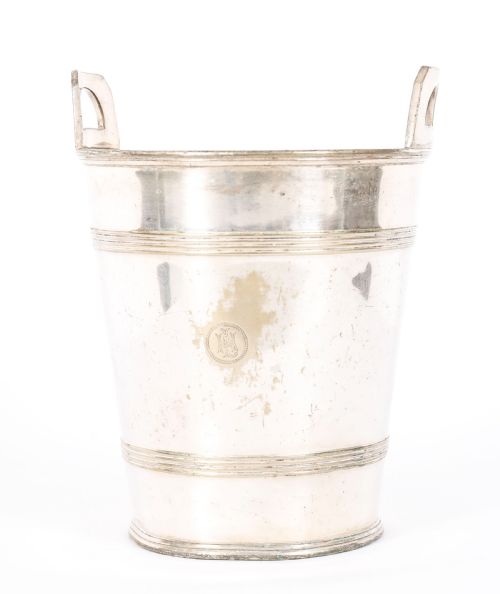
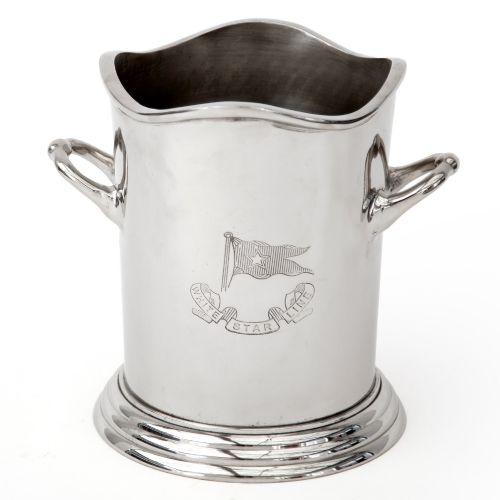
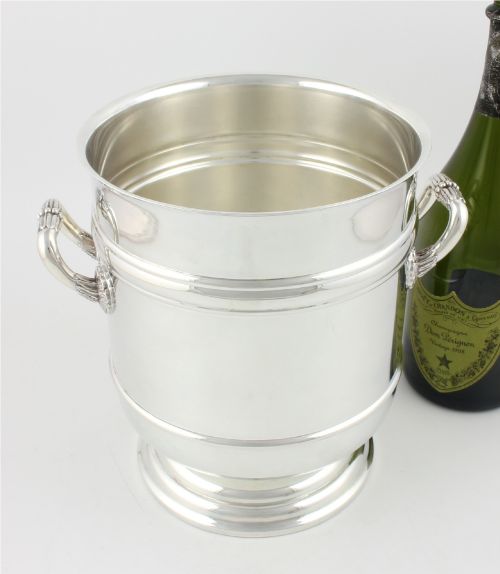
Silver plated ice coolers range from stately Old Sheffield vessels to Art Deco champagne buckets designed to keep your vintages chilled in style.
Silver Plated Ice Cooler
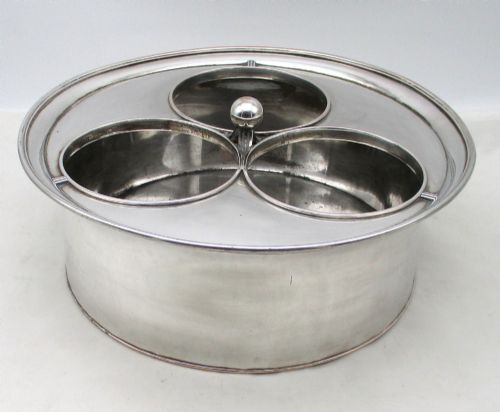
A silver plated ice cooler satisfies the table host by combining thermal function with polished presentation. The selections here span forms designed for individual bottles, multi-bottle table centres, and substantial floor-standing champagne buckets.
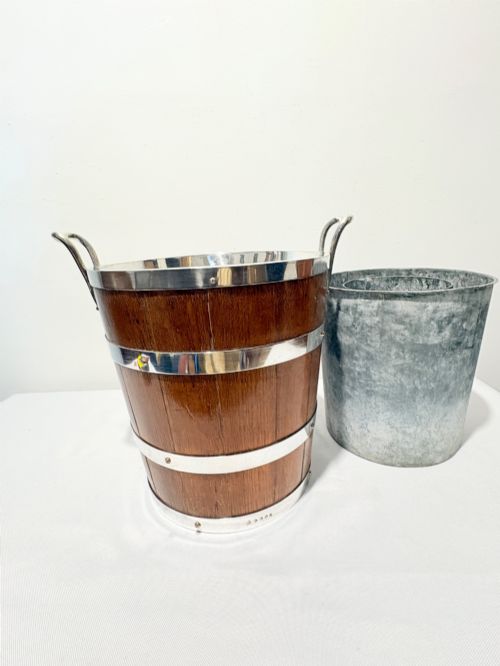
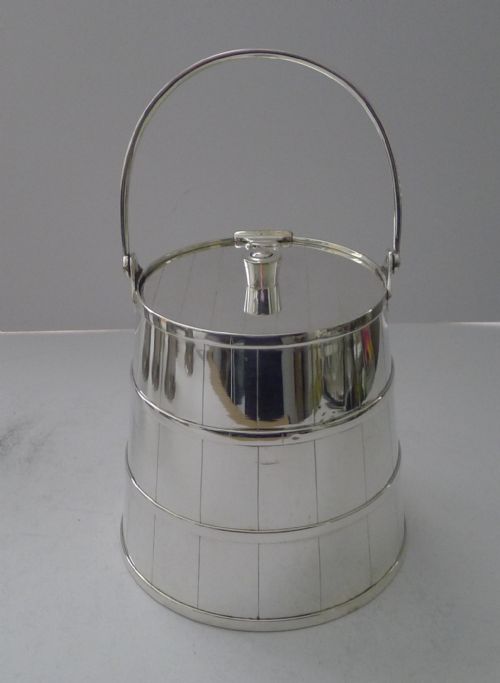
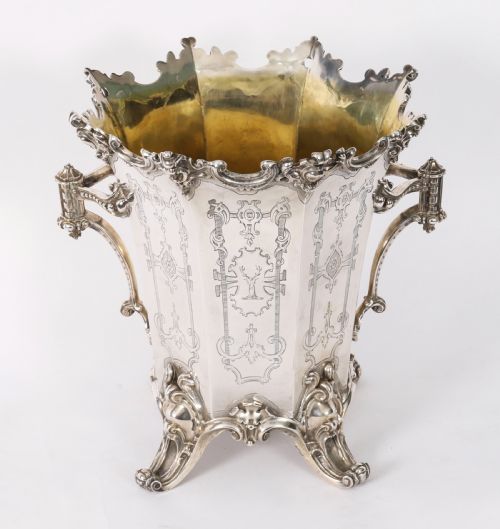
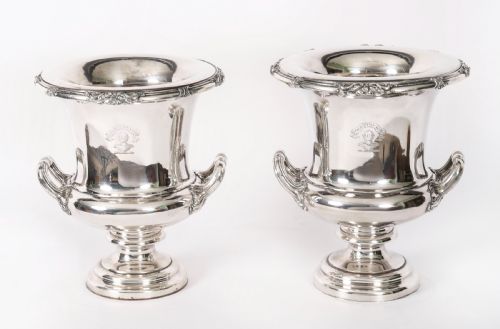
Most pieces date from the nineteenth and twentieth centuries, taking the shape of traditional wine coolers, novelty barrels, lidded pails, and structured barware. English and French workshops dominate the output, moving from Georgian urns to clean-lined Mid-Century Modern silhouettes.
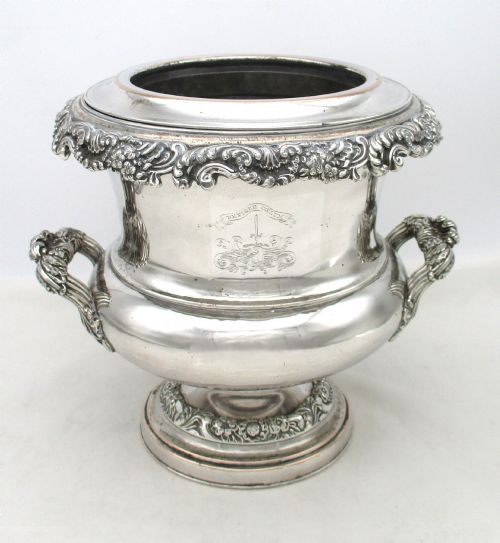
Buyers encounter everything from heavy Old Sheffield Plate examples with armorial crests to streamlined Art Deco ice buckets by noted makers. Whether configured with cut glass liners, swing handles, or matching tongs, these items serve entertaining spaces effectively.
How They Were Made
Makers produced these pieces using silver plate, Old Sheffield plate, and silver on copper, applying thin layers of silver over base metals like copper or brass. Old Sheffield plate involved fusing a sheet of silver to a copper ingot before rolling them together, creating a distinct material structure.
Later manufacturing shifted to electroplating, which allowed factories to deposit a coat of silver onto base metal blanks via an electrical current. Artisans then added cast handles, applied rims, engraved crests, and hand-embossed floral or geometric motifs by hand.
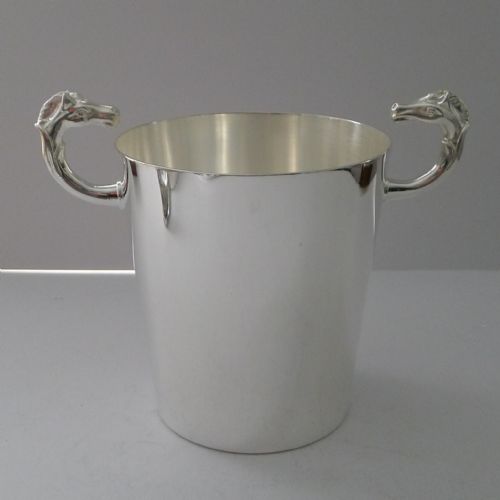
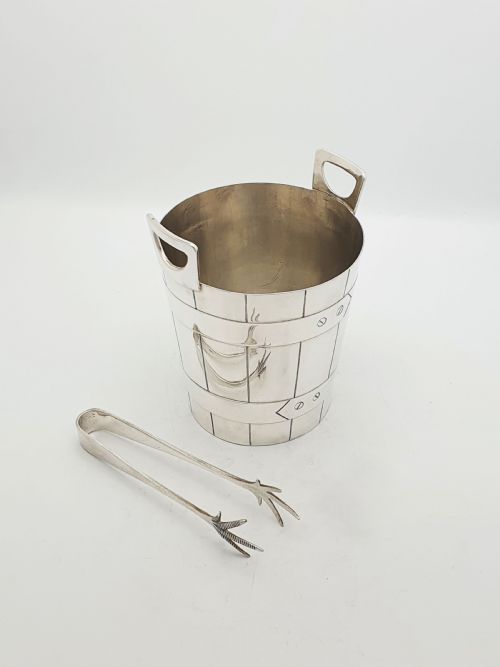
Several coolers take the playful form of equestrian horse heads and novelty barrels with claw tongs ready to grab stray cubes.
What Varies in Quality
Weight and structural thickness separate utilitarian vessels from finer salon pieces, as heavier gauge metals resist denting and maintain thermal stability more effectively. The integrity of the plated surface also matters, distinguishing deeply coated items from those showing extensive base metal bleed.
Execution of decorative detail reveals the maker's hand, from crisp cast lion masks and tendrils to finely hand-engraved coats of arms and heraldic crests. Original components such as matching cut glass liners, internal drainage grills, and fitted tongs elevate a piece's completeness.
Hutton Sheffield·Christofle·Elkington, Mason & Co·WMF·Mappin & Webb·Barker Ellis·Ercuis Paris·John Round & Son
The Silver Plated Ice Cooler Glossary
- Old Sheffield Plate
- An early fusing technique where a sheet of silver is melted onto a copper core before shaping. This method creates a warm dual-metal tone visible at exposed edges.
- Silver Plate
- A manufactured metal object where a thin layer of pure silver coats a base metal substrate. Electroplating largely replaced older layering methods by the mid-nineteenth century.
- Champagne Bucket
- A deep vessel sized specifically to hold a wine or champagne bottle surrounded by ice and water. These often feature sturdy side handles for lifting when filled.
- Cut Glass Liner
- A heavy insert fitted inside an ice bucket or biscuit box to hold melting ice and protect the outer metal from moisture corrosion. They are frequently cut with geometric or star patterns.
- Coat of Arms
- A heraldic design engraved or applied to silver and plated items to denote family lineage or institutional ownership. These personalisations frequently appear on nineteenth-century presentation pieces.
Silver Plated Ice Cooler: Frequently Asked Questions
How do I clean a silver plated ice cooler?
Wash the piece gently in warm, soapy water using a soft cloth to remove surface dust and residue. Avoid harsh abrasive dips that strip remaining silver plate from the base metal.
Dry the vessel thoroughly with a lint-free towel to prevent water spots. Apply a specialist silver polish sparingly only when necessary to maintain the shine.
Can I use an antique ice bucket for daily dining?
These vessels were engineered precisely for holding ice and chilled bottles during meals. Modern usage mirrors their original purpose on the dining table or bar cart.
Take care to empty melted water promptly after use rather than letting moisture sit inside the plating for extended periods. Hand washing preserves the finish far better than mechanical dishwashing.
What is the difference between Old Sheffield Plate and later silver plate?
Old Sheffield Plate uses a mechanical fusion process where a silver sheet is bonded to copper under high heat. This creates a thick layer where copper shows subtly at cut borders.
Later silver plate relies on electro-deposition, coating a white metal or brass blank uniformly. Electroplated items lack the distinct copper bleed lines characteristic of eighteenth and early nineteenth-century production.
How do I date an unmarked silver plated cooler?
Examine the overall silhouette, handling mounts, and decorative motifs for period indicators like Georgian neoclassical urns or Art Deco geometric angles. Construction clues, such as hand-soldered joints or Old Sheffield copper edges, narrow down the decade.
Maker marks, registration numbers, and retailer stamps often appear on the base. Cross-referencing these punch marks with historical trade records provides a reliable production window.