
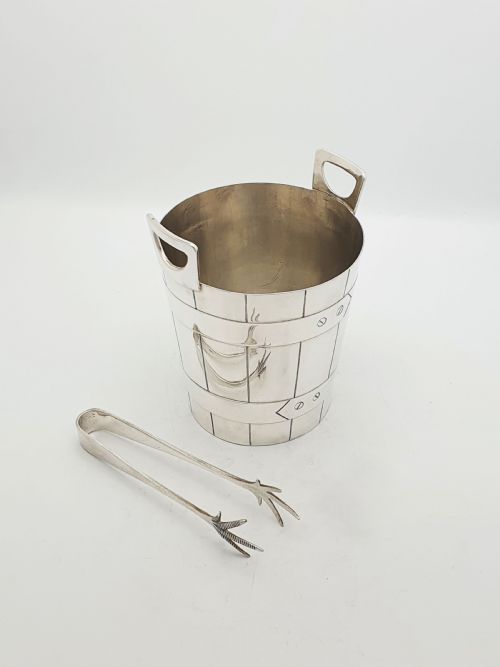


Edwardian Ice Bucket
Edwardian ice buckets bring heavy cut glass, warm oak and polished silver plate to the table, holding wine and cooling champagne with effortless period style.
Edwardian Ice Bucket
An edwardian ice bucket serves as a practical barware piece, combining deep cut glass bowls with silver plated mounts and swing handles. These table accessories often double as wine coolers, champagne buckets or biscuit barrels depending on their interior depth.
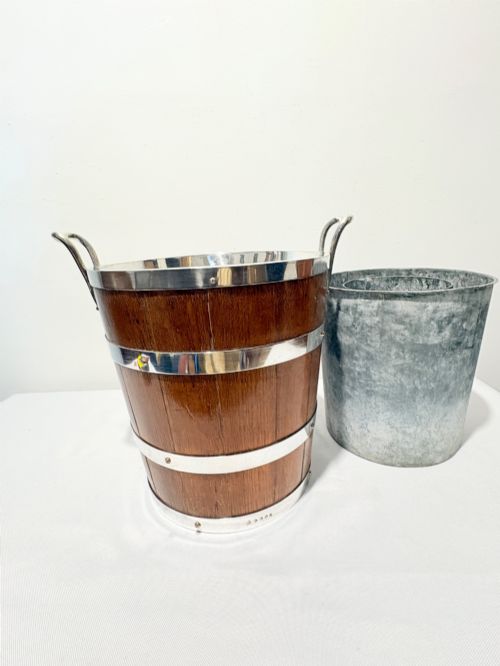
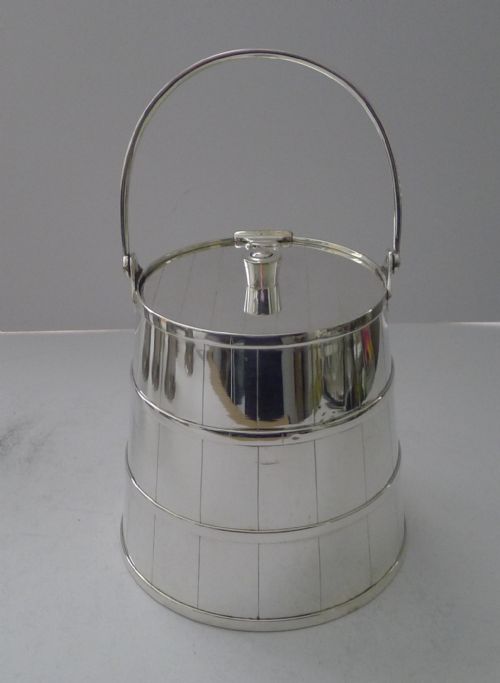
The versions most commonly met on this page span the early twentieth century, featuring stout barrel forms banded in oak alongside taller silver plated pails. Many examples incorporate ceramic creamware liners or clear glass inserts designed to hold melting ice safely away from the outer wooden staves.
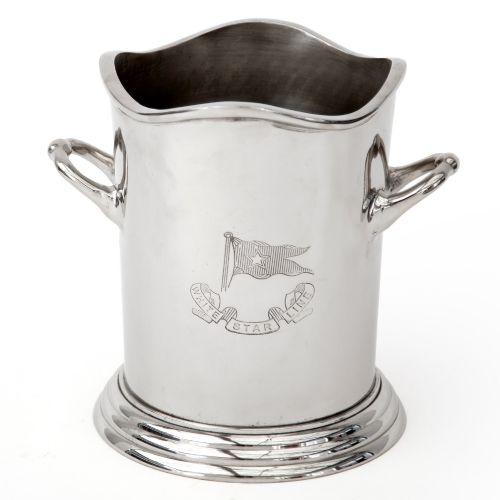
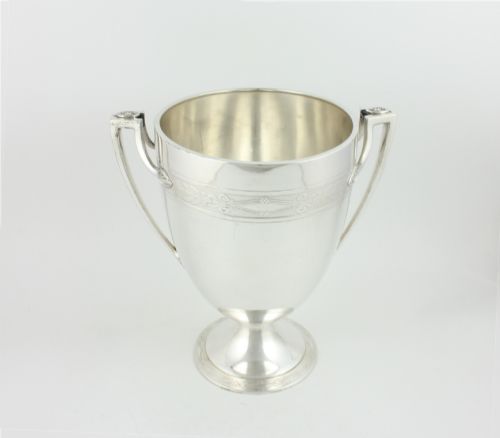
Makers adapted these vessels for various social settings, producing twin handled presentation bowls and novelty servers alongside standard cylindrical coolers. While many pieces date directly to the Edwardian decade, related examples stretch from late Victorian years into the early art deco period.
Construction and Materials
Silversmiths utilised heavy silver plate and EPNS over base metals, applying bright polished finishes that contrast against dark oak staves and turned wooden bodies. Copper, brass and nickel silver also appear in auxiliary vessels, providing sturdy structural integrity for large wine coolings.
Glasscutters shaped thick lead crystal and flint glass with deep vertical flutes, diamond patterns and star cut bases to catch the candlelight. These liners sit snugly within metal rims or oak frames, secured by swing handles fastened with sturdy side pivots.
Listings feature oak, cut glass, copper, and silver plate across periods spanning the late nineteenth century to nineteen thirty.
Judging Quality
Quality rests upon the weight of the metal mountings and the clarity of the glass insert, where heavier gauge silver plate and thick, resonant crystal distinguish superior pieces. The precision of the cooperage work on wooden barrel forms also matters, showing tight joints and well fitted metal bands.
Makers' marks stamped clearly onto the base or rim elevate a piece, separating unmarked workshop output from documented examples by known makers such as James Dixon or John Grinsell.
Christofle·Dawson·John Grinsell And Sons·James Dixon And Sons
The Edwardian Ice Bucket Glossary
- EPNS
- Electroplated nickel silver. This forms the base white metal foundation beneath a thin coating of pure silver.
- Creamware
- A fine earthenware pottery developed in Yorkshire. Creamware liners provide an alternative to glass inserts within wooden ice barrels.
- Biscuit barrel
- A covered ceramic or glass vessel fitted with metal mounts. These containers double in function as ice buckets.
- Claw tongs
- Spring action serving utensils with gripped ends. These accompany ice buckets for lifting ice cubes without slippage.
Edwardian Ice Bucket: Frequently Asked Questions
How do you use an ice bucket daily?
Place ice cubes inside the glass or ceramic liner to keep them chilled for table service. The surrounding metal or wood body insulates the contents while catching condensation.
Many pieces also accommodate wine bottles and champagne magnums when the internal liner is removed.
How do I identify an edwardian piece?
Look for hallmarks or maker stamps associated with early twentieth century silversmiths alongside distinctive stylistic cues like heavy cut glass and oak cooperage. Pieces from this era often feature swing handles and matching claw tongs.
Design influences range from late Victorian revival forms to early art deco geometric lines.
Are liners usually original to the bucket?
Original glass and ceramic liners fit the internal collar precisely without excessive movement. Replacements occasionally occur due to historical breakages over decades of use.
Checking for matching wear patterns between the metal rim and the glass helps confirm originality.