


Silver Plated Glass Stand
When you search for a silver plated glass stand, you find a practical table piece that brings together metalwork and glass from the Georgian period through to Art Deco.
Silver Plated Glass Stand
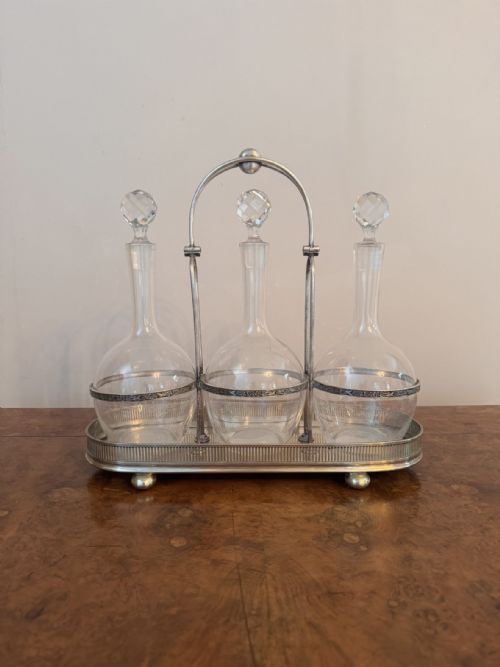
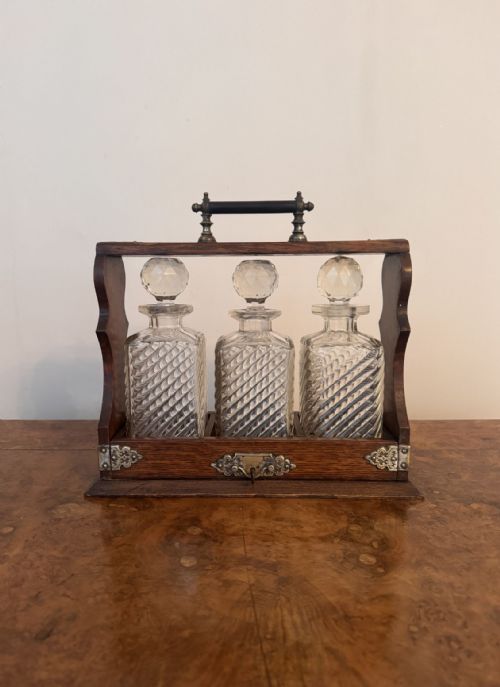
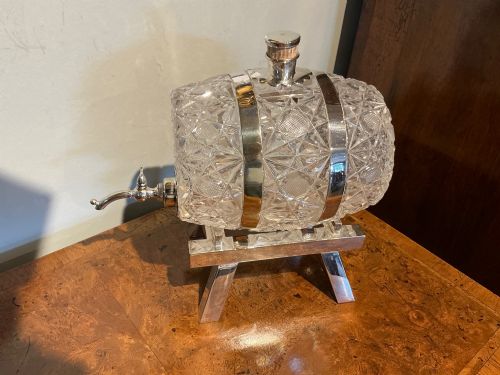
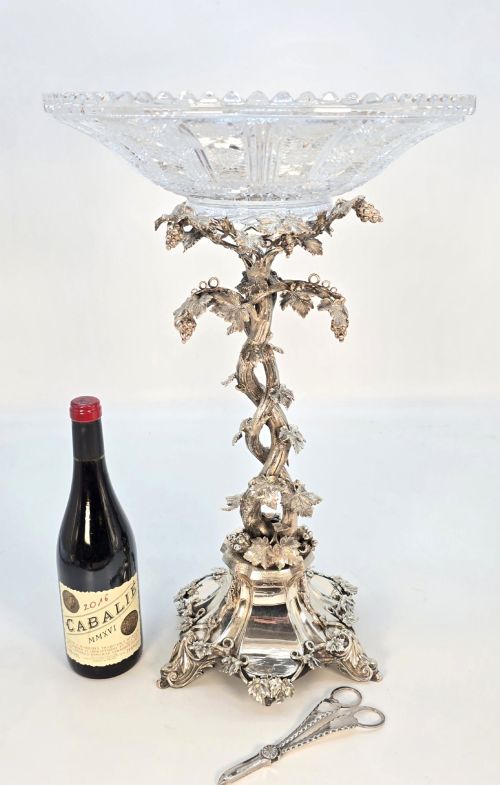
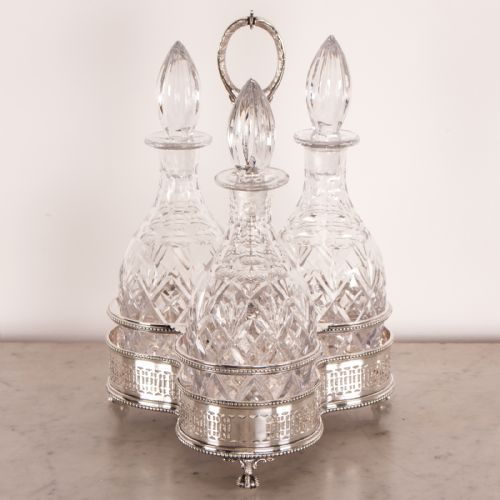
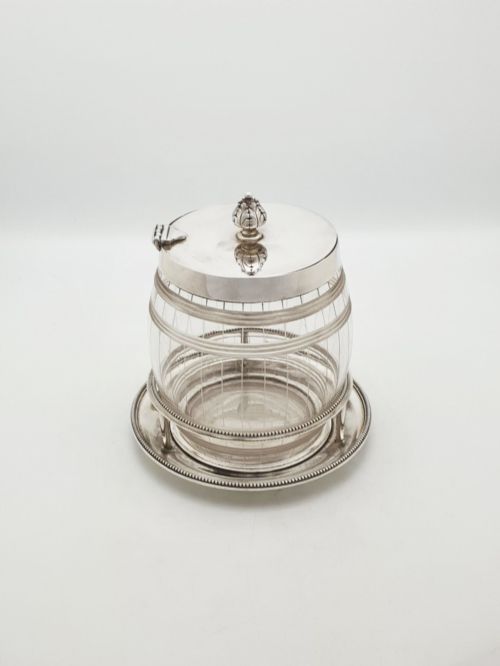
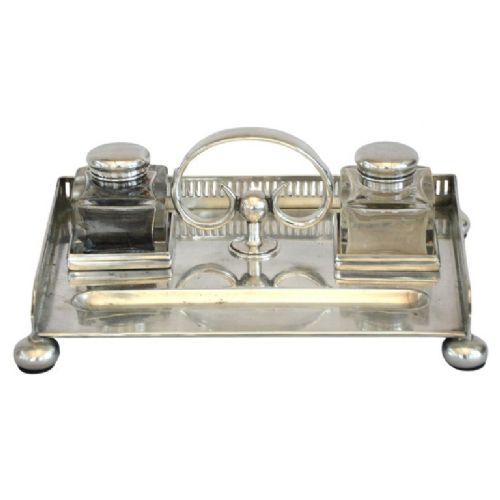
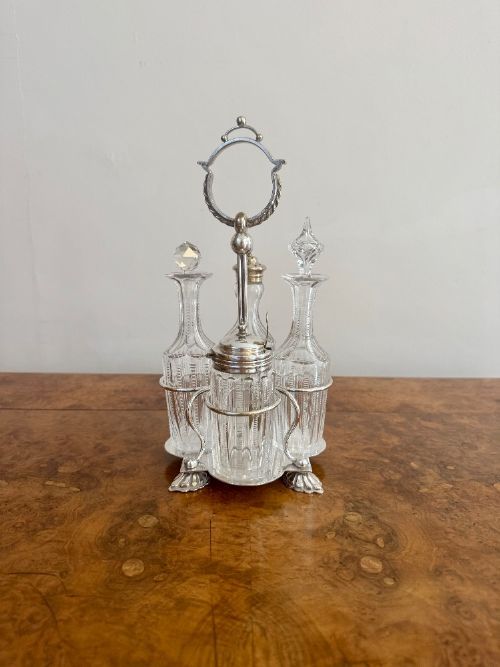
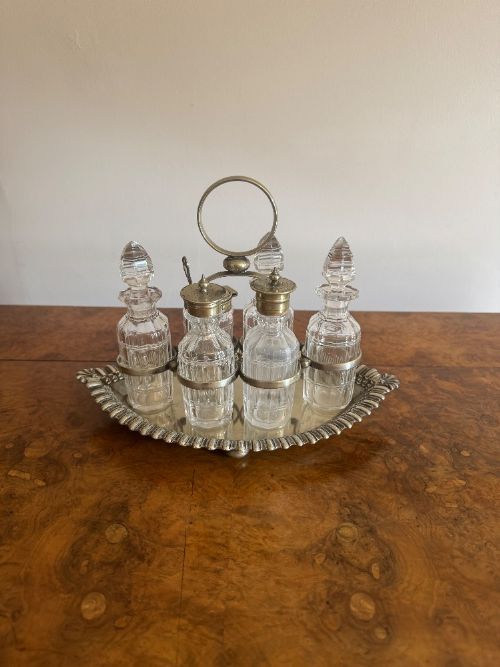
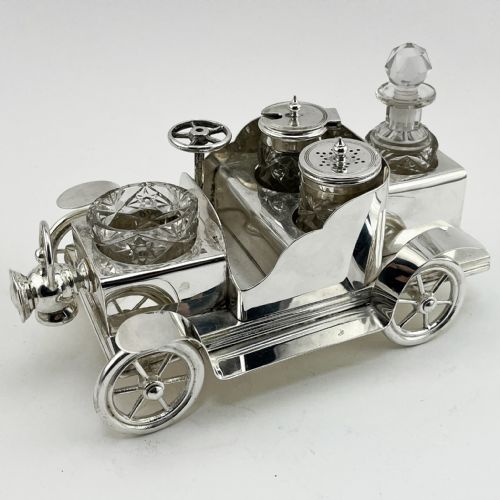
A silver plated glass stand combines metal frames with glass vessels, appearing across dining tables and desk settings from the Victorian and Edwardian eras. These objects range from multi-bottle cruet sets and spirit barrels to centrepieces, inkstands, and cake stands.
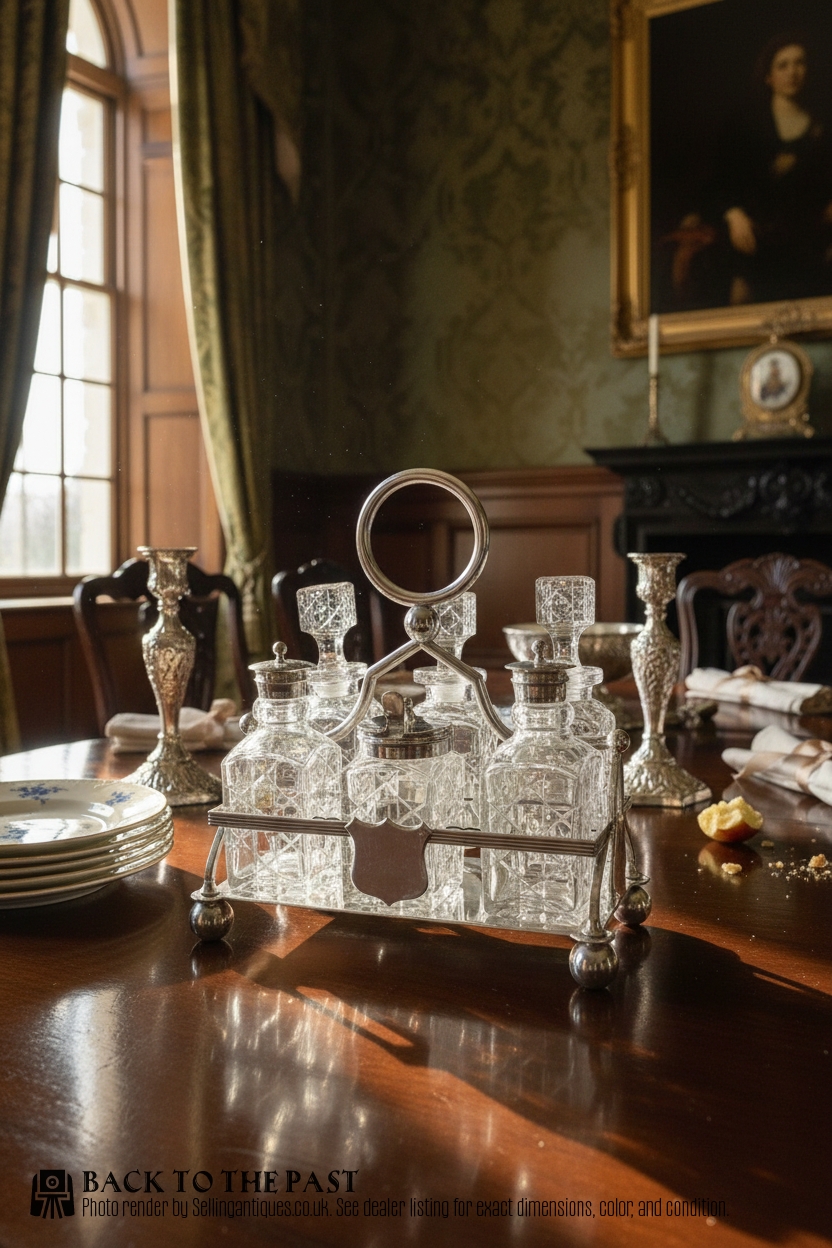
The most common examples on this page date from the Edwardian period and the late Victorian era, typically taking the form of cruet sets or decanter stands fitted with cut glass bottles.
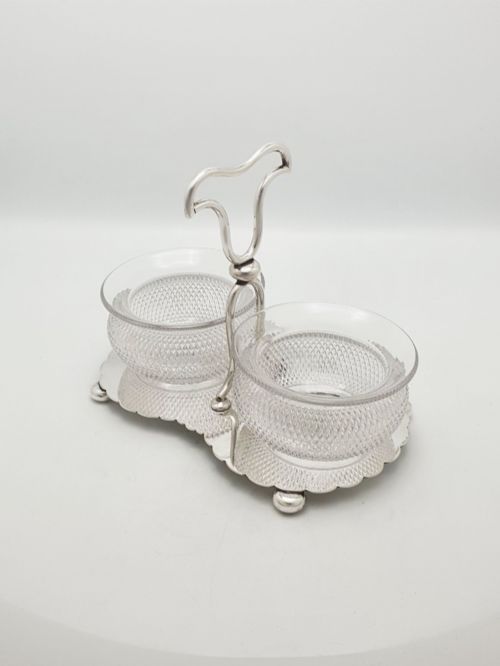
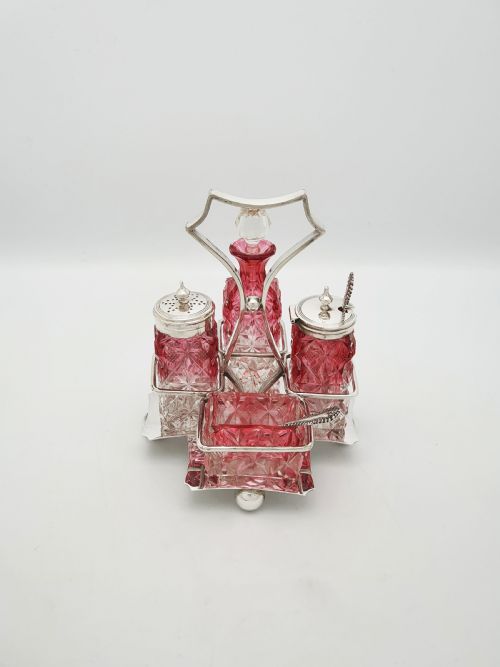
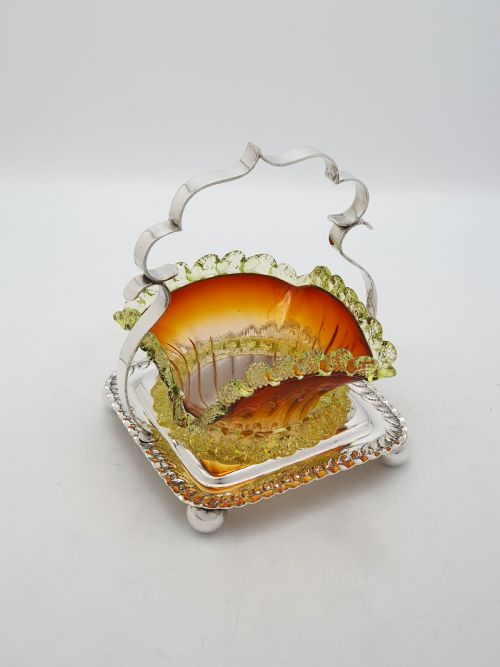
Makers utilised these stands for serving condiments, holding ink wells, or displaying coloured glass bowls in cranberry, vaseline, and green glass. Each piece reflects the formal dining and entertaining habits of the nineteenth and early twentieth centuries.
Materials and construction
The metal frames are manufactured using silver plate or Old Sheffield Plate over a base metal, often paired with cast elements or oak mounts. Silversmiths formed the stands through casting and soldering, creating secure rings and handles to support the glass vessels.
The glass components feature heavy wheel-cut crystal, pressed glass, or blown coloured glass such as cranberry and vaseline varieties. Artisans cut geometric and floral motifs into the crystal to catch the light during candlelit or gas-lit meals.
Distinguishing quality in stands
Quality depends heavily on the crispness of the glass cutting and the weight of the silver plate applied to the metal frame. Finer pieces retain matching original glass inserts and sturdy mounts that show no distortion from heavy use.
Maker attribution also dictates standing in the market, with workshops such as Elkington and Walker & Hall producing heavier, more refined designs compared to unbranded domestic pieces.
Walker And Hall·Elkington·Mappin Brothers·R Richardson·Mappin And Webb·Henry Wilkinson And Co·John Grinsell And Sons
The Silver Plated Glass Stand Glossary
- Cruet set
- A fitted stand holding glass bottles or jars for oil, vinegar, mustard, and other table condiments.
- Tantalus
- A locking wooden or metal frame enclosing decanters of spirits to prevent unauthorised access while displaying the glass.
- Cranberry glass
- A rich red glass created by adding gold chloride to the molten batch, popular during the Victorian period.
- Vaseline glass
- A transparent yellow-green glass containing uranium dioxide that glows under ultraviolet light, seen frequently in Edwardian pieces.
- Epergne
- A large table centrepiece featuring a central trumpet vase surrounded by smaller hanging baskets or dishes on a metal stand.
Silver Plated Glass Stand: Frequently Asked Questions
How do I clean a silver plated glass stand?
Wash the glass inserts gently in warm soapy water using a soft cloth, taking care to avoid harsh abrasives on the cut crystal.
Polish the silver plated frame with a dedicated silver cloth, ensuring you keep cleaning pastes away from any fitted wooden or fabric components.
Are the glass bottles usually original to the stand?
Many surviving examples retain their matching original glass bottles, particularly when fitted into custom-moulded metal frames.
Replacement bottles do occur due to accidental breakages over the decades, so checking the fit and glass colour consistency is essential.
What were silver plated stands used for originally?
These stands served practical functions during formal meals, holding condiments near the diner or displaying sweetmeats and preserves on the sideboard.
Desk variants held inkwells and sanders for correspondence, while larger versions supported decanters of port and sherry after dinner.
How can I tell a Victorian stand from an Edwardian one?
Victorian stands tend to feature heavier, more ornate casting with deep cut crystal and elaborate floral engraving.
Edwardian examples often lean towards lighter, airier designs influenced by earlier Georgian proportions or incorporate coloured glass bowls.