



Silver Plated Glass Pitcher
A silver plated glass pitcher combines metal mounts with transparent vessels for serving wine and water across the Victorian and Edwardian eras.
Silver Plated Glass Pitcher
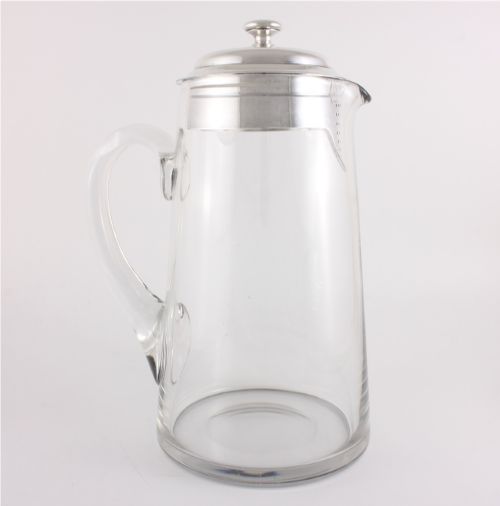
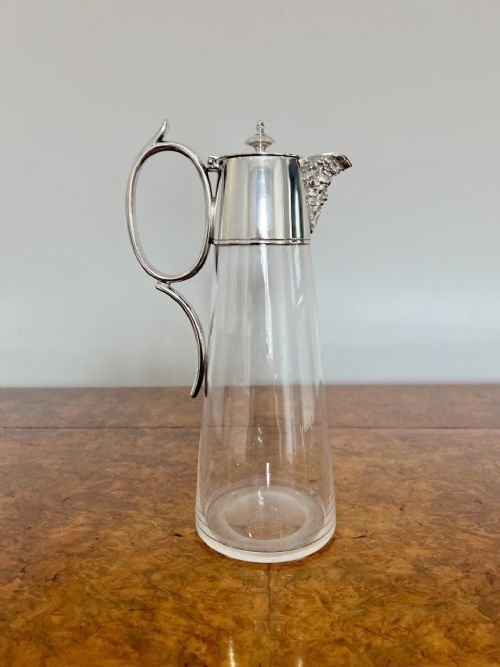
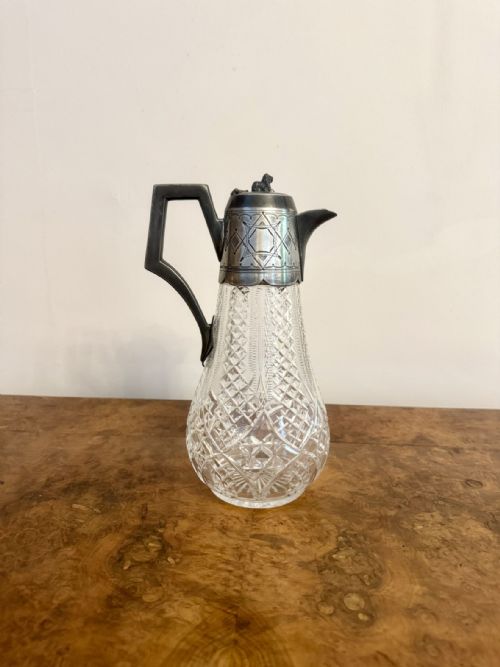
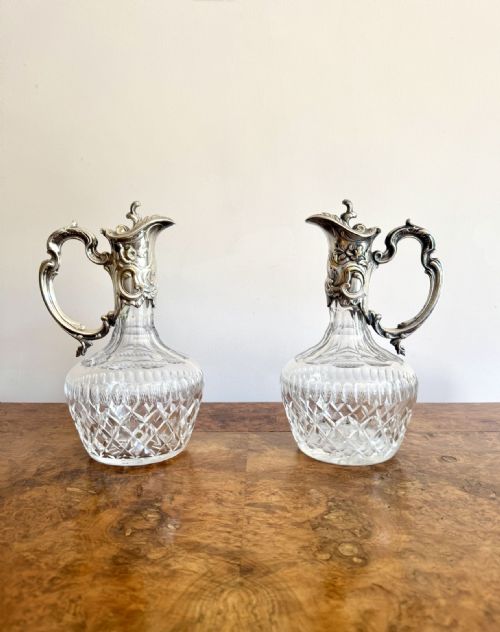
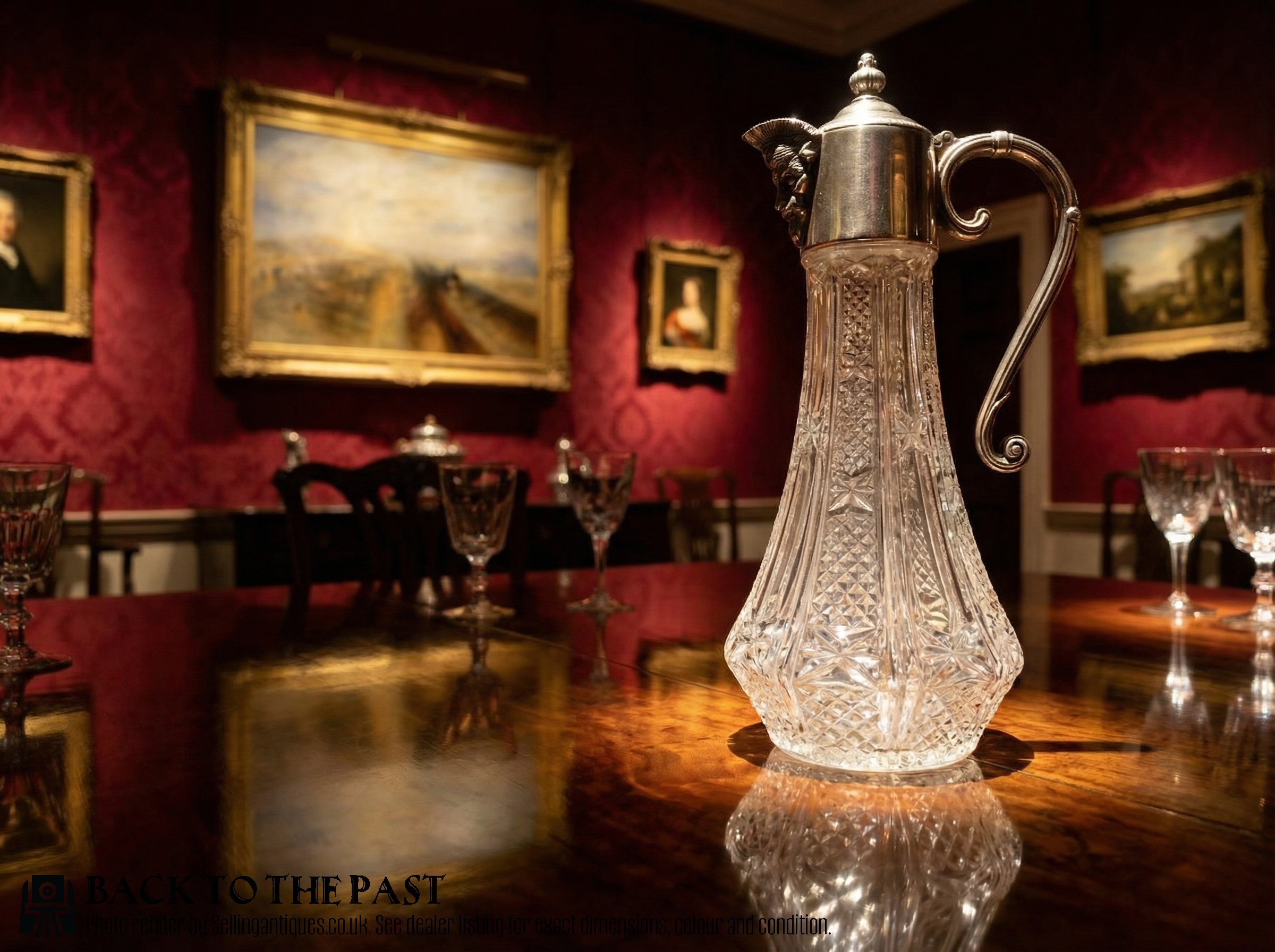
A silver plated glass pitcher takes several forms in these listings, most commonly appearing as claret jugs, water jugs, and wine decanters. These vessels combine metal mounts, handles, and hinged covers with glass bodies designed for formal dining and entertaining.
The selection spans periods from the mid-nineteenth century through the Edwardian era and into mid-century modern designs. English and continental workshops produced these items in styles ranging from Victorian and Aesthetic Movement to Art Nouveau and Arts and Crafts.
How they were made
Makers fused silver plating onto base metals to create mounts, collars, and hinged lids that secured onto blown glass bodies. Glass was shaped using cutting, etching, and moulding techniques to produce faceted patterns, clear surfaces, or coloured vessels like cranberry glass.
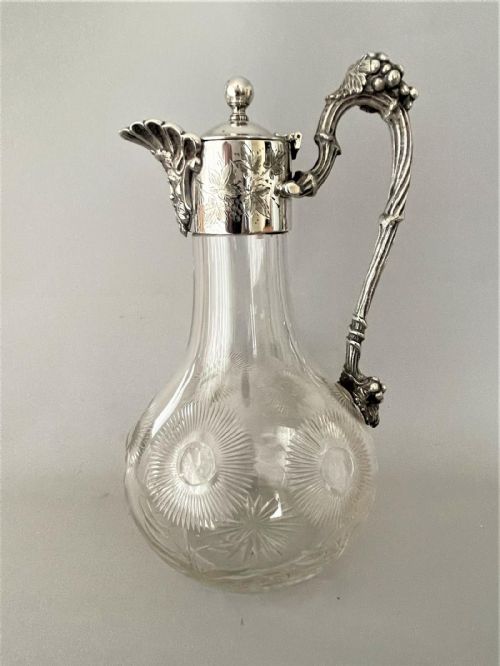
Specialised internal elements such as ice tubes were incorporated into lemonade jugs to chill drinks without dilution. Handles and spouts were cast in metal, sometimes taking figural forms like birds, animal heads, or human faces before attachment to the glass.
Listings feature pieces spanning the Victorian, Edwardian, and mid-century periods, utilising cut glass, crystal, cranberry glass, and silver plate.
What varies in quality
The weight and clarity of the glass body distinguish pieces, with deep hand-cut facets and heavy crystal demonstrating superior production standards. The thickness of the silver plating on mounts and handles determines durability and how well the metal ages.
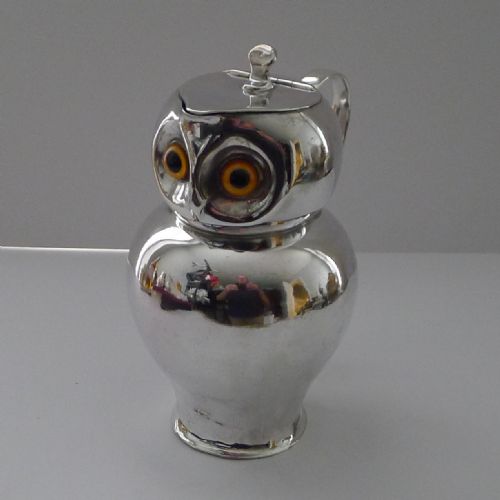
Design complexity separates standard service vessels from distinctive works by notable makers and designers. Fine casting work on figural mounts, novelty elements like glass eyes, and integrated internal fittings indicate higher craftsmanship.
Christofle·Mappin & Webb·Elkington & Co·Hukin & Heath·WMF·Karl Palda·Valenti·Dr Christopher Dresser
The Silver Plated Glass Pitcher Glossary
- Claret jug
- A specialised serving vessel designed specifically for pouring red wine at the table. These typically feature a hinged silver plated cover and an ergonomic handle.
- Cranberry glass
- A rich red glass coloured with gold chloride during the melting process. It appears frequently in Victorian and Edwardian water jugs and decanters.
- Ice tube
- A cylindrical metal compartment inserted into the centre of a pitcher to hold ice. This keeps beverages cold without melting ice directly into the liquid.
- Silver plate
- A layer of silver fused to a base metal substrate. This technique allowed makers to produce ornamental tableware mounts at a lower cost than solid silver.
- Etched glass
- Glass decorated by applying acid to eat away exposed areas of the surface. This technique created intricate patterns and motifs across the body of the vessel.
Silver Plated Glass Pitcher: Frequently Asked Questions
What is an ice tube used for?
An ice tube is a removable metal cylinder that sits inside the pitcher. It allows chilled ice to cool beverages without watering down the contents.
This practical addition became popular in large lemonade and Pimm's jugs during the late nineteenth century.
How do I clean a silver plated glass pitcher?
Wash the glass body gently in warm soapy water using a soft cloth or bottle brush. Take care to avoid harsh abrasives that might scratch the surface.
Polish the silver plated mounts separately with a dedicated silver cloth, keeping moisture away from any historic joints.
How do I date a silver plated glass pitcher?
Examine the overall design style, such as Victorian ornamentation, Art Nouveau curves, or Edwardian proportions. Maker marks and registration numbers stamped on the silver plate often provide precise manufacturing dates.
The manufacturing technique and glass colour also offer strong clues to the period of origin.